








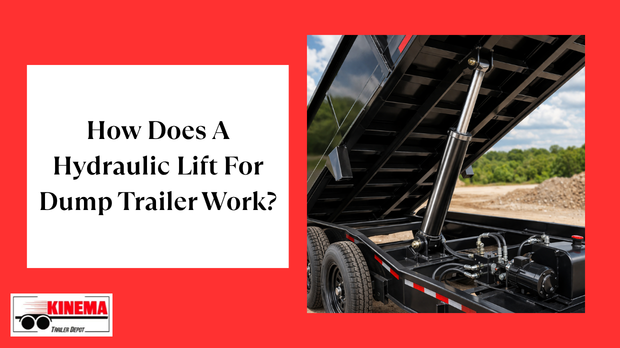
In case you need to transport heavy stuff, gravel, mulch, dirt or construction waste etc., a hydraulic lift for dump trailer is among systems that can be of great value to you. But just how does it work? This manual simplifies the complete dump trailer hydraulic system into simple language starting with the pump, to the cylinder, through the bed.
What Is a Hydraulic Lift for Dump Trailer?
A hydraulic lift for dump trailer is a motor driven system that operates under pressurized fluid to elevate and lower the trailer bed. When you have to offload, the hydraulic system forces the bed to raise at an angle whereby the heavy is left to be lifted by gravity – literally. This system is essential, as it is impossible to manually unload tons of material without this system.
The system is constructed on the basis of a single principle that is known as Pascal’s Law or the law that claims that pressure exerted on a fluid that is confined forces the same pressure equally in all directions. By forcing hydraulic oil through an enclosed system using a small pump, people can be able to exert amazing power, such as moving several tons.
Essential Parts of a Dump Trailer Hydraulic System
You should be familiar with its major components before grasping the mechanism. An effective dump trailer hydraulic system is made up of a number of ancillary components:
- Hydraulic Pump: Produces pressure required to displace the hydraulic fluid.
- Hydraulic Fluid Reservoir: Holds the hydraulic oil; maintains the fluid clean and temperature controlled.
- Hydraulic Cylinder: The motor of the system – changes fluid pressure into straight upwards force.
- Control Valve: Manually controls the fluid flow to either elevate the trailer bed, support it or lower it.
- Electric Motor / PTO: Drives the pump – either a 12V electric motor, or a Power Take-Off unit.
- Hydraulic Hoses & Lines: Tubing that holds fluid which flows between all system damages.
Also Read: Dump Trailers: Uses, Benefits and Options
What are the Steps of the Hydraulic System?
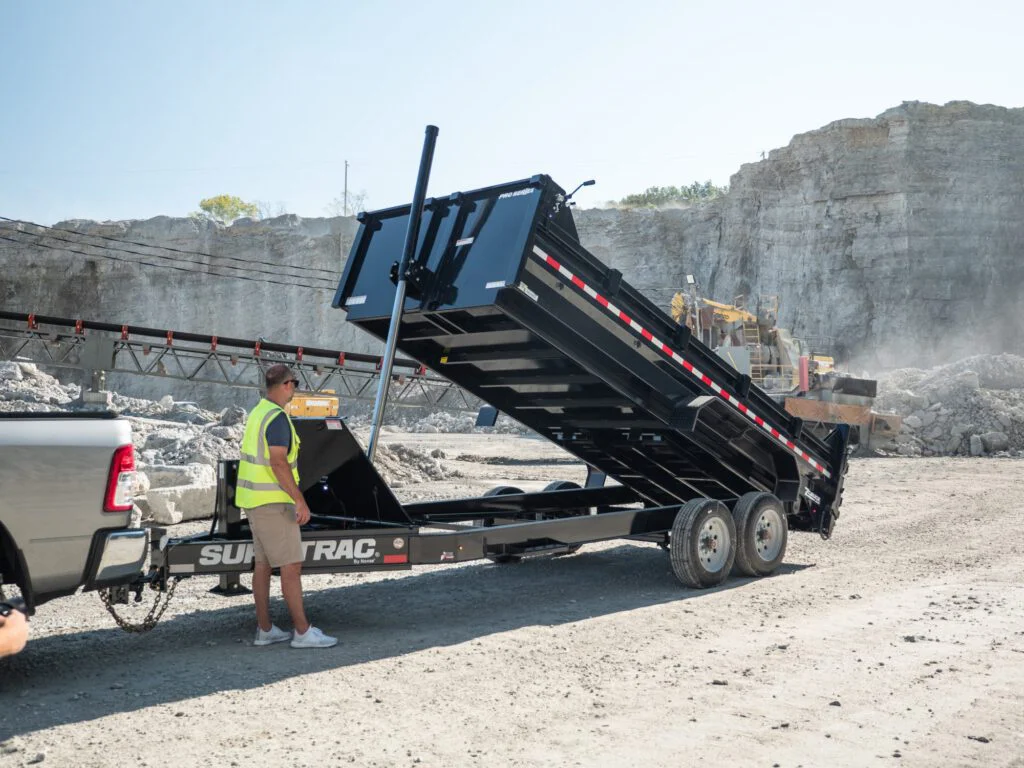
The following is the entire sequence of hydraulic dump trailer lift action in a normal dump cycle:
Step 1- Starting the Power Source
When you turn on the switch or flick the control, the electric motor (typically 12V DC, driven by the battery in the tow vehicle) or a PTO (Power Take-Off) shaft off the truck transmission kicks into action. This propels the hydraulic pump.
Step 2 – Construction of the Hydraulic Pressure
Hydraulic oil in the reservoir is pumped and pressured into the system with a lot of force – high pressure, usually 1,500 to 3,000 PSI load-dependent – to operate the system. This fluid is under pressure and is filled with so much energy that can be channeled.
Step 3 – Flowing by the Control Valve
The pressurized water flows through the hydraulic hoses to the directional control valve. It is a sort of traffic control valve of its own, and, when you press the “raise” button, it admits a channel which takes the fluid swiftly into the hydraulic cylinder.
Step 4 – The Cylinder pushes the Bed up and down
Fluid pushes into the cylinder and forces the internal piston rod out of the cylinder mightily. This is a telescoping and/or single stage cylinder that is placed in between the trailer frame and the bed. The rod physically stretches forcing the front of the bed or the back upwards as the rod extends and rotates the bed on its pivot.
Step 5 – Cargo Slides Out
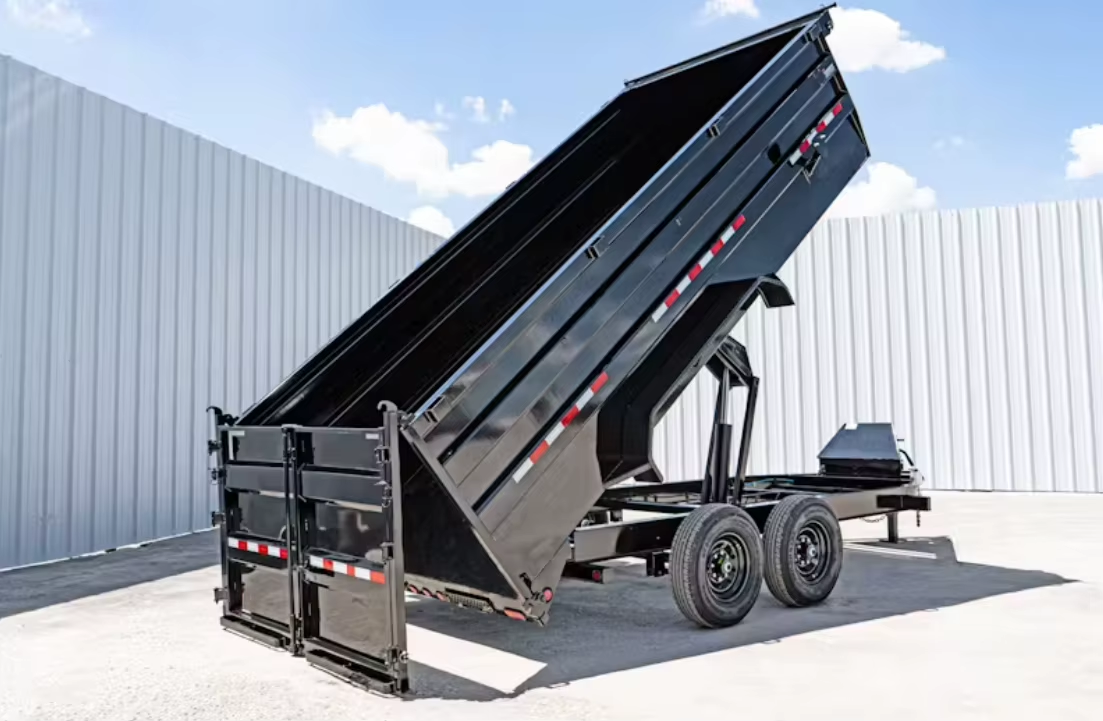
The bed is then tilted to the required angle (usually 4550 degrees) and the tailgate opens letting the material spill out. The operator will maintain the bed in place with the hydraulic lock in the control valve until the load has been completely shot off.
Step 6 – Bed Depression
To lower the bed, the operator rotates the control to lower. At this point, the valve forms a loop and the fluid can sink into the reservoir due to the pressure of the bed, as the cylinder flows back to the reservoir. The flow-control valve controls the speed such that the bed drops harmlessly without hitting the bottom.
Pro Tip – Maintenance Note
The level of your hydraulic fluids should be checked every time you use it. The predominant cause of poor performance of lift and wear of pump is the low fluid. Optimal use should be done with the hydraulic oil grade that was used by the manufacturer.
Types of Hydraulic Cylinders Used in Dump Trailers
A dump trailer does not have the same cylinder design in all. Three most widespread types to be applied to a trailer hydraulic lift kit are:
- Telescoping Cylinders: Multi stage cylinders which grow step by step. Fits well with trailers that have small underbody clearance. They provide large stroke without having to have large collapsed length.
- Single Stage Cylinders: Simple, one-rod cylinders. Heavy per unit yet need more under-frame space. Usually found in heavy-duty business dump trailers.
- Scissor Hoist (Underbody Lift): It is a type of mechanism in the form of a scissor, which functions to offer a very stable and a low profile lift. Often found in larger dump trucks and some heavy trailers.
Selecting the correct Trailer Hydraulic Lift Kit
In choosing or replacing a trailer hydraulic lift kit, there are some crucial considerations:
- Payload Capacity: Ensuring that the tonnage rated of the cylinder is higher than what you plan to carry is important. Never underestimate, overestimate.
- Cylinder Stroke Length: Should be the lift angle required in your trailer bed. The longer the stroke = the higher the dump.
- Power Source Compatibility: Determine what you require; a 12V electric or PTO-powered pump depending on your tow vehicle.
- Reservoir Size: Bigger reservoirs maintain fluid cooler, and this increases the life of the pump and seals when undergoing a repeated dump cycle.
- Mounting Hardware: Quality steel brackets, pivot pins and hose fittings prevent structural failure in the stress of loads.
Common Problems and Troubleshooting Tips
Even a well maintained dump trailer hydraulic system may have problems. The most frequent issues and easy solutions are as follows:
- Slow or difficult to raise a bed: Check hydraulic fluid pressure; check hoses are free of leaks; make sure the pump motor is getting all its typical voltage.
- Bed sinks of its own: Typically a deteriorated or dirty control valve seal. Changing the valve, or recomposing the seal.
- Pump is running and no pressure is observed: Probable broken pump gear set or an obstructions relief valve. Check and repair when necessary.
- Noise in pump operation: Air in the system (cavitation). Bleed System and refill fluid level: to remove air in the system.
- Hydraulic fluid overheating: Excessive number of successive cycles of dump running with no cooling or low fluid. Install a hydraulic cooler to be used heavily.
FAQs
1. What is the cost of installation of a hydraulic lift on a dump trailer?
The cost of a complete trailer hydraulic lift kit can be found between 400 and 1500 dollars depending on cylinder size, type and brand of pump. Installation costs are an extra $200-500 labor costs. Commercial outfits that are heavy-duty can cost more than 2500.
2. What sort of hydraulic fluid would I use in my dump trailer?
The majority of manufacturers of dump trailers show hydraulic oil of AW32 or AW46. AW32 should be used in colder climates where AW46 is in warmer climates. Before replacing types of fluids, always refer to your pump and cylinder manufacturers specifications.
3. Am I able to have my manual dump trailer converted to a hydraulic lift?
Yes. A large number of owners have managed to successfully retrofit a hydraulic dump trailer lift onto existing manual trailers with an aftermarket kit. It will require a cylinder, 12v pump unit, control valve, and hoses and mounting brackets. Make sure your trailer frame has the capacity to support hydraulic loads.
4. Do I know when my hydraulic cylinder is in need of replacing?
Symptoms of defective cylinder can consist of oil leaking around the rod seal visible to the eye, the bed sinking under pressure, slow / non-uniform expansion or a bent / scored piston rod. Small seal failures may be corrected using a rebuilding kit; a bent or broken cylinder should be replaced completely.
5. Does a dump trailer work better with a telescoping or a single stage cylinder?
It will be based on your design of the trailer. Telescoping cylinders are perfect in those cases when there is not much underbody clearance – they become shorter but longer. Single stage cylinders are more powerful and easier to service, and are more suited to heavy duty operation where clearance is unimportant. Majority of the light-to-medium weight trailers are suitable with 2 or 3-stage telescoping cylinder.
About Author: