








If you are one of these first-time buyers needing to upgrade your flatbed trailer and secure the most advantageous deal possible, here’s some advice.
Therefore, you are now thinking about purchasing a flatbed trailer. Perhaps you’re looking to add more equipment to your fleet, want to form your own business, or simply want to but out the rental business. Regardless of the reason, you’re in the right place. The problem, however, is that you can spend thousands of dollars and many headaches later in the investment process if you do not plan on visiting this purchase.
The following flatbed trailer buying guide is designed for those people who are purchasing a flatbed for the first time. We’ll demystify it everything in simple terms so you know what to expect to see, what questions to ask, and what are the biggest pitfalls to watch out for.
Let’s get into it.
Why a Flatbed Trailer Might Be the Right Choice for You?
First, let’s make sure we have the right kind of flatbed. Among all the types of trailers available on the market, flatbed trailers are the most versatile trailer types. They provide you open access from all sides and are easy to load or unload heavy or oversized loads unlike enclosed trailers.
Flatbeds are utilized on a regular basis for transporting construction vehicles, lumber, steel beams, agriculture machinery, vehicles and so much more. A flatbed is nearly always the solution if you have top heavy loads, a large or unusual cargo or really heavy loads that require an enclosed trailer.
Understanding the Different Types of Flatbed Trailers
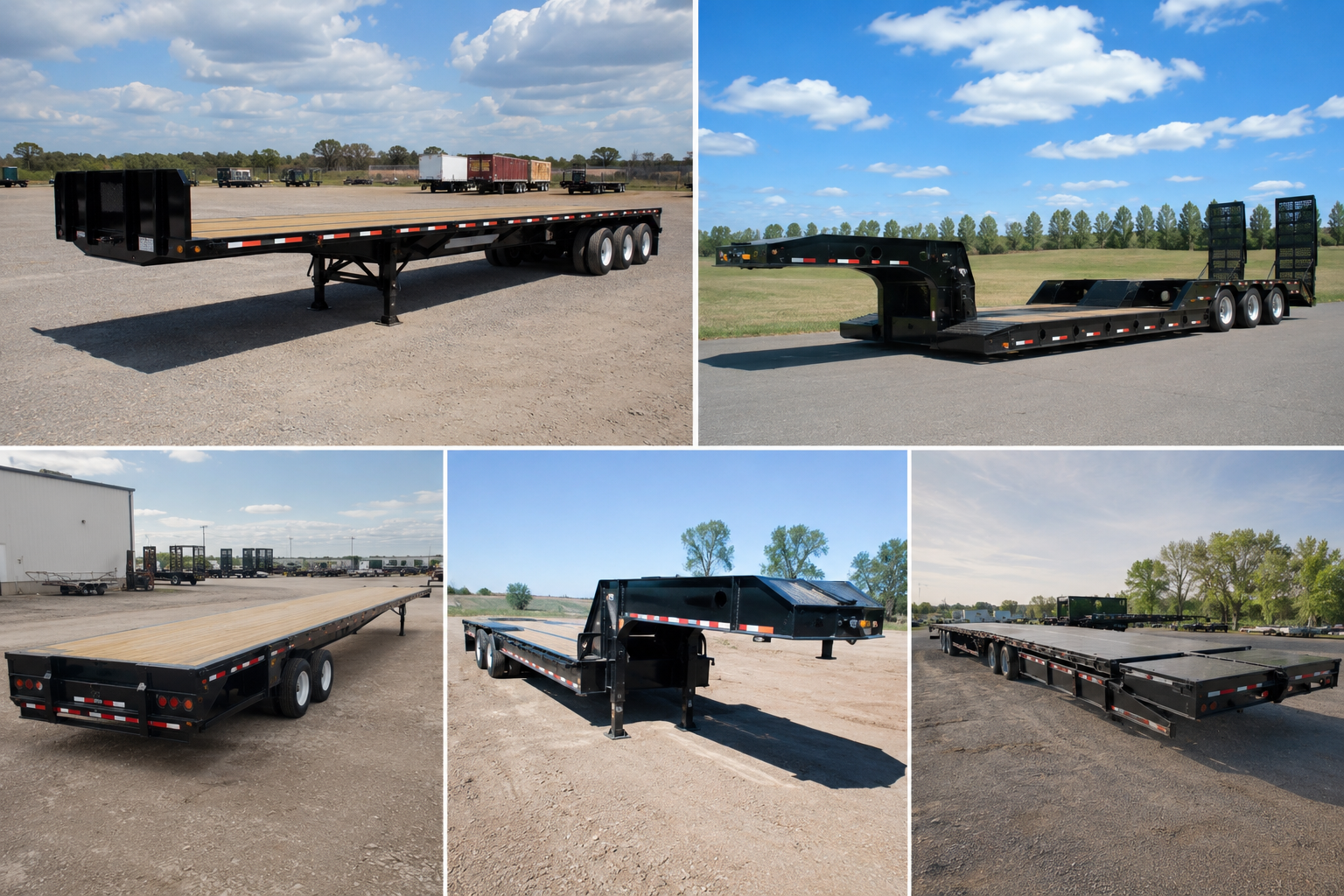
Any flatbed trailer buying guide you read will tell you this is the first rule of flatbeds—Not all are created equal. They exist in different forms and can be used for various purposes.
- Standard Flatbed: It is the most typical flatbed. Typically carries from 48 to 53 feet in length and is used for carrying all kinds of general freight over the highways.
- Step Deck (Drop Deck): A lower deck level that is suited for taller goods, which may otherwise not have a height clearance to a standard flatbed.
- Lowboy Trailer: Sits extremely close to the ground, used for very heavy or tall equipment like bulldozers and cranes.
- Oversized extensible flatbed: Can be extended to be longer to carry oversized items such as wind blades or oversized steel beams.
- Double Drop Deck: This is the lowest step deck; used for the largest equipment loads.
Most households will have a normal flatbed or step deck for most hauling requirements, for first-time buyers. Be knowledgeable about freight before you select a type of freight carrier.
Key Flatbed Trailer Features to Evaluate
Features are as important as flatbed trailer varieties when when buying a flatbed trailer. The following are the main feature of flatbed trailers you need to keep an eye on:
1. Deck Material:
wood, steel, and aluminum. Traditional and easily replaceable, although wood can rot over time. Steel is strong, but also heavy. Aluminum is light weight, rustproof and more expensive. If you have a very cold climate, consider how often the deck will get plenty of exposure.
2. Payload Capacity:
Each of the trailers will display a “Gross Vehicle Weight Rating (GVWR)” and a “payload capacity. When buying heavy equipment Trailer Hire for your installation, additional information you’ll require is the load weight. Don’t put too much weight in the trailer, it’s not only unsafe, it’s the law.
3. Axle Configuration:
Single axle trailers are lighter and easier to move around, but have lesser weight limits. Single axle or 3 axle trailers can carry heavier loads and are more stable on the road. In commercial vehicles, tandem axles are typically the norm.
4. Suspension Type Spring:
Classic, budget friendly. Air ride suspension is more expensive but gives a smoother ride and is suitable for fragile and high value goods. In case you are driving a piece which is not concerned with bumps, spring suspension will work just fine.
5. Tie-Down Points and Side Rails:
Explore trailers that have stake pockets on the sides which will enable side rails or boards to be added to secure loads if necessary.
You Must Also Read: Top Flatbed Trailer Accessories That Add Real Value
Flatbed Trailer Options: New vs. Used
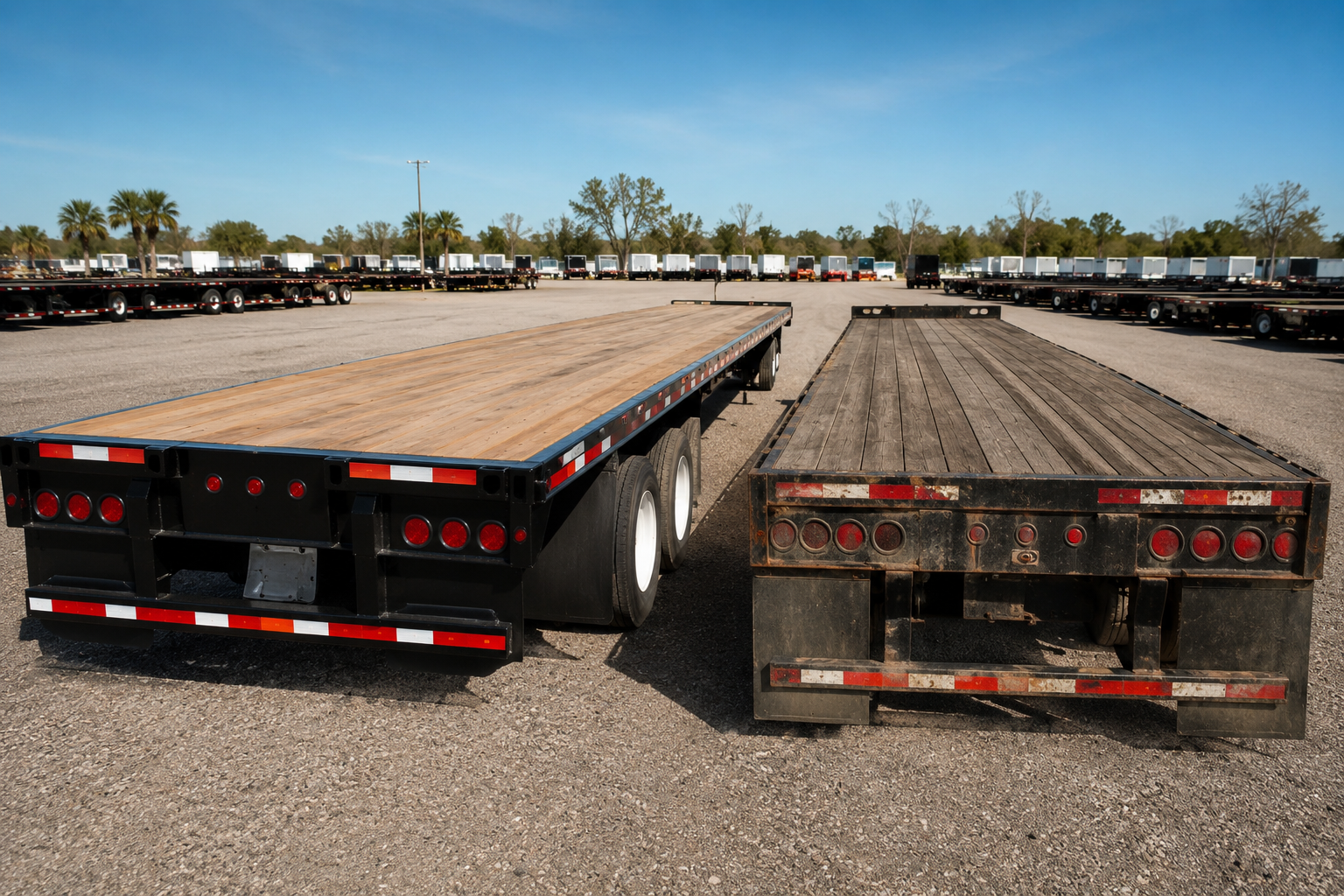
The critical decision when getting a flatbed trailer is whether to buy a brand new or used type. Of course, each has its merits and you will end up deciding on their merits based on the costs and frequency of usage.
New Trailers:
- Seven years manufacturer’s warranty
- Zero wear and tear
- Newest safety and technology
- Higher upfront cost
Used Trailers:
- This is a substantially cut price
- There is no need to consider depreciation if the tenant has already covered up the cost including any depreciation due to the previous owner
- Wide availability in the secondary market
- Needs to be well examined before purchasing
When buying a second hand frame, always check for cracks or rust, check the brakes, check the tyres and wheel bearings and, if available, look at the maintenance record. Never go without a professional inspection — it is in your pocket.
How to Choose a Flatbed Trailer: The Practical Checklist
The idea of selecting a flatbed trailer is all about selection of the trailer for specific needs. This is a simple decision guide to help you make your choice:
- What items will you be transporting the most?
- What is the heaviest loads you typically carry?
- How many feet would you need (or will need) (48 ft, 53 ft, custom)?
- Is there a need for extended length?
- What distance limits do you have on your frequent travel routes?
- Will you be hauling nationally or regionally?
- What is the towing capacity of your tow truck?
- What are your special tie-down systems required for?
Honestly go through this checklist prior to shopping. It will help you narrow down the choices by 80%, and provide you with a clearer idea of what will work for you.
You Must Also Read: Common Flatbed Trailer Sizes and Weight Limits
Legal and Compliance Considerations
As far as I know, most flatbed trailer guides don’t discuss this enough. It is important for you to have a clear idea of the “compliance” side of the situation before you get into a purchase.
All states have weight regulations for trucks and trailers on public roadways. Failure to comply with these limits may lead to fines, permit requirements and/or being put out of service. The standard legal weight limits in the U.S. are 80,000 lbs–gross vehicle weight or axle-specific weights – whichever is lower.
Trailer lighting, reflective tape and braking systems are also something you’ll need to ensure are installed correctly as per the DOT Codes. When purchasing a used trailer make sure that everything is up to the current standards and not just the legal standards at the time of its construction.
Registration and insurance, too! You have to register a commercial flatbed trailer, and have some cargo and liability insurance before you load it up and start driving.
Ensuring that the Tow Vehicle is a Match for the Trailer
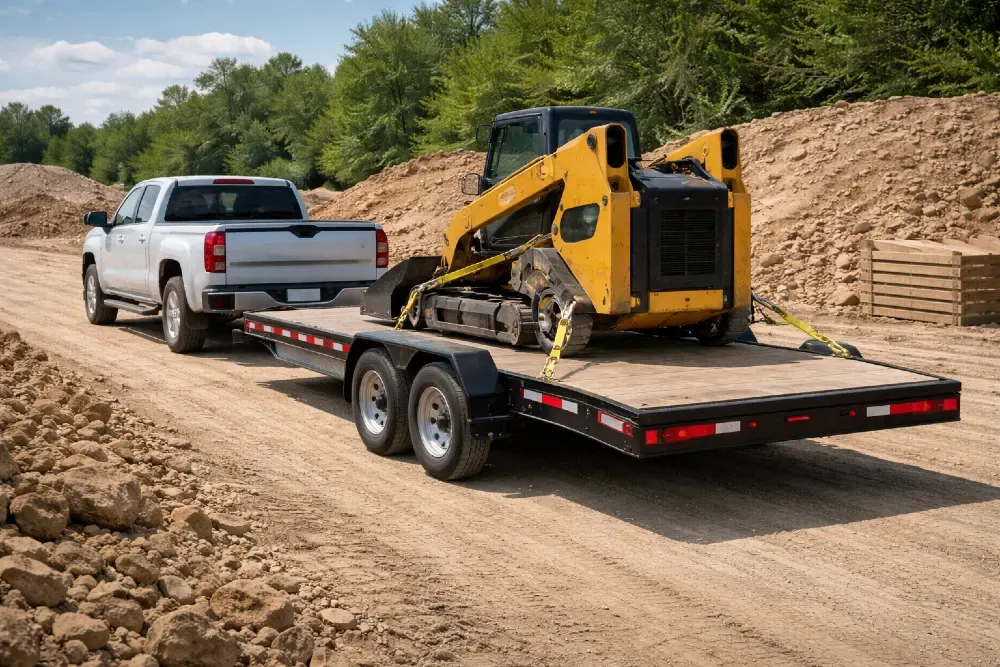
The best flatbed trailer will be of no use if the tow vehicle isn’t. It is a common/dumb mistake which first time buyers make in this part.
Inspect your truck or tractor’s:
- Gross Combined Weight Rating (GCWR): This is a measurement of the total weight of the truck and its load.
- Fifth wheel or gooseneck hitch rating
- Braking power, torque capacity of engine
This can lead to a failure in the ignition system to operate correctly, which can lead to engine misfiring, faster wear on your vehicle’s brakes and unsafe driving conditions, particularly while on a slope or in wet conditions. Always tow within rated limits of the tow vehicle.
Understanding the cost of a flatbed trailer
Let’s talk numbers. The prices of flatbeds can fluctuate from one type to another, from size to size, and whether the truck is new or used.
New standard flatbed trailers start at $25 000 – $50 000 +. When it comes to specialty trailers, lowboys or extendables can easily run into the $80,000 range. In terms of used containers, they cost $8,000 to $25,000, and the cost goes up as they get older and in worse condition.
Take into account the following in addition to the price of the grill:
- Annual registration fees
- Insurance premiums
- Maintenance and repairs (tyres, lights, bearings)
- Additional enhancements (tarp, straps and side kit)
Don’t eat into your budget for buying the trailer, so that you don’t have any money left for running it. A rule of thumb is to allocate 10-15% of the cost of the trailer every year for maintenance and incidental items.
Final Thoughts
The initial purchase of a flatbed trailer can be an expensive endeavor but one that can be done without sweating too. The important thing to remember is to do your homework before you sign anything. This flatbed trailer buying guide is a beginning not an end; deal with established haulers, check out entire dealers and if possible, talk with them and get the opportunity to handle them in person before buying them.
The right trailer will benefit your business and pay for itself numerous times over. Sit tight, ask tough questions and then you decided and you won’t regret it.
FAQs
Q1. For Toyota transiting construction equipment, what size flatbed will I need?
A 48′ standard or step deck flatbed is suitable for the majority of construction equipment. Always verify weight and size to know the size of your equipment prior to sizing your trailer.
Q2. In this case, it is better to buy a new centre end flatbed or a used one?
There are used trailers which will save money initially but will need a check. New trailers are equipped with guarantees and dependability. Select depending on how much money you have to afford and how often you will move.
Q3. What is the max capacity of a flatbed trailer?
The typical key items for flatbed trailers are not designed to carry more than about 48,000 lbs, keeping the total within the federal gross weight limit of 80,000lbs when loaded with the truck.
Q4. I want to haul a flatbed commercially, but do I need a special license for this?
Yes. A CDL (Commercial Driver’s License) is probably a part of the requirements for commercial flatbed hauling. Specifications differ according to the state, load and type of trailer. Please verify your state’s state motor vehicle department rules.
Q5. Which flatbed trailer attributes are crucial to long haul trucking?
To ensure safety and protection of cargo, air ride suspension, tandem axles, aluminum decking, bountiful tie-down points and DOT compliant lighting are of primary concern for long hauls.
About Author: