








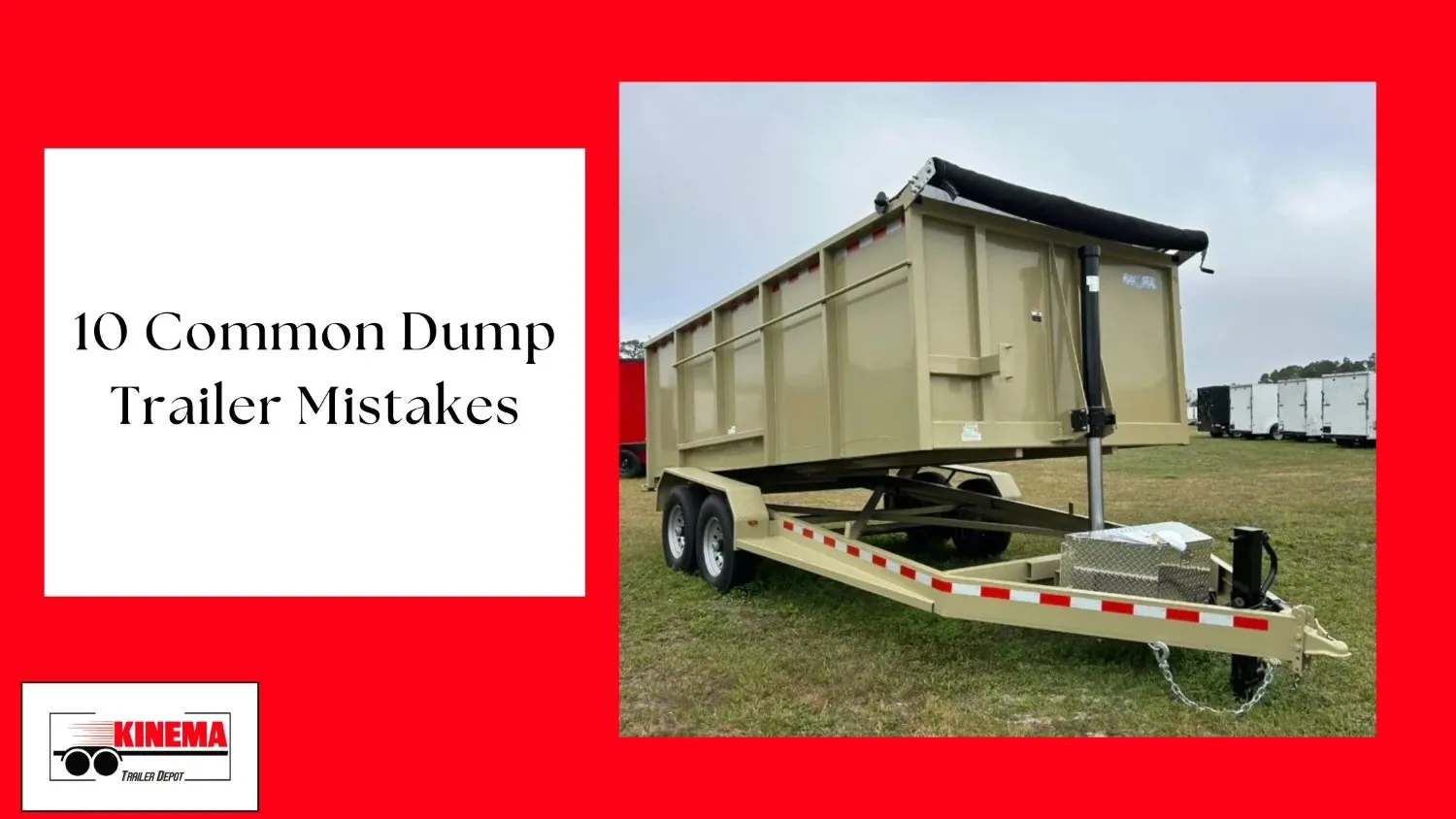
In 2023, equipment repair data showed that trailer related failures caused over 20 percent of unexpected jobsite downtime for small contractors.
Another industry survey found that improper loading and towing errors led to thousands of preventable accidents each year.
These numbers matter because many of these issues come from simple dump trailer mistakes that happen every day.
Contractors often learn the hard way that small errors with a dump trailer can lead to lost time, safety risks, and high repair bills.
Understanding dump trailer mistakes early can protect both your crew and your bottom line.
Dump trailers are powerful tools, but only when they are used correctly.
This guide explains the most common dump trailer mistakes contractors make and how to avoid them using clear, practical advice.
Mistake 1: Overloading the Dump Trailer
One of the most frequent dump trailer mistakes is overloading.
Many contractors believe that going slightly over the rated capacity will not cause damage.
Over time, this assumption leads to bent frames, worn axles, and brake failure.
Every heavy duty dump trailer has a Gross Vehicle Weight Rating listed by the manufacturer. This number includes the weight of the trailer plus the load.
Ignoring this limit puts stress on every major component.
Overloading also affects stopping distance and steering control. Even if the trailer seems to handle fine at first, repeated overloads shorten its lifespan.
Avoiding this dump trailer mistake starts with knowing the weight of the material you haul and respecting the trailer’s limits.
Mistake 2: Choosing the Wrong Trailer for the Job
Another common dump trailer mistake happens before the trailer is even used. Some contractors buy a trailer based on price or availability instead of job needs.
A landscaping crew hauling mulch does not need the same trailer as a contractor hauling concrete debris. Bed length, side height, axle rating, and hydraulic strength all matter.
Using the wrong trailer leads to inefficient loading, uneven wear, and frequent breakdowns.
The right dump trailer should match the material type, load weight, and towing vehicle. Avoiding this dump trailer mistake saves time and reduces strain on equipment.
Also Read: Types of Dump Trailers
Mistake 3: Poor Load Distribution
Improper load distribution is a quiet but dangerous Dump Trailer Mistake. When weight is placed too far forward or backward, it affects trailer balance.
Front heavy loads overload the hitch and reduce steering control. Rear heavy loads increase sway and make dumping unpredictable. Uneven side loading increases rollover risk.
The safest approach is even weight distribution over the axles. Materials should be loaded slowly and checked visually before transport.
Fixing this dump trailer mistake improves safety and dumping performance.
Mistake 4: Skipping Routine Maintenance
Skipping maintenance is one of the most expensive dump trailer mistakes contractors make. Many issues begin as small problems that are easy to fix.
Hydraulic fluid leaks, worn brake pads, loose bolts, and damaged wiring often go unnoticed. Over time, these issues turn into major failures that stop work completely.
A simple maintenance schedule helps prevent this dump trailer mistake. Weekly visual checks and regular servicing keep the trailer reliable and safe.
Mistake 5: Improper Hitching and Towing Setup
Incorrect hitching is among serious dump trailer mistakes that leads to accidents. Using the wrong ball size, failing to secure the coupler, or crossing safety chains incorrectly creates risk.
Towing with a vehicle that lacks the proper capacity also falls into this category. Even a well built trailer becomes unsafe if the tow vehicle is underpowered.
A proper hitch setup ensures stability, braking performance, and safe handling. This Dump Trailer Mistake is easy to avoid with basic checks before every trip.
Mistake 6: Dumping on Uneven or Soft Ground
Dumping on unstable ground is one of the most dangerous dump trailer mistakes. When the bed raises, the center of gravity shifts quickly.
Soft soil, slopes, and uneven surfaces increase rollover risk. Many tip over accidents happen during dumping, not towing.
Before dumping, the ground should be firm and level. If conditions are poor, repositioning the trailer is worth the extra time.
Avoiding this dump trailer mistake protects workers and equipment.
Mistake 7: Misusing the Hydraulic System
Hydraulic systems are designed for controlled use. One common dump trailer mistake is holding the control after the bed reaches full height.
This practice overheats the pump and wears seals faster. Another error is dumping without fully opening the tailgate, which strains the system and frame.
Smooth operation and short cycles extend hydraulic life. Understanding how the system works prevents this costly Dump Trailer Mistake.
Mistake 8: Failing to Secure the Load
Unsecured loads cause road hazards and legal trouble. This Dump Trailer Mistake often happens when contractors rush between jobs.
Loose debris can fall onto roadways, leading to accidents or fines. Many regions require tarps or covers for certain materials.
Proper load securement protects drivers and keeps contractors compliant. Fixing this Dump Trailer Mistake takes only a few minutes but prevents serious consequences.
Mistake 9: Ignoring Legal and Safety Requirements
Ignoring regulations is a costly Dump Trailer Mistake. Weight limits, lighting rules, brake laws, and licensing requirements vary by region.
Failing inspections can result in fines and downtime. Insurance claims may also be denied if equipment is not compliant.
Staying informed about local laws reduces risk. This Dump Trailer Mistake is avoidable with basic awareness and preparation.
Mistake 10: Buying Based on Price Alone
Choosing the cheapest option is a long term Dump Trailer Mistake. Low cost trailers often use thinner steel, weaker hydraulics, and lower grade wiring.
While upfront savings seem attractive, repair and replacement costs add up quickly. Build quality matters more than initial price.
Contractors who focus on durability and support avoid this Dump Trailer Mistake and benefit from longer service life.
Common Dump Trailer Mistakes and Their Impact
| Dump Trailer Mistake | Primary Risk | Long Term Cost |
| Overloading | Structural damage | High repair expenses |
| Poor load distribution | Loss of control | Safety incidents |
| Skipping maintenance | System failure | Downtime and repairs |
| Improper dumping surface | Tip over risk | Equipment loss |
| Ignoring regulations | Fines and delays | Legal expenses |
Conclusion
Dump trailers are essential tools, but they demand careful use. Most dump trailer mistakes come from rushing, guessing, or skipping basic checks.
By understanding these common errors, contractors can improve safety, reduce downtime, and protect their investment.
Whether you are reviewing your current setup or planning future purchases, learning from these utility dump trailer mistakes makes a real difference.
Companies like Kinema Trailer often encourage contractors to focus on proper use, maintenance, and education to get the most from their equipment.
Taking a moment to apply these lessons can help you work smarter and safer on every job.
FAQs
1. What are the most common dump trailer mistakes contractors make?
The most common dump trailer mistakes include overloading the trailer, failing to distribute weight evenly, skipping routine maintenance, and dumping on uneven ground. Many contractors also make mistakes by ignoring local regulations or using the wrong trailer for the job. These errors usually happen due to time pressure or lack of training, but they can lead to safety risks and costly repairs.
2. How often should a dump trailer be inspected to avoid problems?
A dump trailer should be visually inspected before each use to catch obvious issues such as low tire pressure, loose wiring, or hydraulic leaks. More detailed inspections should be done at least once a month. Regular inspections help prevent dump trailer mistakes by identifying small problems before they turn into major equipment failures.
3. Does overloading a dump trailer by a small amount really cause damage?
Yes, even small overloads can cause long term damage if they happen repeatedly. Overloading stresses the axles, brakes, and frame, which reduces the trailer’s lifespan and increases the risk of accidents. One of the most costly dump trailer mistakes is assuming that a little extra weight will not matter.
4. Why is proper load distribution so important when using a dump trailer?
Proper load distribution keeps the trailer stable during towing and dumping. When weight is uneven, the trailer may sway, tip, or place too much stress on the hitch. Poor load balance is one of the most overlooked dump trailer mistakes, yet it plays a major role in safety and control.
5. What problems are caused by improper use of the hydraulic system?
Improper hydraulic use can overheat the pump, wear out seals, and shorten the life of the system. Holding the control too long or cycling the system unnecessarily are common dump trailer mistakes. Smooth and controlled operation helps the hydraulics work efficiently and last longer.
About Author: