








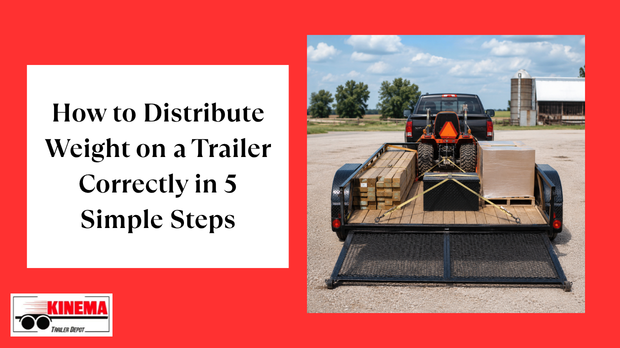
When it comes to moving loads, whether it’s a load of equipment, furniture or farm supplies, one of the most critical skills any trailer owner can have is how to properly load a trailer. Poor weight distribution will cause unsafe swaying, tire blowouts and highway crash occurrence. The good news is, with the right approach and methodology, safe weight distribution is simple and it’s easy to follow.
In this guide, we will walk you through exactly how to distribute weight on a trailer in 5 simple, proven steps that will keep you safe on the road.
Why Trailer Weight Distribution Matters?
It is crucial to know why this is a topic to look into deeply before taking each and every step.
If weight is not placed properly on a trailer, you are under unequal strain on your hitch, axles and tow vehicle. This can cause:
- Trailer sway at highway speeds
- Reduced braking efficiency
- Uneven and premature tire wear
- Loss of steering control
- Structural damage to your trailer frame
Ensuring correct trailer weight loading keeps your load safe, your vehicle safe and all other road users safe as well! It is also useful for weight control and will stop you getting fines for exceeding legal weights and liability problems.
Step 1: Check Your Trailer’s Weight Restrictions Before InLoading
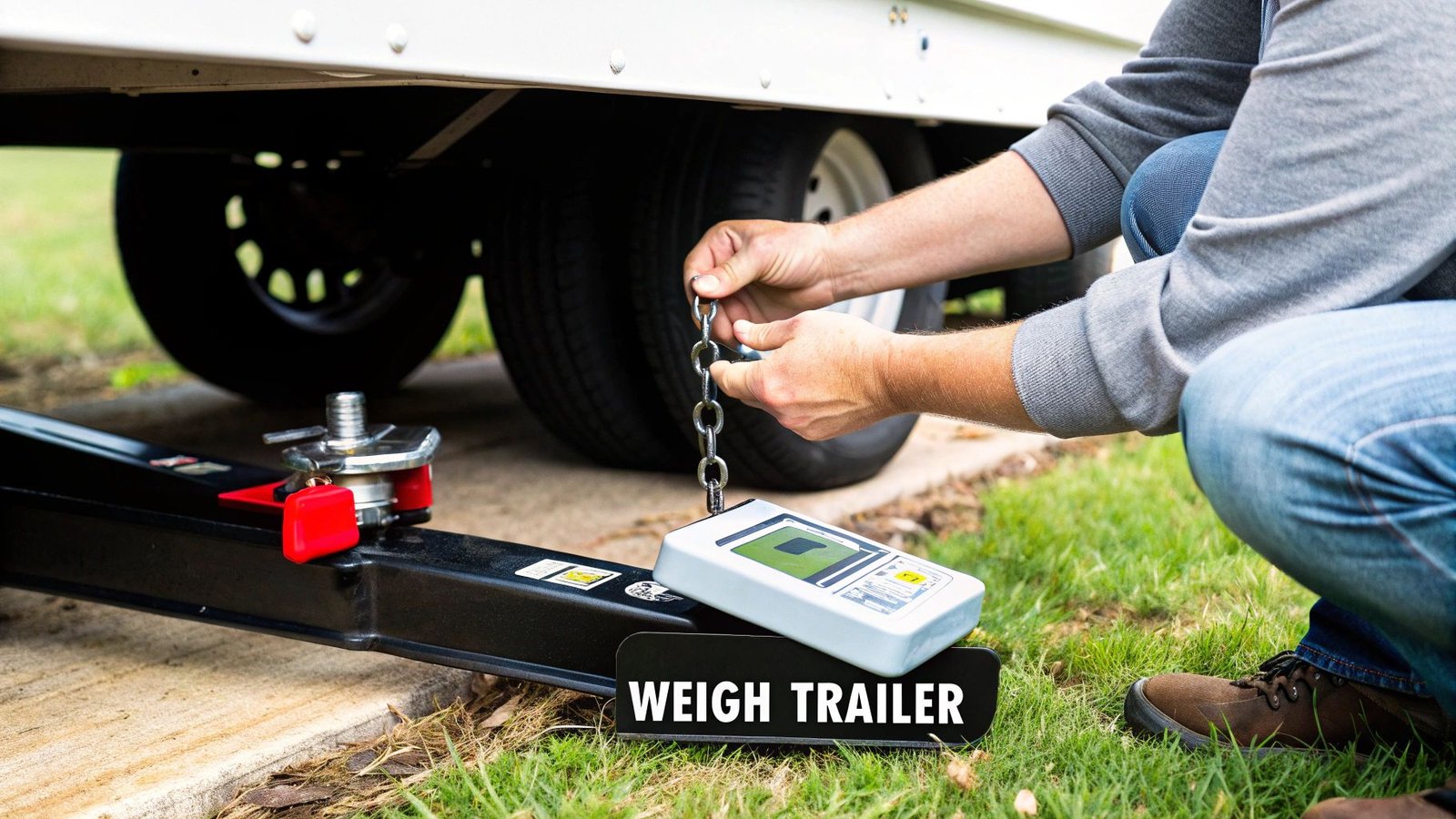
The first important decision that has to be made when learning to distribute weight on a trailer is to know the numbers that must be worked.
There are three important weight ratings for each trailer to be aware of:
- Gross Vehicle Weight Rating (GVWR): This is the maximum total weight is your trailer able to carry, the weight of the trailer itself, plus all cargo.
- Tongue Weight Capacity: The amount of down force (tongue weight) that your trailer hitch can safely support. A rule of thumb is to use between 10% and 15% “tongue weight ratio” for the loaded weight of the trailer.
- Axle Weight Rating: The maximum weight for each axle. The surpassing of this rating can be hazardous and unauthorized in majority of the states.
Be sure to read the manual or data plate on your trailer before loading anything. Once you know these limits, you have a solid upper bound to keep within, and the basis on which to build site load distribution-ready trailers.
Step 2: Put the heaviest objects over and ahead of the axle
An important part in understanding how to balance a trailer is this. Where your heaviest load is located affects the way your trailer rolls along the road.
The number one rule is to load 60% of the load in front of or over the axle.
If the load is too heavy in the back, the back end of the load is heavier than the front end. This raises the tongue up, helps to deplete hitch pressure and leads to serious trailer sway. However, if the front of the trailer is heavier, it will also compress the hitch ball and hold the load stable.
In the case of weight distribution of a utility trailer, this is particularly crucial because utility trailers are typically used to transport different material items such as ATVs, riding mowers or heavy machines.
Just a few tips for this:
- Place heavy appliances, machinery or equipment directly over or slightly in front of the truck axle of the trailer.
- Center the load on multi axle trailers.
- Always tie down heavier items before putting lighter items around them.
Step 3: “Balance the Load Side – to Side”
The ability to load a trailer correctly is not solely an issue of loading it front to back. Balancing side-to-side counts as much as well.
When one side of your trailer is much heavier than the other, it will cause the trailer to lean or tilt. This leads to uneven tire wear, can wear the frame, and gives your tow vehicle an erratic feel.
To achieve proper side-to-side balance:
- Visually divide the trailer deck down the middle
- Distribute similar weights on both the left and right sides
- If loads are uneven in shape, position them so their centers of gravity offset each other
- Check the trailer visually once loaded — it should sit level and not dip to one side
The ready-made technique of experienced haulers is to stand beside the trailer and watch the tire contact patch. If both sides are even, and the trailer sits level, existing lateral weight distribution for your items in an utility trailer is probably appropriate.
Step 4: When securing the load, ensure that it does not shift
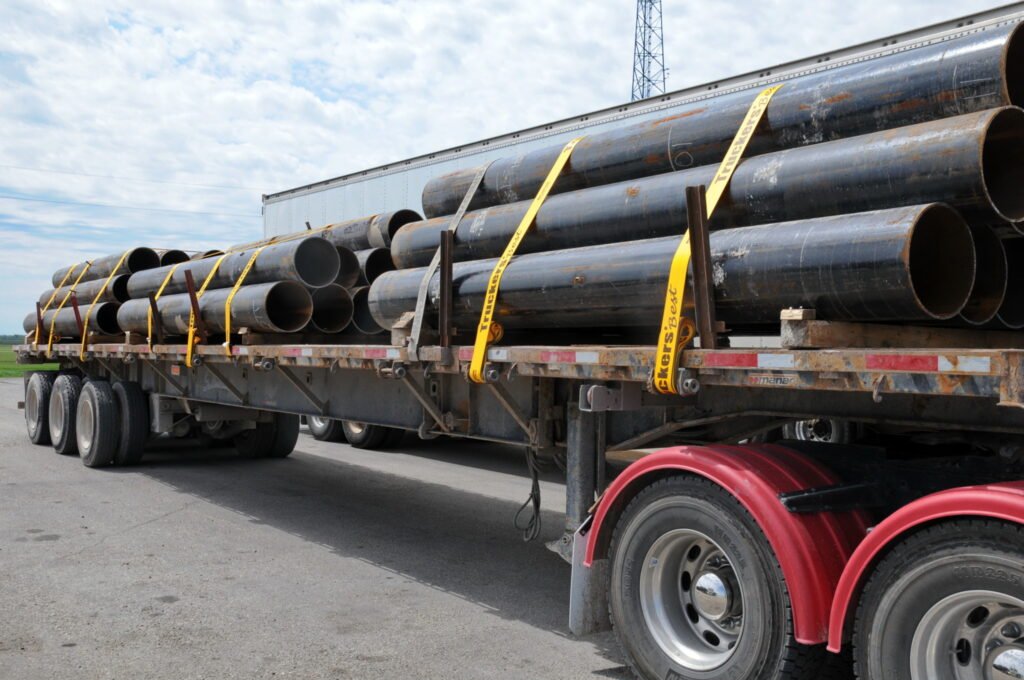
You might have a perfect load in your trailer but the trailers can shift in transit, and spoil your load plan. If the load is moved to the back or to one side on the truck it will do as much damage as if it were loaded improperly in the first place.
This is a step many people overlook when thinking about how to distribute weight on a trailer, but cargo control is a direct part of weight management.
Here are the following ways on how to secure your load:
- Heavy vehicle/accessory ratchet straps, vehicles or appliances.
- Cut holes in jars to wrap around larger and lighter objects, including rope/bungee cords
- Wheel chocks for any wheeled pieces of equipment such as ATVs and lawnmowers
- Load bars or cargo nets to prevent smaller items from moving around
- Use of non-slip mats under objects to decrease movement on slick surface on trailer decks.
On unenclosed trailers be sure no items can be a projectiles at highway speeds. Check all tie down’s twice before and twice after leaving your driveway and delivering the message.Always check tie down twice before pulling even from driveway, and once after first 10 or 15 miles of driving, Stop and Check.
Step 5: Check Tongue Weight and Adjust if Needed
After loading and securing your cargo, the final step in achieving safe trailer weight distribution is to verify your tongue weight.
Tongue weight that is too low causes sway. Tongue weight that is too high overloads your hitch and can damage your tow vehicle’s rear suspension. The target, as mentioned earlier, is 10% to 15% of the total loaded trailer weight pressing down on the hitch ball.
You can measure tongue weight using:
- A dedicated tongue weight scale
- A standard bathroom scale with a block setup
- A trailer tongue weight gauge available at most automotive stores
If the tongue weight is too low, shift some of the heavier loads to the front of the trailer towards the tongue. If it is too high, move some of the load toward the back (but not beyond the center of the load on the trailer).
If you’re towing something heavy, frequently, then it’s worth the weight of investing in a weight distribution hitch setup. These systems disperse the overload of the tongue across the other axles of the towing vehicle, for a more stable towing.
Quick Checklist: Before Every Trip
Before you hit the road, run through this fast pre-trip checklist:
- Tongue weight is within the 10%–15% range
- Heavy items are loaded in the front 60% of the trailer
- Left and right sides are balanced
- All cargo is tied down and cannot shift
- Trailer tires are inflated to the correct PSI
- Hitch ball, coupler, and safety chains are secured
- Trailer lights and brakes are fully functional
This checklist takes less than five minutes and significantly reduces your risk on the road.
Final Thoughts
Understanding how to distribute weight on a trailer correctly is not just about following rules — it is about protecting yourself, your cargo, and every driver sharing the road with you. The five steps covered in this guide cover everything from knowing your weight ratings to checking tongue weight before every trip. Whether you are a first-time tower or a seasoned hauler, applying these principles of trailer weight distribution will make every trip safer, smoother, and more efficient. Take the time to load correctly every single time — it is one habit that can genuinely save lives.
FAQs
Q1. Which is the right way to load a trailer?
Ideally packing the load 60% in the front half of the trailer and ensuring a tongue weight of 10-15% of the total weight of the trailer is suitable for safe and stable towing.
Q2. What can I do to prevent my trailer from sway out of control?
Trailer sway is usually caused by too much rear weight. To move heavy loads forward, inspect mgts, slow down, and use a sway control hitch.
Q3. What shuk you do if tongue weight is low?
If a trailer has low Tongue Weight, it can cause trailer sway leading to loss of control. Maintain a tongue weight between 10–15% of the loaded weight of the trailer.
Q4. How to balance weight on a line-axle utility trailer?
Locate heavier objects forward of the axle, distribute weight to both sides equally and ensure the tongue weight is within 10–15% of the recommended weight.
Q5. Do I need a weight distribution hitch?
A weight distribution hitch system is highly recommended if your books are over 5,000 lbs, if you often exceed the tongue weight of your tow vehicle, or if the tongue weight of the vehicle exceeds the rating of the tow vehicle.
About Author: