








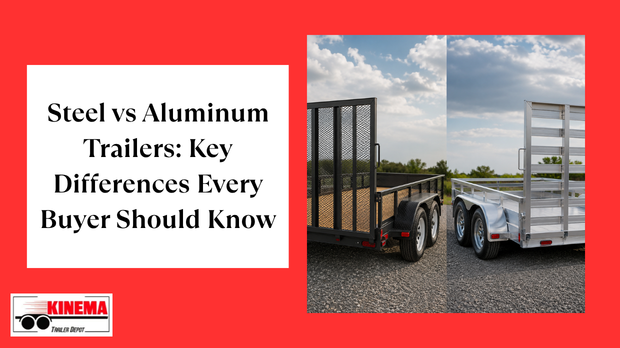
Purchasing a steel trailer or an aluminum trailer to transport livestock, motorcycles and heavy equipment has significant ramifications. Choosing the wrong type of trailer can lead to costly repairs, fuel costs or depreciation in your equipment.
For many years there has been a heated debate between steel vs aluminum trailers, each having a large following. The two camps have differing advantages based on the strength, weight, cost and longevity of each; thus providing each camp with suitable products for various customers and uses.
This guide will help you to understand the differences between steel and aluminum trailers and to make an informed and confident decision when purchasing a trailer, whether it is your first time buying a trailer or an upgrade to your current equipment.
Weight and Payload Capacity
The first thing consumers look at in the steel vs. aluminum trailer debate is raw weight. While aluminum trailer trailers are light weight — about 10 to 15% less than like steel trailer trailers. This means better fuel economy and also gives you a higher maximum payload since your tow vehicle’s max capacity does not change based on what you plan on towing.
Steel is a more solid material than other construction materials. Steel can withstand heavy loads; even steel trailers are very rigid compared to other trailers. So if you’re using your trailer to transport a lot of heavy appliances, trailers made from steel will provide you with more structural integrity than trailers constructed from lightweight materials like aluminum.
Durability and Structural Strength
If you’re hauling livestock, heavy machinery, and traveling across rough terrain, your trailer should have a thicker and sturdier frame that will also handle abuse better than a lightweight alloy.
That being said, recent improvements to aluminum alloys have resulted in much stronger aluminum trailers. For most everyday hauling requirements, such as utility work, powersports, and cargo, aluminum trailers will provide the necessary strength for adequate hauling performance.
Corrosion Resistance: A Major Difference
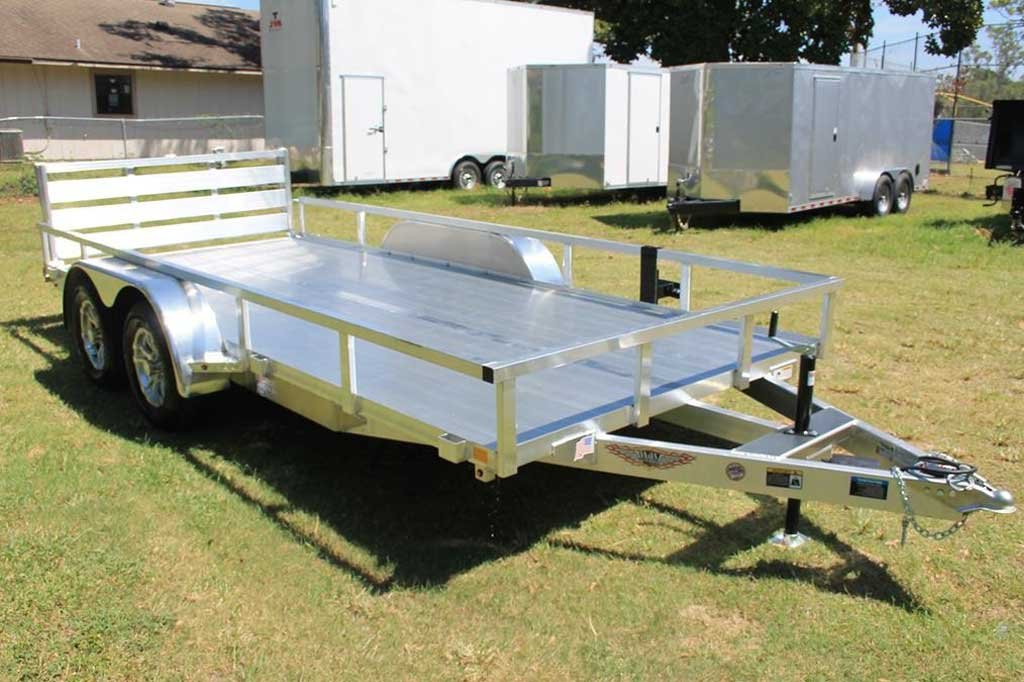
Corrosion resistance is another big difference between steel vs aluminum trailers. Aluminum trailers are naturally resistant to corrosion because they have an oxide coating on them. Steel trailers will rust as soon as the coating has been scratched, chipped, or worn due to water or moisture in the air. If you live in a humid or coastal area or use road salt frequently, then your trailer may begin to rust quickly after purchase.
Steel Trailer
- Prone to rust if coating is damaged
- Needs annual paint/coating upkeep
- Requires inspection after winters
- Galvanizing adds cost but helps
Aluminum Trailer
- Naturally rust-resistant surface
- Ideal for coastal or wet climates
- Minimal protective coating needed
- Retains appearance over decades
Steel Trailer Maintenance vs Aluminum Trailer Maintenance
A major disadvantage of steel trailer maintenance is the increased amount of work involved. Annual maintenance includes checking the condition of the welds and frame joints, painting or re-coating any areas where rust has begun to form, looking for rust on the bottom side of the deck boards, and using a protective spray if the trailer is exposed to road salt during winter months. If you do not maintain your trailer properly, you may develop structural rust within a few seasons.
When comparing aluminum trailer maintenance with steel trailer maintenance, it is easy to see that the amount of maintenance required for an aluminum trailer is much lower than for a steel trailer. All that an aluminum trailer needs for maintenance is to wash the trailer to remove road dirt, check the fasteners and rivets from time to time, and inspect for cracks in the welds as aluminum is more susceptible to cracking due to stress than steel. The reduced maintenance required for an aluminum trailer gives an owner of an aluminum trailer a significant long-term benefit when compared to steel trailers, especially owners of aluminum trailers that do not have time for regular heavy maintenance.
A PRO TIP: If you trailer in salt water or through very cold winters, you can save hundreds of dollars in maintenance to a steel trailer over five years of ownership due to the corrosion-resistant nature of aluminum.
Must Read: Top 10 Trailer Dealers in Georgia (2026 Update)
Upfront Cost and Long-Term Value
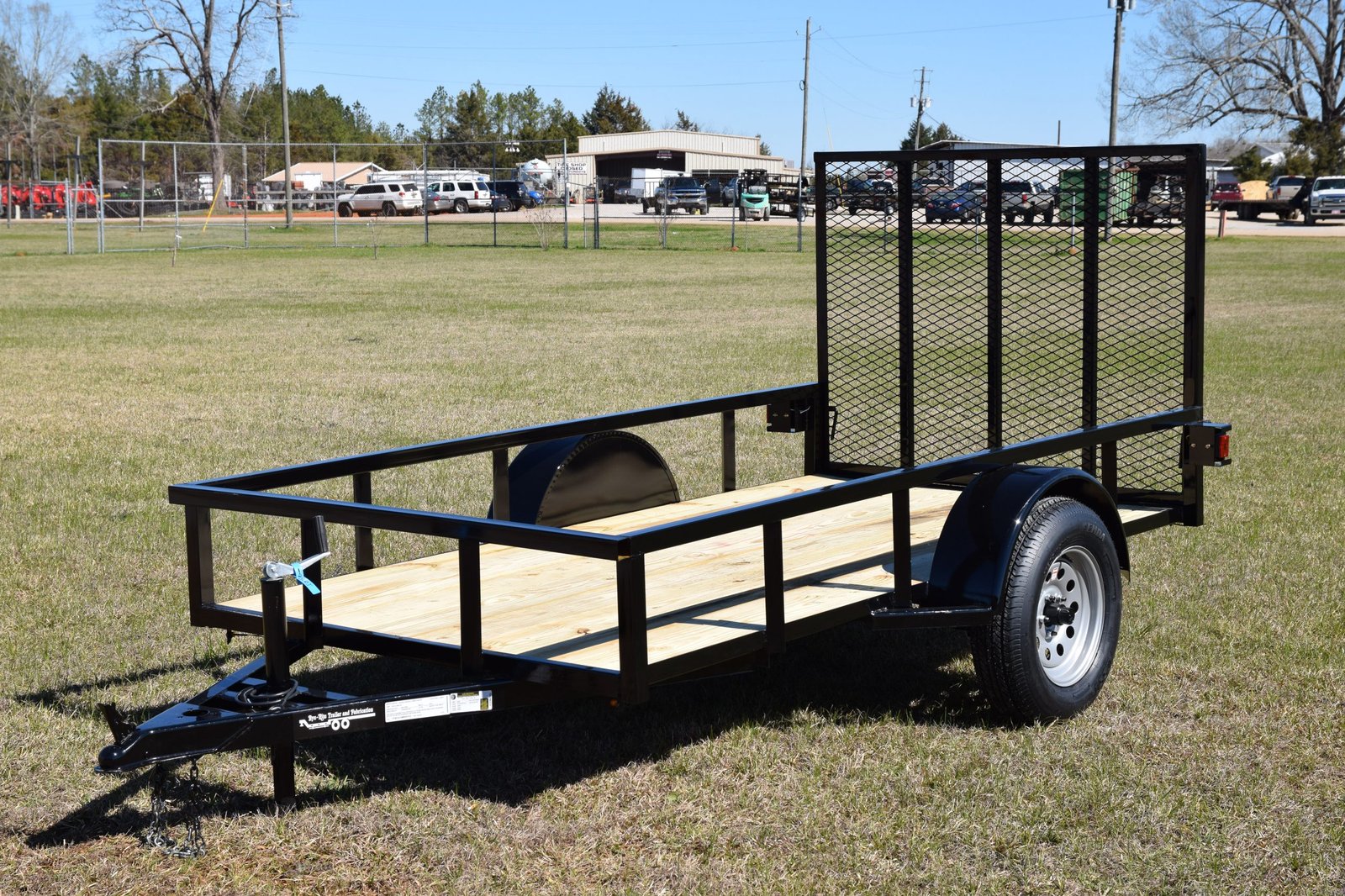
Steel trailers are cheaper to buy — sometimes by 20–30% compared to equivalent aluminum models. That makes them an attractive entry point for buyers on a tight budget or those who only need a trailer occasionally. Repairs to steel are also generally cheaper, since fabricators and welders who work with steel are widely available.
Aluminum trailers carry a higher purchase price, but they often deliver superior long-term value. They depreciate more slowly, are lighter on tires and brakes (reducing wear on your tow vehicle), and command stronger resale prices on the used market. Over a 10-year ownership window, the gap in total cost of ownership often narrows significantly — and sometimes flips in aluminum’s favor.
Steel Trailer Advantages and Aluminum Trailer Advantages side by side
Before making your final decision in the steel vs aluminum trailers debate, it helps to see the key advantages in plain terms.
Steel trailer advantages include lower upfront purchase price, superior impact and dent resistance, easier and cheaper welding repairs, and higher tongue weight ratings on many models — making steel the go-to for heavy-duty commercial applications and buyers with tighter budgets.
Aluminum trailer advantages include natural rust resistance, significantly lower weight for better fuel economy, lower long-term maintenance costs, stronger resale value, and a cleaner appearance that holds up over time — making aluminum the preferred choice for recreational use, coastal environments, and buyers focused on total ownership cost.
Which Use Case Calls for Which Trailer?
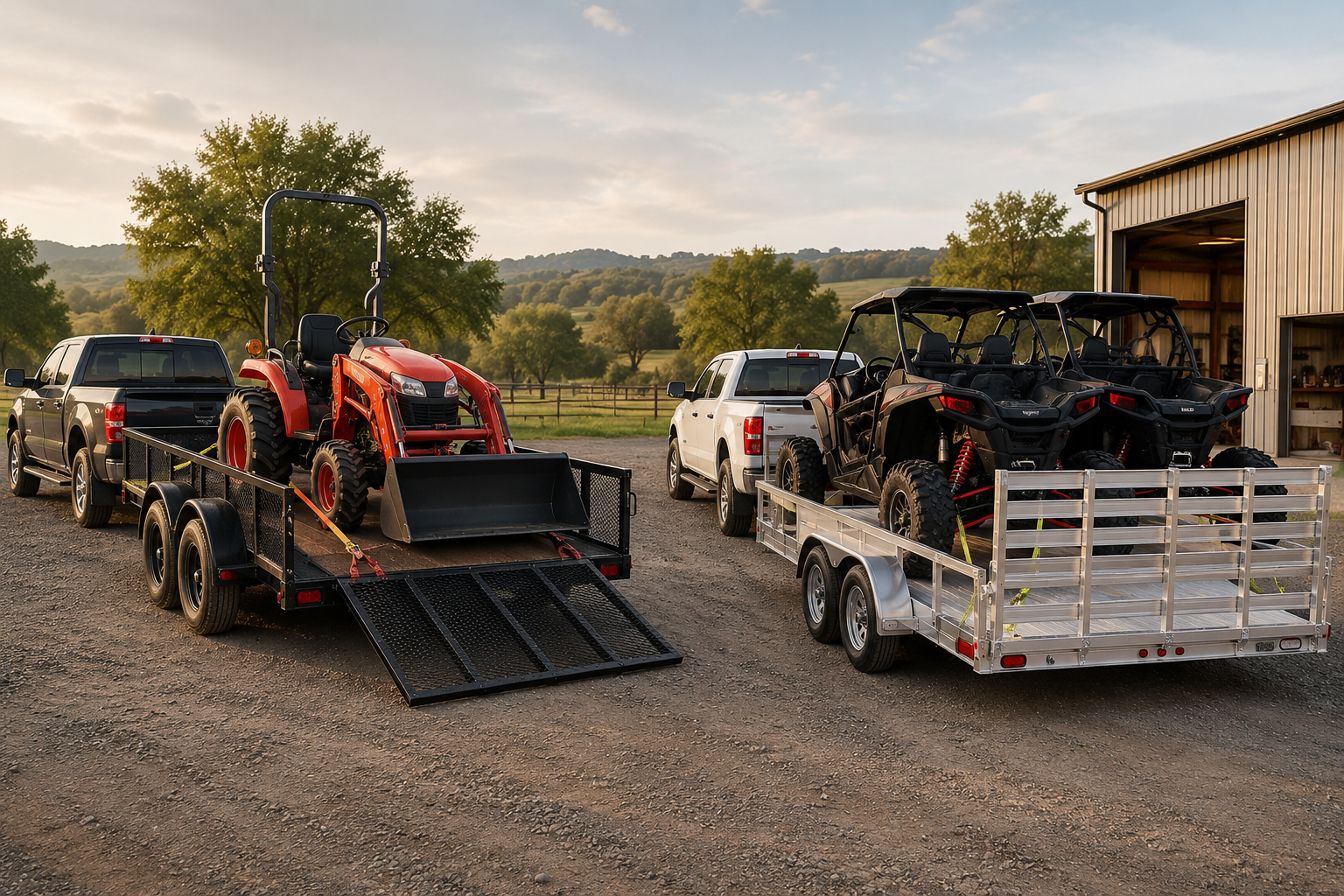
Understanding the steel vs aluminum trailers difference in real-world terms helps clarify the decision quickly. If you’re hauling construction equipment, oversized farm machinery, or working in demanding industrial settings, steel is the more dependable workhorse. If you’re transporting horses, motorcycles, boats, or ATVs — and care about fuel efficiency and longevity — aluminum is almost always the smarter pick.
Geography also matters. Coastal regions, wet climates, and areas that use road salt heavily tip the scales further toward aluminum. Dry inland regions where corrosion is less of a threat make steel a more competitive option.
Must Read: Common Flatbed Trailer Sizes and Weight Limits
Repairability and Parts Availability
Steel trailers are easier and cheaper to repair almost anywhere. A basic welder can handle most structural work, and replacement parts are universally available. Aluminum repairs require a skilled TIG welder and the right filler rod — while not impossible, they can be more expensive and harder to find in rural areas. This is a practical consideration if you haul in remote locations or cross long distances regularly.
In the broader steel vs aluminum trailers conversation, repairability often comes down to where and how you use the trailer — not just what it carries.
Final Thoughts
There is no universal winner in the steel vs aluminum trailers comparison — only the right choice for your situation. Steel offers raw strength and low initial cost, making it ideal for heavy-duty commercial work. Aluminum rewards buyers who prioritize low maintenance, fuel savings, and long-term resale value. Assess your primary use case, climate, budget, and maintenance appetite before signing on the dotted line. Either way, understanding these key differences puts you in a far stronger position to buy smart and buy once.
FAQs
Q1. Does an aluminium or steel trailer last longer?
Aluminum trailers tend to have a longer life span because they do not rust. Steel trailers can be equally durable, but they need more maintenance to stop them from rusting, particularly in humid or coastal environments.
Q2. Should I spend more to get an aluminum trailer?
For most, yes. Aluminum trailers have improved fuel efficiency, reduced maintenance, and higher resale value, so the higher initial cost is offset by savings over a 5-10 year life span.
Q3. Is it easy to weld an aluminum trailer?
Aluminum is welded using filler rods with a TIG welder, which is more complex than steel welding. Experienced welders can do it but many owner’s hire an expert for structural repair on their aluminum trailers.
Q4. Which trailer is best for livestock?
Livestock trailers are often made of aluminum. It remains cooler in hot weather, is less prone to urine rust, is easier on tow vehicles, and less maintenance over many years of use.
Q5. How do I stop my steel trailer from rusting?
Examine for paint chips and breaks in the welding each year. Repaint exposed steel right away, apply rust-preventing primer and spray undercoating before storing for winter. Use a cover to prolong life if possible.
About Author: