








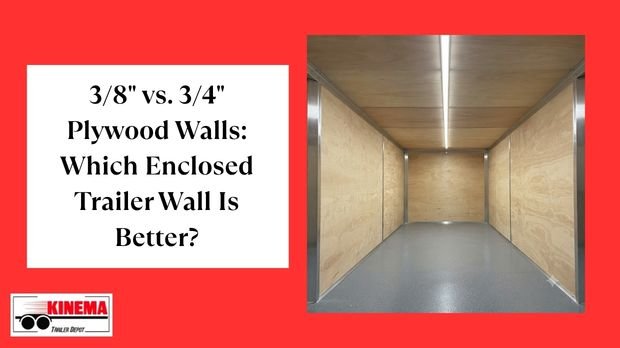
When purchasing an enclosed trailer, wall construction may be the last thing on your mind. Trailer size, axle capacity, ramp doors, brakes, and cost often take precedence. However, an enclosed trailer’s interior wall construction can affect it over time.
But plywood thickness can make a big difference, too. You have two versions available: 3/8″ and 3/4”. Each has distinct benefits and may suit one application better than the other.
So how do you decide which one is best? It depends on usage and purpose. For instance, if you want a thicker wall system for heavy-duty projects, then get the 3/4-inch plywood, which has a clear advantage.
What Does Plywood Wall Thickness Mean?
The fraction-like numbers you see indicate the estimated thickness of the panels used on the trailer’s interior walls.
3/8-inch plywood is thinner and lighter.
3/4-inch plywood gives you a much thicker, stronger wall.
Plywood is just one element in a trailer wall. The stud framing, roof structure, fastener types, trailer design, and exterior sheet metal all work together to provide the finished trailer’s strength.
But the wall plywood still matters—especially if you plan to use the inside of your panel as storage, a stockroom, or both.
3/8-Inch Plywood Walls
Since 3/8-inch plywood is lighter, it weighs less on your trailer. This can help if you’re concerned about towing, fuel efficiency, or limited payload capacity.
It works well for lighter-duty use, when you can’t expect the interior walls to withstand abuse.
For instance, if you mainly use a trailer to carry boxed items, small equipment, or tools, you might not need the extra wall material that 3/4-inch plywood provides.
But because it’s thinner, it can’t support wall-mounted items and resists impacts less effectively than a thicker panel.
3/4-Inch Plywood Walls
Significantly, 3/4-inch plywood consists of a much thicker wall surface.
This extra material can help if you’re planning to use the enclosed trailer commercially, transport gear in it, or subject it to harsher working conditions.
What’s more, they are more resilient to normal wear and tear. During loading and unloading, materials can shift. The plywood provides a thicker barrier that’s less likely to dent or scrape.
Another benefit is increased flexibility. Thicker plywood, depending on the trailer’s framing and construction, offers more material to attach shelves, hooks, brackets, cabinets, and other interior accessories. This is especially helpful for contractors, tradespeople, and mobile businesses looking to convert the box trailer into a work or equipment trailer.
3/8″ vs. 3/4″ Plywood: Key Differences
| Feature | 3/8″ Plywood Walls | 3/4″ Plywood Walls |
| Thickness | 3/8 inch | 3/4 inch |
| Weight | Lighter | Heavier |
| Material Used | Less | More |
| Wall Surface | Suitable for lighter use | More substantial |
| Impact Resistance | Moderate | Generally higher |
| Mounting Accessories | More limited | Better suited to heavier-duty mounting |
| Commercial Use | Suitable for lighter applications | Well suited to demanding applications |
| Interior Durability | Good for lighter use | Better suited to frequent heavy use |
| Trailer Weight | Helps keep weight lower | Adds more weight |
| Cost | Generally lower | Generally higher |
| Best For | Light-duty hauling and general use | Equipment, commercial, and heavy-duty applications |
Why Cynergy Trailers Are Worth Considering
If you’re looking for enclosed trailers, consider Cynergy for construction and performance.
These trailers are built for ease of use, with options to suit a range of hauling needs. Evaluate the whole trailer, not just one specification, and how the components work together to help you function.
A properly assembled enclosed trailer delivers integrity and utility in every aspect of its construction, plus a ride and transportation system built to handle the demands of your work.
And it’s also where selecting the right trailer setup makes a difference.
If you need a trailer for tools and equipment, commercial use, contracting work, or just to haul and tow around the property or site, the professionals at Kinema Trailer Depot can help you compare different Cynergy models, standards, or custom options.
Think About How You’ll Use the Trailer
Before you choose between 3/8-inch and 3/4-inch plywood walls, consider these questions:
What will you haul?
For lightweight products, the extra ¾”-inch wall of plywood may not be necessary. Heavy equipment and tools may need a heavier interior.
Will you mount equipment to the walls?
If you are considering installing shelving, cabinets, hooks, or other accessories, the wall structure matters more.
How frequently will you use the trailer?
An everyday trailer used for commercial work might warrant a heavier-duty specification than an infrequently used trailer.
How important is trailer weight?
If you really want to keep the trailer weight as low as possible, 3/8″ plywood is the way to go.
Are you buying for long-term use?
If the trailer will be part of your operation for many years, choosing construction based on the work it will handle can be a wise choice.
The Bottom Line
When should you use 3/8-inch or 3/4-inch plywood walls? Ultimately, it is how you plan to use your enclosed trailer.
3/8-inch plywood is a lighter, more cost-effective choice for general and lighter-duty applications. 3/4-inch plywood may be best for a thicker, more solid wall surface that can handle tougher commercial use, hauling equipment, and interior use.
Keep in mind: Wall thickness is just one factor. Consider the trailer’s framing, flooring quality, wheels and axles, suspension, doors, and overall build before you decide.
Questions about CYNERGY enclosed trailers with the right specs? Contact Kinema Trailer Depot in Douglas, GA, today. Our sales team can help you review available enclosed trailer options and identify the setup that best fits your work.
FAQs
Is 3/4-inch plywood stronger than 3/8-inch plywood?
The extra material in a 3/4-inch panel gives you a stiffer wall and perhaps more impact resistance and general durability. But framing and other elements also provide some trailer strength.
Will 3/4-inch plywood make an enclosed trailer heavier?
Yes. Since 3/4 inch is much thicker than 3/8 inch, adding 1/4 inch of thickness will definitely make the trailer heavier. You will need to do a bit of calculation to see the actual difference.
What thickness of plywood is best for a contractor trailer?
If you regularly haul tools and equipment on your daily work ride or want to install accessories like shelving inside, 3/4-inch plywood may be the best panel for the job.
Is it okay to mount shelves and other equipment to walls made of 3/8-inch plywood?
You can mount certain accessories to 3/8-inch plywood, but mounting depends on the equipment weight, not the plywood thickness or the trailer’s underlying framing.
Enclosed Trailers in Douglas, GA: Where Can I Purchase Cynergy?
KINEMA TRAILER DEPOT has all the enclosed trailers that fit your hauling and commercial needs. Call us to compare Cynergy trailers and see which specs you need.
About Author: