








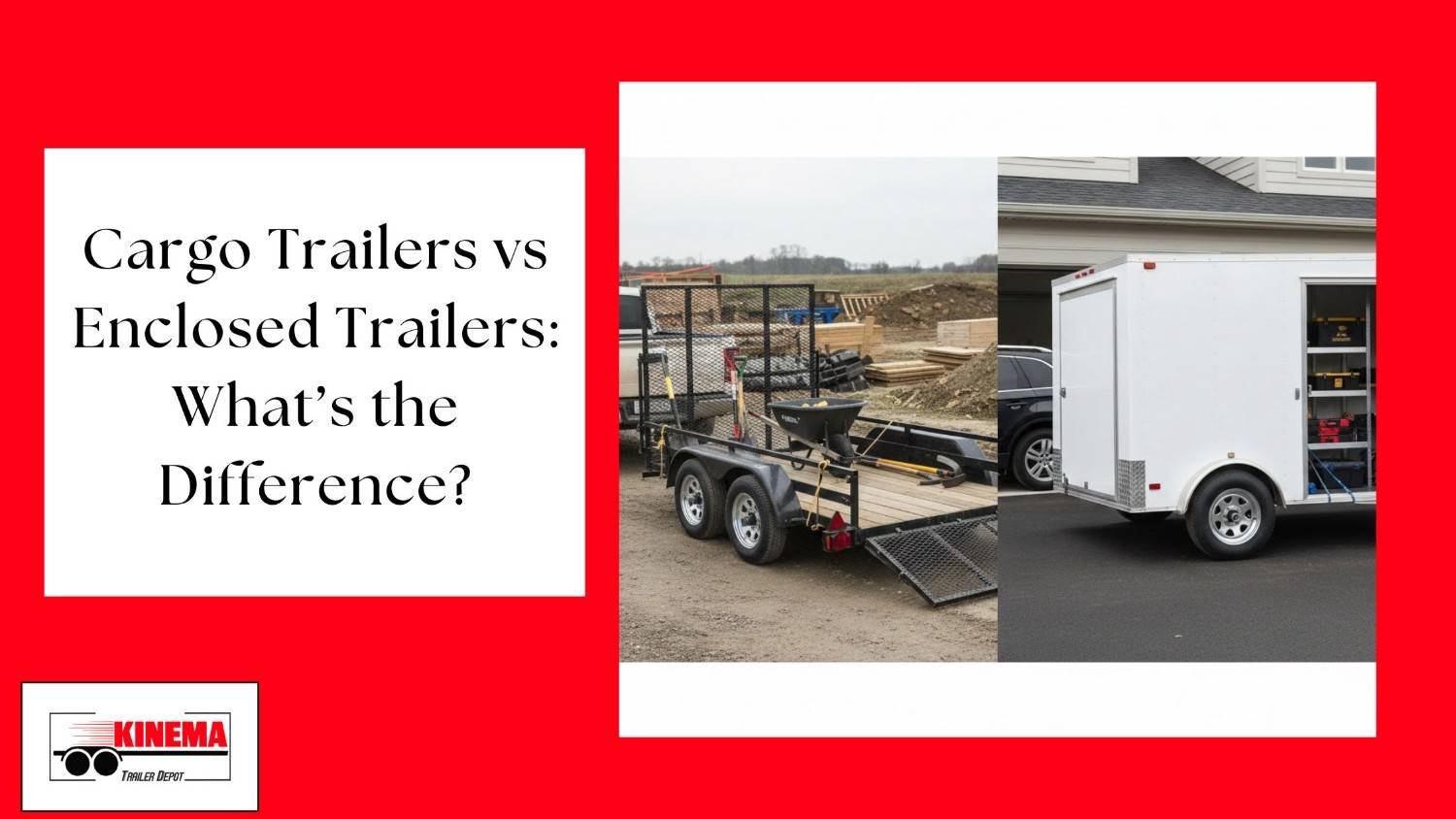
If you are in the market for a trailer for business, hauling, travel, or personal use, you have likely searched for Cargo Trailers vs Enclosed Trailers at some point.
Many buyers assume these two trailer types are identical because both are commonly used to transport equipment and goods.
However, the difference between cargo trailers and enclosed trailers can significantly impact your hauling experience, security needs, and long-term value.
Understanding these differences helps you make a more informed decision before investing in a trailer that must serve you for years.
Choosing the right trailer is about more than just size and price.
It is also about the type of cargo you haul, the distances you travel, the environments you drive through, and how much protection your items need.
In this guide, we compare Cargo Trailers vs Enclosed Trailers in detail. You will learn their features, strengths, applications, and cost factors.
By the end, you will be able to determine which option best fits your hauling requirements.
What Are Cargo Trailers?
Cargo trailers are non-motorized units that attach to a vehicle and are used to haul various types of goods.
The term “cargo trailer” is broad, so it can refer to either open or enclosed designs depending on the manufacturer or the context of use.
In most cases, buyers looking for Cargo Trailers vs Enclosed Trailers are comparing general-purpose cargo units with fully enclosed options.
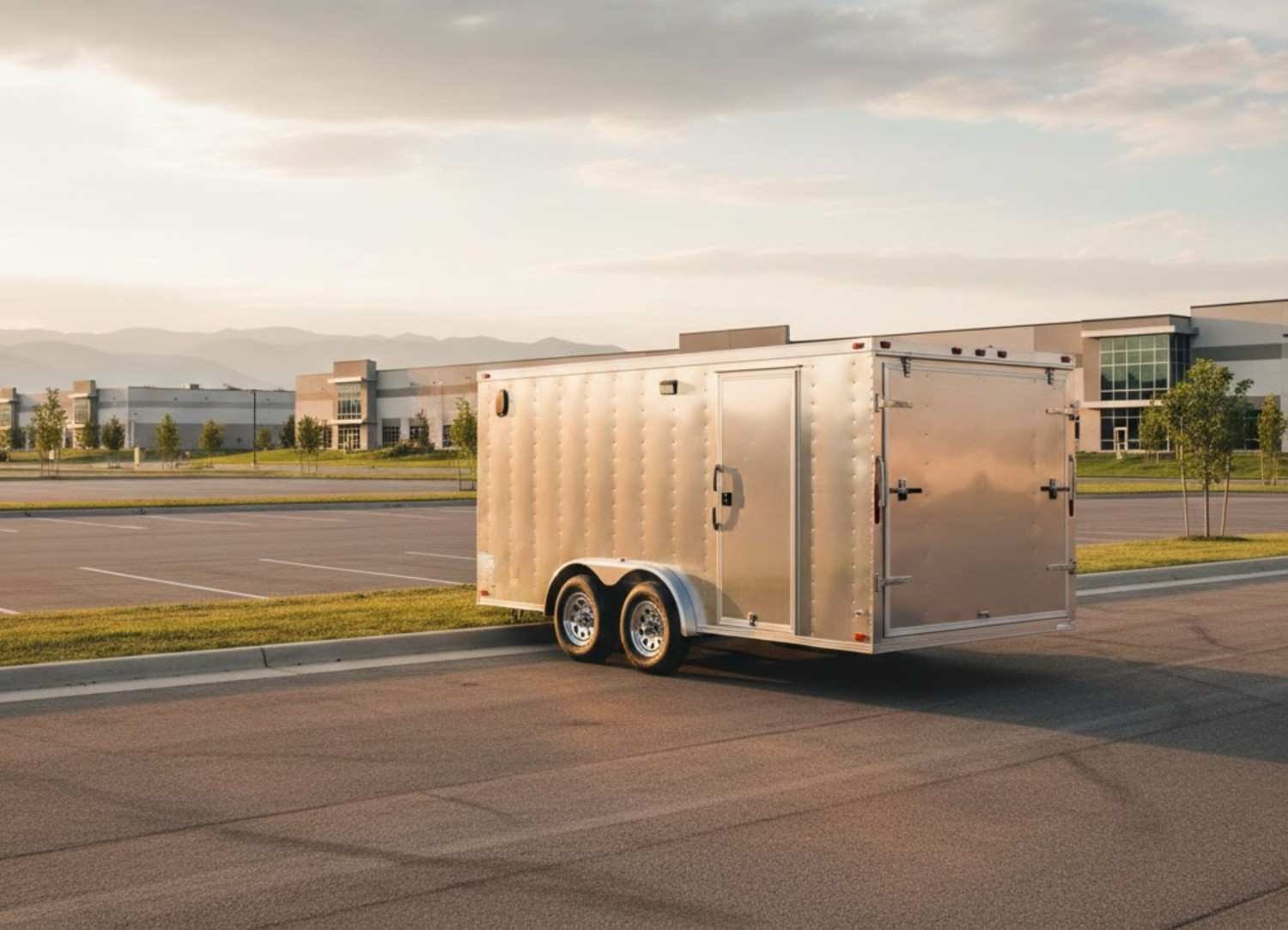
Cargo trailers are commonly used in industries such as landscaping, construction, moving services, farming, and recreation.
Their primary purpose is to provide space and capacity without unnecessary structure. Many cargo trailers are open, meaning they do not have walls or a roof.
This makes them ideal for loads that are oversized, irregularly shaped, or better suited for fast loading and unloading.
Types of Cargo Trailers
Although variations exist, the most common types are:
1. Open Cargo Trailers
Open cargo trailers are fully exposed and designed for heavy-duty items that can withstand weather or road debris. These include:
• Lawn equipment
• ATVs
• Motorcycles
• Lumber
• Construction supplies
Because they are open, they provide easy access and excellent visibility. They also weigh less than enclosed trailers, which often means better fuel efficiency.
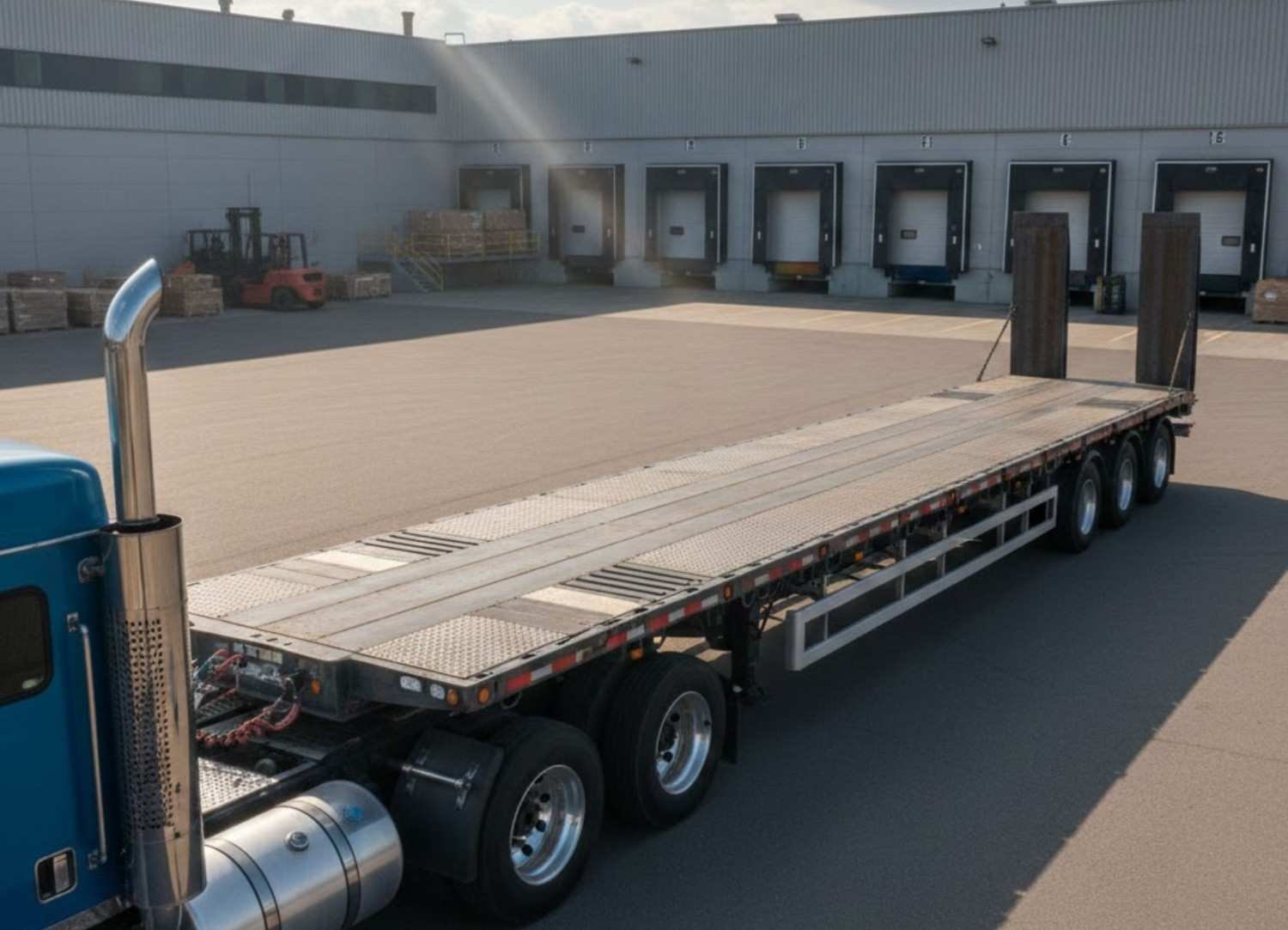
2. Flatbed Cargo Trailers
These have a flat platform with no side walls, making them ideal for large equipment and bulky machinery. Strapping systems are used to secure the load.
3. Utility Cargo Trailers
Utility cargo trailers have short side rails and are commonly used for gardening tools, appliances, or household items. They are easier to maneuver and affordable.
Advantages of Cargo Trailers
When discussing Cargo Trailers vs Enclosed Trailers, it helps to understand the key advantages of cargo units:
1. Affordability
Cargo trailers generally cost less because they use fewer materials and offer simpler construction.
2. Lighter Weight
Less weight means better fuel economy and easier towing, especially for smaller vehicles.
3. Easy Loading
The open structure allows loading from multiple directions without obstruction.
4. Large Load Flexibility
Bulky, tall, or unusually shaped items fit easily without worrying about height limits.
Disadvantages of Cargo Trailers
Despite their benefits, cargo trailers are not for everyone.
1. Lack of Weather Protection
Everything inside is exposed to rain, sun, and dirt.
2. Lower Security
With no walls or doors, items can be stolen or tampered with.
3. Less Professional Appearance
For businesses that care about branding, open cargo trailers may appear less polished.
What Are Enclosed Trailers?
Now, let us explore the other side of the Cargo Trailers vs Enclosed Trailers comparison. Enclosed trailers are fully covered with side walls, a roof, and a rear door or ramp.
They create a protected environment for valuable or sensitive cargo.
Enclosed trailers are popular across industries such as construction, mobile businesses, moving companies, motorsports, and event management.
Many buyers prefer enclosed trailers because they provide exceptional protection along with a polished look that supports business branding.
Types of Enclosed Trailers
1. Single Axle Enclosed Trailers
Best for smaller loads, lightweight equipment, or local hauls. These are easy to tow and maintain.
2. Tandem Axle Enclosed Trailers
Designed for heavier loads and long-distance travel. Tandem axles offer better stability and weight distribution.
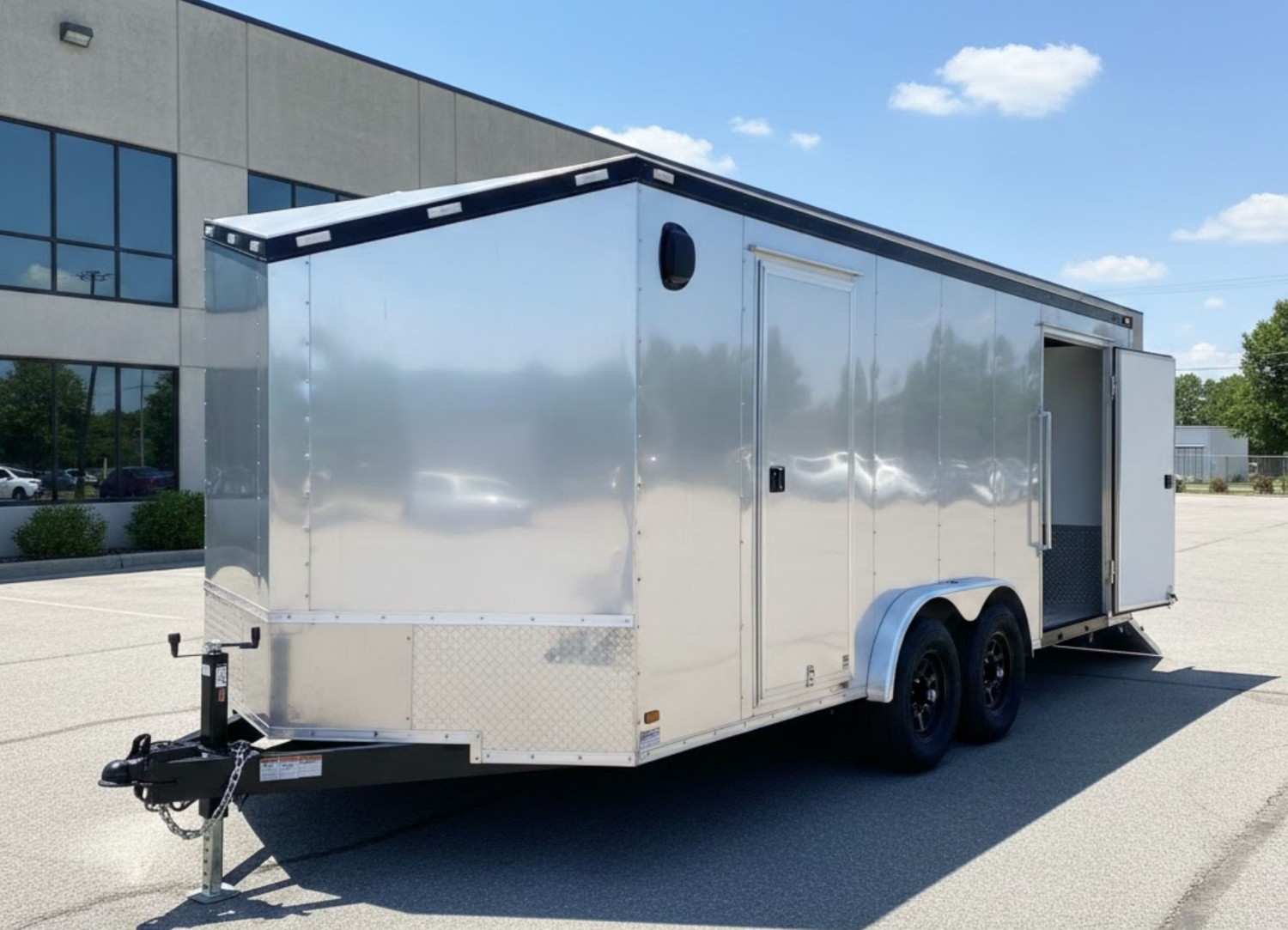
3. Specialty Enclosed Trailers
These include options tailored for:
• Mobile workshops
• Motorcycle hauling
• Car hauling
• Food service
• Mobile offices
Advantages of Enclosed Trailers
When comparing Cargo Trailers vs Enclosed Trailers, enclosed units shine in certain areas:
1. Superior Protection
Your goods stay shielded from sun, wind, rain, and road debris.
2. High Security
Lockable doors prevent theft and unauthorized access.
3. Professional Image
Insulated enclosed trailers offer clean surfaces that can display logos, graphics, and business information.
4. Organizational Options
Interior shelving, wall racks, E-track systems, and lighting help keep equipment organized.
Disadvantages of Enclosed Trailers
Despite their advantages, enclosed trailers are not always the best choice.
1. Higher Cost
The full enclosure requires more materials and construction time.
2. More Weight
Extra weight means higher fuel consumption and the need for a stronger tow vehicle.
3. Reduced Visibility
Reversing and maneuvering can be slightly more difficult than with open cargo trailers.
Cargo Trailers vs Enclosed Trailers: Key Differences
To fully understand the comparison of Cargo Trailers vs Enclosed Trailers, let us break down the primary differences across essential categories.
| Factor | Cargo Trailers | Enclosed Trailers |
| Protection Level | Offer minimal protection and remain open to the weather and debris | Provide full protection from weather, theft, and external elements |
| Cost and Budget | More budget-friendly and affordable upfront | Higher initial cost but offers better long-term value for sensitive cargo |
| Weight and Towing Requirements | Lighter and easier to tow with smaller vehicles | Heavier due to the enclosure and requires stronger tow vehicles |
| Use Cases | Ideal for landscaping, farming, construction, and recreational hauling | Best for business equipment, mobile workshops, valuable tools, and sensitive goods |
| Appearance and Branding | Simple and rugged look with minimal branding potential | Professional appearance with full custom branding options like wraps or decals |
| Security | Limited theft protection | Lockable and highly secure for valuable items |
Which One Should You Choose?
When deciding between Cargo Trailers vs Enclosed Trailers, consider the following questions.
1. What Are You Hauling?
If your items can handle weather exposure or are too large for an enclosed space, cargo trailers make sense. If you are transporting valuable tools or sensitive equipment, an enclosed vehicle is the safer option.
2. How Often Will You Use It?
Frequent long-distance haulers benefit from enclosed trailers because they reduce wear and tear on the cargo.
3. What Is Your Budget?
If affordability is a priority, cargo trailers are more cost-effective. However, enclosed trailers offer more features and long-term security.
4. Do You Need Branding?
Businesses that want a polished professional appearance often prefer enclosed trailers for signage.
5. What Tow Vehicle Do You Have?
If your vehicle has limited towing capacity, a lighter cargo trailer may be more suitable.
Real World Scenarios
Scenario 1: Landscapers and Gardeners
Most landscapers choose open cargo trailers because they need fast access and haul outdoor equipment. The open design reduces loading time and handles dirt and debris easily.
Scenario 2: Mobile Contractors
Electricians, plumbers, and repair professionals prefer enclosed trailers because they act as mobile storage units. Tool protection and organization are essential.
Scenario 3: Recreational Hauling
ATVs, bikes, and small vehicles can be hauled using either option. Cargo trailers are great for casual hauling, while enclosed trailers provide protection for expensive toys.
Scenario 4: Movers and Delivery Services
Enclosed trailers are the best choice because furniture, appliances, and personal items must stay clean and dry.
Maintenance Differences
Even the maintenance needs differ when comparing Cargo Trailers vs Enclosed Trailers.
| Category | Cargo Trailer Maintenance | Enclosed Trailer Maintenance |
| Structural Checks | Check side rails and flooring for damage | Inspect the roof and sealants for cracks or leaks |
| Hardware & Components | Inspect tie-down points frequently | Check door hinges, locks, and latches for security |
| Surface Care | Treat metal surfaces to prevent rust | Maintain interior walls, shelves, and coated surfaces |
| Interior Needs | Not applicable (open design) | Maintain interior lighting, wiring, and storage systems |
| Airflow & Moisture Control | Not required due to open layout | Monitor ventilation systems to prevent moisture buildup |
| General Upkeep | Clean debris from the bed and rails | Clean and organize the interior regularly |
Conclusion
In the comparison of Cargo Trailers vs Enclosed Trailers, the right choice depends on your budget, hauling needs, and security preferences.
Cargo trailers are ideal for open, heavy-duty, and flexible hauling, while enclosed trailers offer the highest level of protection and professionalism.
Whether you are transporting equipment, running a business, or planning long-distance travel, the right trailer ensures safety and efficiency.
For high-quality options and expert guidance, consider exploring trailers from Kinema Trailer Depot, where you can find reliable models tailored to your specific needs.
FAQs
1. Are cargo trailers and enclosed trailers the same thing?
No. Cargo trailers may include open and general-purpose trailers, while enclosed trailers are fully covered units that offer weather and theft protection.
2. Which is better for long-distance travel?
Enclosed trailers perform better on long routes because they protect items from wind, rain, and debris
3. Does an enclosed trailer require a stronger tow vehicle?
Yes, enclosed trailers are heavier and need more towing power than most cargo trailers.
4. Which option has better resale value?
Enclosed trailers usually maintain higher resale value because of their durability and protective design.
5. Can I convert a cargo trailer into an enclosed trailer?
It is possible, but rarely cost-effective. Buying an enclosed trailer is better than modifying an open cargo trailer.
About Author:

Leave a Reply