








If you’ve ever hauled equipment, building materials, ATVs, or machinery, you already know one thing: flatbed trailers are only as effective as their size and weight rating.
Choose a trailer that’s too small and you risk unsafe overloading; choose one that’s too large and you end up spending more than necessary.
This guide breaks everything down in simple, practical terms, using real-world trailer dimensions; ranging from compact 5×8 and 6×10 models to larger 7×16 and 7×20 units.
Flatbed Trailer Sizes follow the same sizing logic used for enclosed, utility, and cargo trailers, so the principles apply across the board.
By the end of these two parts, you’ll understand which trailer size is best suited for different jobs, how much weight each type can safely handle, and how to avoid the most common hauling mistakes.
What Is a Flatbed Trailer?
A flatbed trailer is an open, roofless, and wall-less platform designed to haul a wide variety of cargo such as equipment, farm machinery, lumber, palletized goods, vehicles, steel beams, and oversized loads.
Its open design makes loading and unloading simple, allowing cranes, forklifts, and even side-loading methods to operate without restriction.
Flatbed trailers come in many sizes, from small bumper-pull options like 5×8, 6×10, 7×14, and 7×20, to large commercial semi-level flatbeds ranging from 40 to 53 feet in length.
Common Flatbed Trailer Sizes
Even though your listed units are mostly enclosed and utility, the dimensions and weight ratings line up with flatbed standards, so let’s break down the common categories.
A) Small Flatbed Trailer Sizes (5×8, 6×10, 6×12)
These mirror your small cargo units like:
- 2024 Cynergy Cargo 5x8SA – $3,000–$3,400
- 2024 Cynergy Cargo 6x10SA – $4,450
- 2024 Cynergy Cargo 6x12SA – $3,950–$4,850
Flatbed equivalents: 5×8, 6×10, 6×12 utility/flat
Typical Specs
- GVWR: 2,990–3,500 lbs
- Payload: ~1,500–2,200 lbs
- Single axle
Best For:
- Lawn mowers
- ATVs
- Appliances
- Small construction tools
- Light landscaping supplies
These are perfect for homeowners and hobby users.
B) Mid-Size Flatbed Trailer Sizes(7×12, 7×14, 7×16)
Equivalent examples from your inventory:
- 2023 Cynergy Cargo 7x12TA – $5,460–$7,700
- 2023 Cynergy Cargo 7x14TA – $12,100
- 2023 Cynergy Cargo 7x16TA – $7,200–$20,300
Flatbed counterparts in these dimensions are some of the most popular work trailers.
Typical Specs
- GVWR: 7,000–14,000 lbs (tandem axle)
- Payload: 4,000–10,000 lbs
Best For:
- UTVs
- Motorcycles
- Lumber
- Roofing bundles
- Heavy equipment
- Construction materials
If someone needs a “workhorse” trailer, these mid-sized flatbeds are usually the sweet spot.
C) Large Flatbed Trailer Sizes (7×20, 8.5×28, 8.5×32)
Your inventory includes:
- 2023 Cynergy Cargo 7x20TA – $4,350
- 2025 Cynergy Cargo 7x14TA Utility – $4,000
- 2023 Southern Utility 7x20TA Hybrid Tilt – $9,000
- 2023 Cynergy Cargo 8.5x28TA – $10,400
- 2023 Cynergy Cargo 8.5x32TA – $11,200
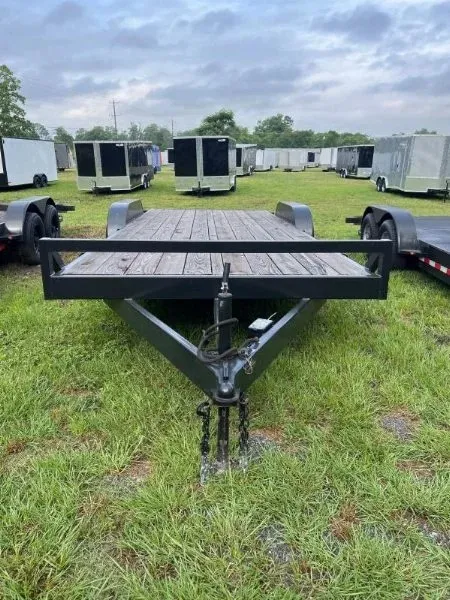
Large flatbed equivalents are ideal for serious hauling.
Typical Specs
- GVWR: 10,000–14,000+ lbs
- Payload: 7,000–12,000 lbs
- Tandem or triple axle
Best For:
- Tractors
- Skid-steers
- Job-site equipment
- Long beams or panels
- Commercial deliveries
- Multiple ATVs/UTVs
These sizes are popular among contractors, farmers, and equipment movers.
Standard Weight Limits for Flatbed Trailers
Whether small or large, every flatbed has three essential numbers:
A) GVWR (Maximum Combined Weight Allowed)
Trailer + Cargo must not exceed this.
B) Empty/Tare Weight
The trailer itself.
C) Payload Capacity
Payload = GVWR – Empty Weight
Example using a typical tandem-axle 7×16:
- GVWR: 10,000 lbs
- Empty: 3,000 lbs
- Payload: 7,000 lbs
Same logic applies whether you’re buying a 6×10 at $4,450 or a 7×20 hybrid tilt at $9,000.
Why Choosing the Right Flatbed Trailer Sizes Matters?
When customers buy flatbed trailer in the wrong sizes class, they usually do one of these:
1. Overload the trailer
This can lead to axle damage, blown tires, or law enforcement fines.
2. Under-buy and regret it
Most buyers say:
“I should’ve just bought the next size up.”
3. Forget about future equipment
Your needs grow faster than your trailer does.
This is why your mid-sized and large sizes- like 7×14, 7×16, 7×20– sell so consistently. They offer room to grow.
Choosing the Right Flatbed Trailer Sizes for Your Job
So now that you understand the standard lengths and weight limits flatbed trailers come in, the real question is this:
Which flatbed trailer size do you actually need?
Choosing the wrong one can mean wasted fuel, rejected loads, overweight violations, or simply not having enough deck space.
Let’s break this down in a simple, practical way.
1. Match Trailer Length to Your Cargo Type
Every type of cargo behaves differently on the road. Long structural pieces need more deck space. Heavy machinery needs more strength. Palletized freight needs consistency.
Here are common pairings:
a. Best Cargo for 48-Foot Trailers
A 48-ft flatbed is the industry standard for a reason – it fits the widest range of loads:
- Lumber bundles
- Palletized freight
- Machinery
- Roofing materials
- Building supplies
- Pipes and steel rods
If you haul mixed loads often, a 48-ft gives the flexibility you want without the length restrictions of a 53-ft.
b. Best Cargo for 53-Foot Trailers
Choose a 53-ft if the length matters more than maneuverability:
- Large trusses
- Oversized coils
- Long beams
- Wind turbine components (smaller ones)
- Multiple large pallets
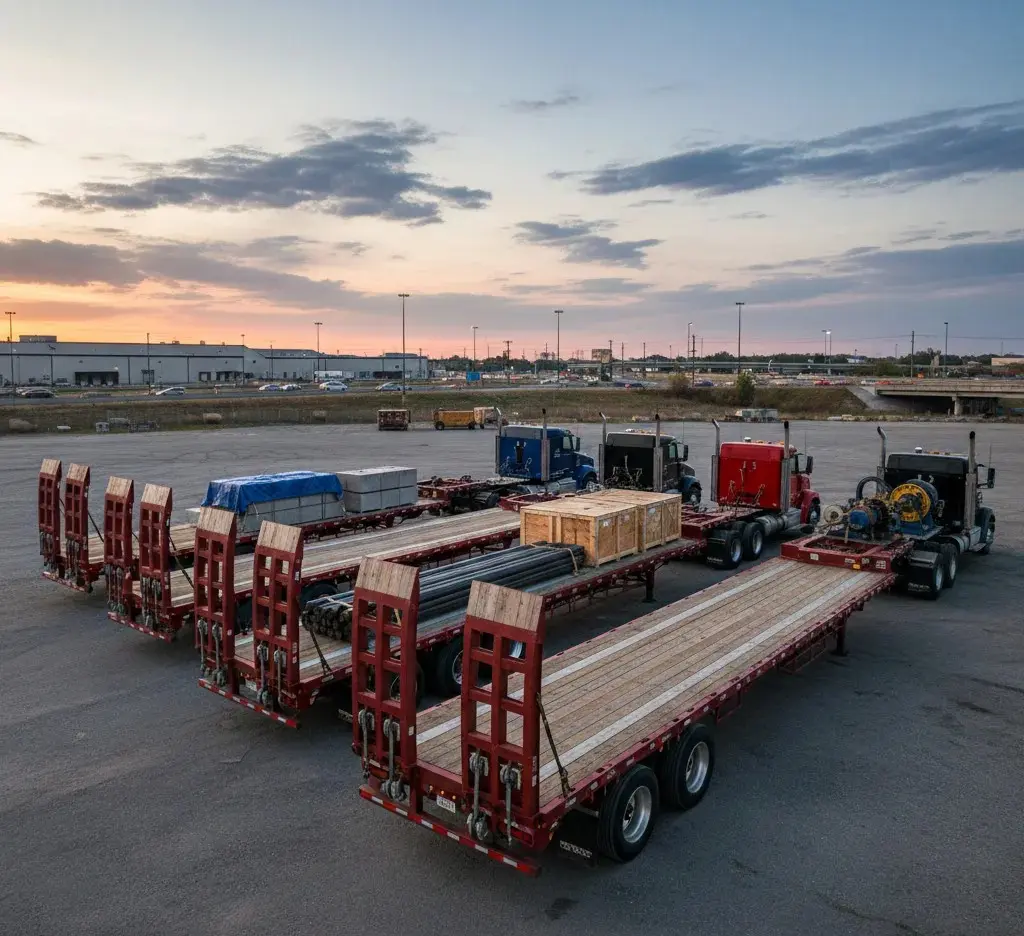
These trailers shine in construction, infrastructure, and industrial projects, where bulk and length dominate.
c. Best Cargo for Short Flatbeds (20–24 ft)
These are ideal for:
- Local construction supply drops
- Landscaping businesses
- Smaller machinery
- Farm equipment
- Deliveries inside tighter urban zones
Shorter decks also pair well with hotshot trucks.
2. Know How Weight Distribution Works
Here’s where many beginners get into trouble.
Even if your flatbed trailer’s total capacity is 48,000 lbs, the load cannot just be placed anywhere. It must be distributed across:
- The drive axles
- The trailer tandems
- The kingpin
- The deck center
When weight isn’t balanced:
- Axle groups get overloaded
- Steering becomes unstable
- DOT can issue costly fines
A good rule of thumb:
The heavier the cargo, the closer it should sit to the trailer’s middle for balanced axles.
This is why equipment like excavators, loaders, and forklifts usually get chained down in the center zone.
3. Think About Your Operating Region
Surprisingly, the trailer you pick also depends on where you’re driving.
Urban Areas
- Shorter flatbeds (20–40 ft)
- Easier parking
- Lighter loads
- Better maneuverability
Long Highway Routes
- 48-ft and 53-ft
- Better fuel efficiency per load
- Higher earning potential per mile
Mountain or Rural Routes
- Mid-length trailers
- Axles placed for stability
- Weight kept lower and centered
Matching the trailer to your environment saves fuel, reduces tire wear, and helps avoid tricky turns or steep-grade problems.
4. Consider Whether You Need a Standard, Step Deck, or Lowboy
A “flatbed” can mean several different trailer styles.
And the choice impacts both your legal height and your load height.
Standard Flatbed
- Deck height: 58–62 inches
- Best for: General freight
Step Deck
- Upper + lower deck
- Lower deck allows taller loads without permits
- Best for machinery, large crates, tall containers
Lowboy
- Very low deck height
- Extreme height clearance
- Best for: Heavy equipment
If your cargo frequently exceeds 8’6″, a step deck or lowboy can help avoid oversize permits.
5. Understand Local Maximum Weight Laws
Most U.S. states follow federal guidelines, but weight laws do vary.
Some states are stricter about:
- Tandem axle weight
- Tridem weight
- Bridge formula spacing
- Kingpin-to-rear-axle distance
For example:
- California restricts 53-ft trailers unless the wheelbase meets specific ratios.
- Texas and Florida offer more leniency on axle configurations.
Before choosing a fleet size, carriers often check state-by-state rules based on where they’ll operate most.
6. Think Long-Term: Will This Trailer Handle Growth?
Let’s say today you mostly haul lumber. But next year, you might add steel loads, machinery, and oversized commercial freight.
So the right question is:
Will your flatbed still work for your business 2–3 years from now?
Most contractors, construction companies, and logistics startups choose:
- 48-ft standard flatbed for versatile cargo
- 48-ft step deck if machinery is common
- 53-ft flatbed if dealing with consistently long components
Buying smart upfront saves you from upgrading too soon.
7. Learn the Weight of Your Common Loads
Here are typical weights to help you match deck capacity:
| Cargo Type | Typical Weight |
| Palletized freight | 1,500–2,200 lbs per pallet |
| Lumber units | 3,000–5,000 lbs |
| Steel coils | 10,000–45,000 lbs |
| Machinery | 5,000–55,000 lbs |
| Landscaping equipment | 1,000–10,000 lbs |
| Pipes or rods | 10,000–30,000 lbs |
This quick reference helps avoid overload risks.
8. When in Doubt, Choose Strength Over Length
Many beginners worry about whether they need 48 or 53 feet, but the more important factor often is:
How much weight can the trailer safely handle?
A stronger deck and axles can handle:
- Heavy equipment
- Multiple loads per day
- Cross-country hauls
- Rough terrain
Upgrading to higher-duty axles often costs less than buying a whole new trailer later.
9. Safety Considerations When Choosing a Flatbed
Flatbeds require higher safety awareness than enclosed trailers because everything is exposed.
Choose a trailer that fits:
- Your tie-down points
- Your chain requirements
- Your tarping needs
- Your height clearance
- Your forklift loading angle
A slightly longer trailer with poor load-securement options is worse than a shorter one with excellent anchor placements.
10. When a Flatbed Isn’t the Right Choice
Flatbed trailers are incredibly versatile, but not ideal for every situation.
You might need a different trailer type if you have:
- Fragile cargo
- High-theft-risk cargo
- Weather-sensitive materials
- Small parcel deliveries
- High-volume small items
In these cases, an enclosed trailer, dry van, or box truck may be more suitable.
Final Thoughts
Understanding flatbed trailer sizes and weight limits isn’t just about memorizing figures; it’s about knowing what those numbers empower you to accomplish.
Choosing the right trailer can save you money, enhance safety, reduce the risk of fines, boost your hauling capacity, and ultimately support steady, confident growth for your business.
With Kinema Trailers, selecting the ideal flatbed becomes easier, ensuring you get the performance and reliability you need for every job.
FAQs
1. What are the most common flatbed trailer sizes?
Common flatbed trailer sizes range from small units like 5×8, 6×10, and 6×12 for light-duty hauling, to mid-sized options such as 7×12, 7×14, and 7×16, and larger commercial sizes like 7×20, 8.5×28, 8.5×32, 48-ft, and 53-ft flatbeds.
2. How do I choose the right flatbed trailer size for my cargo?
Match the trailer length and weight rating to your typical loads. Longer loads (like beams or trusses) need more deck space, while heavy equipment requires stronger axles and proper weight distribution. Your operating region, height limits, and tie-down needs should also guide your choice.
3. What factors determine a flatbed trailer’s weight capacity?
A flatbed trailer’s weight capacity is determined by its GVWR (Gross Vehicle Weight Rating), the empty/tare weight, and the resulting payload capacity. Payload = GVWR – Empty Weight. Axle configuration and deck strength also play key roles.
4. Why is weight distribution important on a flatbed trailer?
Improper weight distribution can overload axles, reduce steering control, or lead to DOT fines. Heavy cargo should be centered on the deck to maintain balance across the drive axles, trailer tandems, and kingpin.
5. When should I choose a step deck or lowboy instead of a standard flatbed?
Choose a step deck or lowboy if your cargo frequently exceeds the legal height limit of 8’6″. Step decks allow taller loads without permits, while lowboys are ideal for extremely heavy or tall equipment. These alternatives help avoid oversize violations and improve loading stability.
About Author:

Leave a Reply