








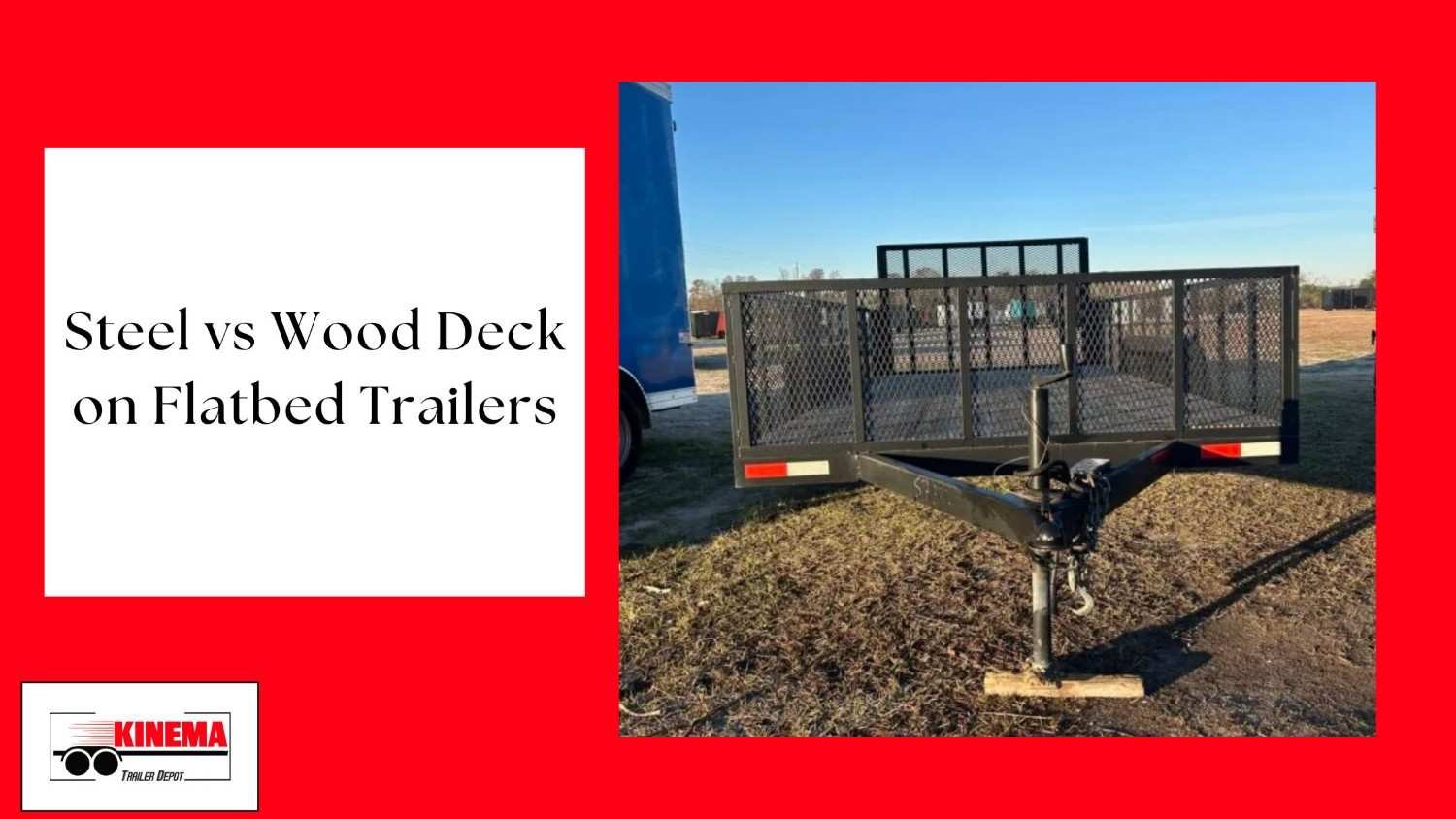
Introduction
Choosing the right deck on flatbed trailer is one of the most important decisions for fleet owners, operators, and logistics businesses.
The deck is the working surface of a flatbed trailer, and it directly affects load safety, durability, operating cost, and long-term performance.
While flatbed trailers may look similar at first glance, the deck material makes a big difference in how the trailer performs in real-world conditions.
Two of the most common options are steel deck flatbed trailers and wood deck flatbed trailers.
Each deck on flatbed trailer has its own strengths and limitations. Some operators prefer steel for its strength and long life, while others rely on wood for its flexibility and grip.
The right choice depends on what you haul, how often you haul, and the environment in which you operate.
In this blog, we will explain what steel and wood deck flatbed trailers are, compare their key differences, explore the best applications for each, and help you decide which option fits your business needs best.
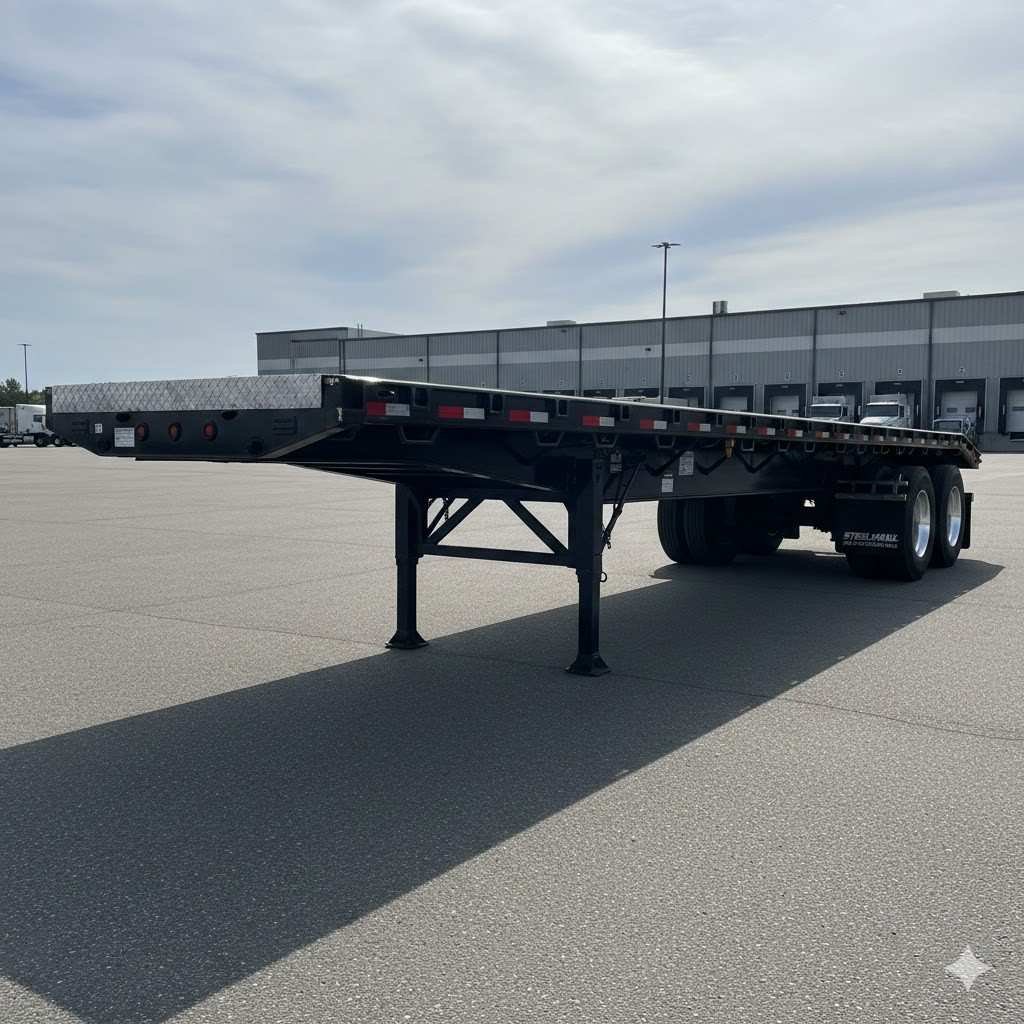
What is a Steel Deck Flatbed Trailer?
A steel deck flatbed trailer uses steel plates as the main loading surface.
These plates are usually made from mild steel, checker plate steel, or treated steel designed to handle heavy loads.
Steel decks are commonly welded directly onto the trailer frame, creating a solid and rigid platform.
Steel deck flatbed trailers are widely used in industries that deal with heavy equipment, construction materials, and metal products.
Because steel is strong and rigid, it can handle point loads better than many wood decks.
This makes steel decks ideal for loads like machinery, coils, and industrial tools.
Another advantage of steel decks is their resistance to physical damage. Unlike wood, steel does not crack, splinter, or break under repeated loading.
With proper coating and rust protection, a steel deck on flatbed trailers can last for many years with minimal structural wear.
However, steel decks are heavier than wood decks. This added weight can reduce payload capacity and slightly increase fuel consumption.
Steel also requires attention to corrosion prevention, especially in humid or coastal environments.
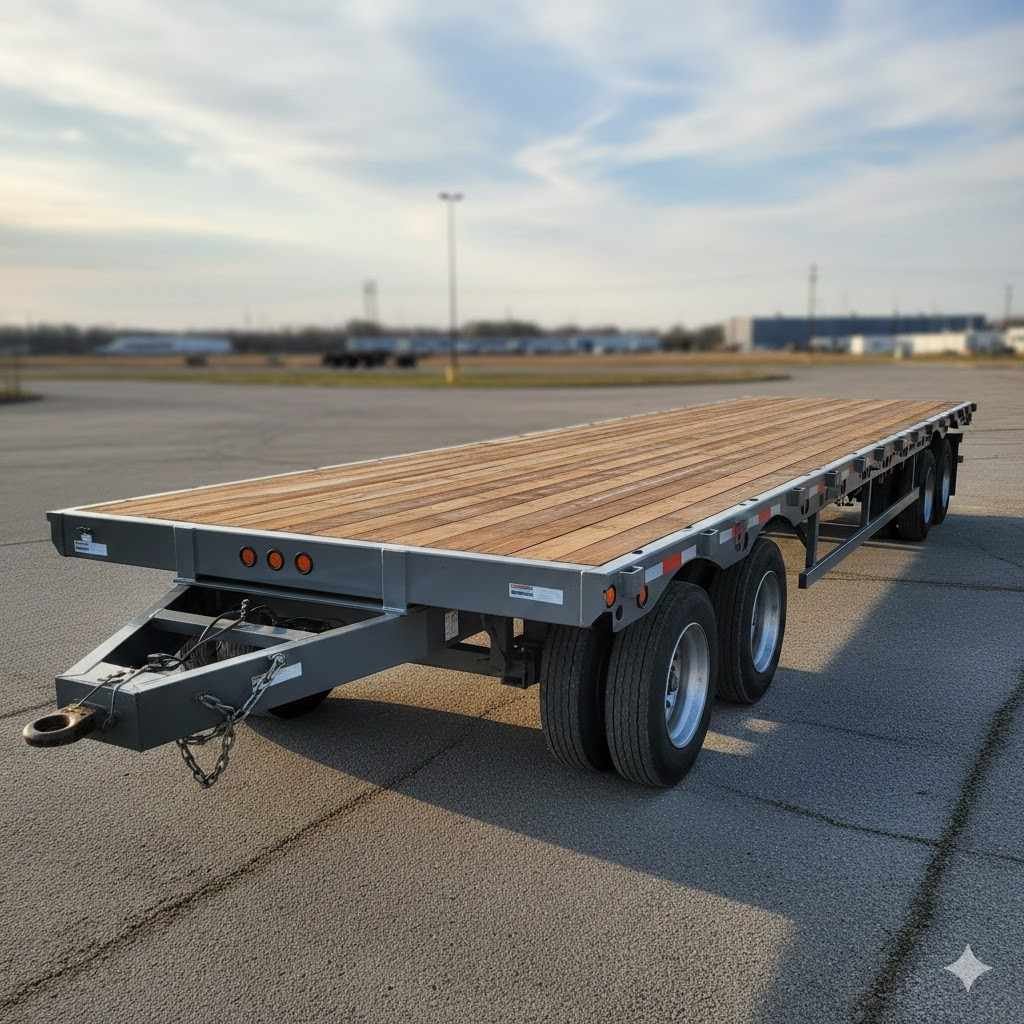
What is a Wood Deck Flatbed Trailer?
A wood deck flatbed trailer uses hardwood or treated softwood planks as the deck surface. Common wood types include oak, pine, and apitong.
These planks are bolted or fastened to the trailer frame, making them easier to replace when damaged.
Wood deck on flatbed trailers have been used for decades and remain popular across many industries.
One major reason is traction. Wood naturally provides better grip than smooth steel, especially when loads are wet or dusty.
This reduces the risk of cargo shifting during transport.
Wood decks also absorb shock better than steel. When driving over uneven roads, wood flexes slightly, which helps protect both the cargo and the trailer frame.
This makes wood decks a good option for general freight and palletized goods.
On the downside, wood is more vulnerable to weather. Over time, moisture can cause rot, warping, or soft spots if the deck is not treated properly.
Wood decks also require more frequent inspections and occasional plank replacement to maintain safety and performance.
Key Difference between Steel vs Wood Deck
Understanding the key differences between steel and wood deck on flatbed trailer helps buyers make smarter decisions.
Below are the most important factors to consider:
a. Durability
Steel decks are extremely durable when it comes to physical impact. They handle heavy machinery and sharp edges without cracking.
Steel does not weaken from repeated loading cycles as quickly as wood.
Wood decks are durable in a different way. They resist surface damage well and handle everyday freight easily.
However, wood can wear out faster in harsh weather or under constant heavy loads. Over time, planks may need replacement.
In terms of pure lifespan, steel decks usually last longer, provided they are protected from rust.
b. Cost
Wood deck flatbed trailers usually have a lower upfront cost. Wood materials are less expensive, and repairs are often simpler and cheaper.
Replacing a single plank costs much less than repairing a steel deck.
Steel deck flatbed trailers cost more initially due to material and fabrication expenses.
While steel decks may reduce repair frequency, rust prevention and coatings add to maintenance costs over time.
For budget-focused buyers, wood decks often make more sense. For long-term durability, steel can offer better value.
c. Weight
Steel decks are heavier than wood decks. This added weight reduces the available payload capacity of the trailer.
It can also affect fuel efficiency, especially over long distances.
Wood decks are lighter, allowing operators to haul slightly more cargo without exceeding weight limits.
This weight advantage is one reason wood remains popular in long-haul and general freight operations.
When payload efficiency matters, the wood deck on flatbed trailers often has an edge.
d. Maintenance
Steel decks require rust prevention measures such as painting, coating, or galvanization.
If rust is ignored, it can weaken the deck over time. Regular inspection is important, especially in wet environments.
Wood decks need protection from moisture and pests. Treated wood lasts longer, but planks may still need replacement after years of use.
Maintenance is usually simpler and faster compared to steel.
Overall, wood decks need more frequent attention, but steel decks require more specialized care.
e. Safety
Safety is critical when choosing a deck on flatbed trailers. Steel decks can become slippery when wet unless they have textured surfaces or anti-slip coatings.
Smooth steel increases the risk of cargo movement.
Wood decks provide natural traction. This helps keep loads stable and improves worker safety during loading and unloading.
Forklifts also grip better on wood surfaces.
For safety and grip, wood decks generally perform better in everyday conditions.
Steel vs Wood Deck Comparison Table
| Feature | Steel Deck Flatbed Trailer | Wood Deck Flatbed Trailer |
| Durability | Very high impact resistance | Moderate to high |
| Initial Cost | Higher | Lower |
| Weight | Heavier | Lighter |
| Maintenance | Rust protection needed | Plank replacement needed |
| Traction | Low without coating | Naturally high |
| Best For | Heavy machinery, steel loads | General freight, pallets |
Best Use Cases: Which One Should You Choose?
Choosing between steel and wood depends on how your trailer will be used on a daily basis.
1. Choose a Steel Deck If:
a. You regularly haul heavy machinery, metal components, or equipment with sharp edges. Steel decks handle point loads better and resist physical damage.
b. You operate in high-impact environments where durability matters more than weight.
c. You want a long-lasting deck on flatbed trailers with minimal structural wear over time.
2. Choose a Wood Deck If:
a. You transport palletized goods, packaged freight, or agricultural products.
b. You need better traction to prevent cargo movement.
c. You want a lighter trailer that supports better payload efficiency and fuel economy.
d. You prefer easier and lower-cost repairs.
Conclusion
There is no single best answer when comparing steel vs wood deck on flatbed trailers.
Both options offer clear benefits, and the right choice depends on your hauling needs, budget, and operating conditions.
Steel decks provide unmatched strength and long-term durability, while wood decks offer better grip, lighter weight, and lower upfront cost.
At Kinema Trailers, we understand that every business has unique requirements.
Our team helps customers choose the right deck on flatbed trailers based on load type, sizes, usage frequency, and long-term goals.
Whether you need a rugged steel deck or a reliable wood deck, Kinema Trailers delivers durable, well-engineered flatbed solutions designed to perform on the road.
FAQs
a. Which deck on flatbed trailers lasts longer, steel or wood?
Steel decks generally last longer because they do not crack or splinter. With proper rust protection, steel can serve for many years. Wood decks may need plank replacement over time, especially in wet conditions.
b. Is a wood deck safer than a steel deck?
Wood decks are often considered safer because they provide better natural traction. This reduces the risk of cargo slipping and improves worker safety during loading and unloading.
c. Does a steel deck affect fuel efficiency?
Yes, steel decks are heavier, which can slightly reduce fuel efficiency. Wood decks are lighter and allow for better payload optimization, especially for long-distance hauling.
d. Can a wood deck be replaced with steel later?
Yes, many flatbed trailers can be modified to switch deck materials. However, this depends on the trailer frame design and should be done by professionals.
About Author: