








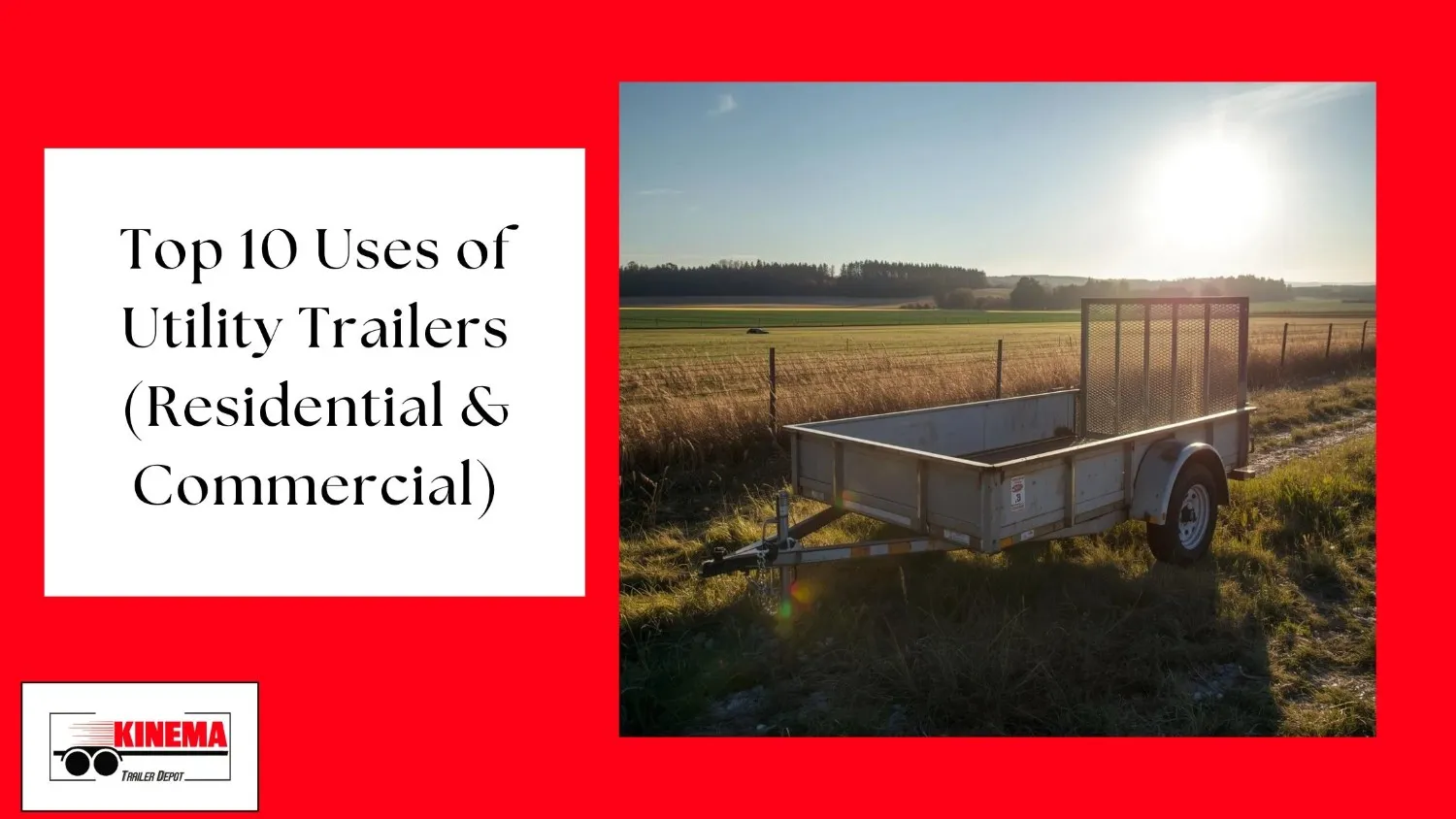
If you ask a contractor, landscaper, farmer, or even a DIY-enthusiast which tool quietly saves them the most time and effort, you’ll often hear the same answer: a utility trailer.
They don’t make noise, they don’t have engines, and they rarely get attention — yet they solve dozens of real-world problems every single day. A utility trailer is one of those things you don’t realise you need until you use one once… and then you wonder how you ever managed without it.
Before we dive into the top uses of utility trailers, it’s important to understand why they’re so popular across residential, commercial, and agricultural settings.
Why Utility Trailers Are So Popular
1. Unmatched Versatility
One day you’re moving yard waste, the next day it’s furniture, and the week after that you’re hauling power tools. A utility trailer adapts to whatever job you throw at it.
2. Saves Time & Money
Instead of renting a pickup, calling a delivery service, or making multiple car trips, you simply hook up your trailer and get the job done in one go.
3. Easy to Tow & Maintain
Most utility trailers work with any standard vehicle equipped with a hitch, and maintenance is minimal — just check the tires, lights, and bearings occasionally.
Whether you’re a homeowner or a business owner, the practicality and simplicity of a utility trailer make it one of the most valuable tools you can invest in.
Top Real-World Uses of Utility Trailers
Below are the 10 most common uses of utility trailers, complete with real examples and situations where people rely on them every day.
1. Moving Household Furniture & Personal Items (Residential)
One of the most popular uses of utility trailers is moving furniture and bulky household items.
Anyone who has moved homes knows the struggle of fitting large items into small cars or making endless back-and-forth trips.

What homeowners typically use trailers for?
- Beds and mattresses
- Dressers and cabinets
- Refrigerators and washing machines
- Tables, chairs, dining sets
- Boxes, décor, and packed items
- Bikes, exercise machines, and bulky home gear
Why it works so well?
The open and flat design means you’re not limited by the height or angles of a van. Large items that never fit inside a car easily slide onto a trailer.
Perfect for:
- College students shifting dorms
- Families moving within the city
- People buying second-hand furniture (OLX, Facebook Marketplace, etc.)
- Homeowners rearranging or renovating
You may not move every day, but even moving twice a year justifies having a trailer handy.
2. Landscaping & Yard Maintenance (Residential + Commercial)
Another use of utility trailers are in landscaping and yard maintainence.
Ask any landscaper what their daily “office” looks like – it’s a utility trailer loaded with tools, bags of soil, plants, and equipment.
Common landscaping loads include:
- Lawn mowers, edgers, weed trimmers
- Leaf blowers and hedge cutters
- Mulch, gravel, sand, and soil
- Stones, bricks, and stepping tiles
- Shrubs, trees, flowers, and saplings
- Rakes, wheelbarrows, and hand tools
Why utility trailers are ideal?
They can handle dirty, heavy, messy loads without worrying about damaging your vehicle’s interior.
Residential homeowners also depend on trailers for:
- Seasonal yard cleaning
- Removing fallen branches
- Hauling garden waste
- Bringing home large plants
- Storm cleanup jobs
For both professionals and homeowners, utility trailers turn full-day jobs into half-day jobs.
3. Construction & Contracting Work (Commercial)
Coming third in the list of uses of utility trailers is in construction and contarcting.
Construction workers largerly depend and regularly uses utility trailers like chefs depend on knives.
A typical contractor trailer carries:
- Lumber
- Plywood and drywall sheets
- Tile boxes
- Paint buckets
- Plumbing tools
- Power saws, drills, generators
- Nails, pipes, electrical supplies
- Scaffolding sections
- Mixed debris and waste
Why contractors love utility trailers?
- They eliminate multiple supplier trips
- They allow carrying odd-sized building materials
- They reduce fuel expenses
- They keep heavy equipment out of personal vehicles
Whether it’s roofing, flooring, plumbing, or electrical work – a utility trailer is practically a mobile workshop.
4. Hauling ATVs, Motorcycles & Outdoor Gear (Residential)
Hauling ATVs, Motorcycles and outdoor gears comes under the uses of utility trailers.
If you’re an outdoor adventure lover, a utility trailer becomes your best friend.

You can easily transport:
- ATVs
- Dirt bikes
- Mountain bikes
- Kayaks or canoes
- Fishing coolers
- Camping tents and gear
Why this matters?
Most recreational gear is bulky and messy. A trailer keeps everything secure and frees space in your car.
Families that go camping or biking often love the comfort of loading gear without dismantling or damaging it.
5. Moving Lawn, Garden, and Farm Equipment (Residential + Agricultural)
Rural homeowners and hobby farmers use utility trailers almost every week.
Typical farm-related loads:
- Mini tractors
- Tillers and cultivators
- Water tanks
- Fuel cans
- Livestock feed bags
- Hay bales
- Portable kennels or cages
- Fence posts, tools, and timber
Why trailers matter on farms?
The more land you have, the more equipment you must move around. Best utility trailers save hours of unnecessary effort.
Even small homesteads benefit hugely from owning one.
6. Commercial Deliveries for Small Businesses (Commercial)
Not every business can afford a delivery van – and not every delivery needs one.
That’s where the use of Utility Trailers comes into play.
Small businesses often turn to utility trailers because they’re cheaper to operate and maintain.
Used widely by businesses like:
- Furniture stores
- Hardware shops
- Nurseries and plant shops
- Light construction suppliers
- Artisans selling heavy handmade items
- Event material suppliers
A store that gets 10–20 delivery requests per month can save a fortune by using a utility trailer instead of outsourcing.
Why commercial owners love them?
- No extra licenses required
- Works with almost any vehicle
- Low maintenance
- Easily replaceable parts
- Lower fuel costs than vans
For many small business owners, a utility trailer is the perfect middle-ground between expensive logistics and doing everything manually.
7. Junk Removal & Cleanup Jobs
Whether you’re a homeowner cleaning your property or a business offering junk removal services, a utility trailer is the ideal tool.
Common junk removal loads:
- Old furniture
- Broken appliances
- Carpet and flooring waste
- Roofing shingles
- Garden waste and branches
- Bags of trash
- Construction debris
Why it’s so useful?
Dumping heavy or dirty junk into your personal vehicle can ruin the interior permanently. A trailer protects your car, holds more volume, and can be cleaned easily.
Contractors especially love trailers because junk removal often gets bundled with renovation jobs.
8. Event Setup & Vendor Transport (Commercial)
Event planners, food vendors, trade-show exhibitors, and wedding decorators rely on utility trailers to transport:
- Booth frames
- Tables, chairs, décor materials
- Catering equipment
- Food stalls
- Coolers and kitchen supplies
- Lighting, props, sound gear
Why event teams prefer trailers?
Everything fits neatly in one place. No multiple car runs. No need for huge trucks unless it’s a massive event.
A food vendor, for example, can tow their entire setup to multiple events in one day.
9. DIY Home Improvement Projects (Residential)
If you’re into DIY home upgrades, a utility trailer will save you more time than any tool you own.
Perfect for:
- Fence-building
- Deck construction
- Flooring renovation
- Painting projects
- Bathroom remodeling
- Garage upgrades
Typical loads include:
- Lumber
- Panels
- Tiles
- Tools
- Waste bags
- Cement and sand
DIY projects usually mean multiple back-and-forth trips to the hardware store. A trailer cuts that down drastically.
10. Seasonal & Occasional Tasks (Residential)
Not all uses of utility trailers involve heavy work. Sometimes they simply make seasonal chores easier, such as:
Like:
- Moving firewood
- Transporting Christmas decorations
- Carrying pool equipment
- Bringing home holiday trees
- Shifting summer outdoor furniture
- Moving gardening supplies for spring prep
These jobs may not seem huge individually, but when added over a year, a utility trailer saves hours of effort.
Final Thoughts
Whether you’re a homeowner wanting stress-free DIY projects, a contractor needing reliable hauling power, or a business trying to reduce logistics costs, the uses of utility trailers are far broader than most people imagine.
They’re affordable, versatile, and incredibly practical; often paying for themselves within months. From hauling furniture to moving equipment to handling debris, a utility trailer is one of the smartest investments for work or home.
FAQs
1. What is a utility trailer used for?
A utility trailer is used for hauling furniture, landscaping tools, construction materials, outdoor gear, junk removal loads, farm equipment, and more.
2. Do I need a special vehicle to tow a utility trailer?
No. Most utility trailers can be towed by standard vehicles with a proper hitch—such as cars, SUVs, and pickup trucks.
3. Are utility trailers expensive to maintain?
Not at all. Maintenance is usually limited to tires, lights, bearings, and occasional cleaning—making them one of the lowest-cost hauling options.
4. Can a utility trailer be used for business deliveries?
Yes. Many small businesses use utility trailers to transport furniture, plants, building materials, or equipment without needing a full delivery van.
5. What size utility trailer is best for home use?
For most homeowners, a 5×8 or 6×10 trailer works best. It’s small enough to tow easily and large enough for furniture, yard waste, tools, or DIY materials.
About Author:

Leave a Reply