








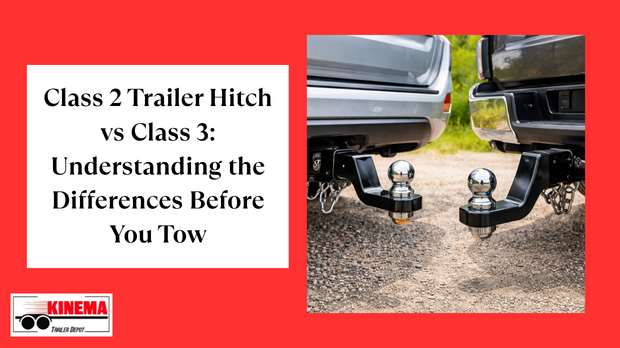
When it comes to towing trailers safely and efficiently, choosing the right hitch class is one of the most important decisions a vehicle owner can make. Many people assume that all trailer hitches are the same, but in reality, hitch classes are designed for different towing capacities, vehicle types, and trailer sizes.
Two of the most commonly discussed options are the Class 2 trailer hitch and the Class 3 trailer hitch. These hitch types are widely used for personal towing tasks, including hauling small campers, utility trailers, boats, and cargo carriers. While they may look similar at first glance, there are important differences in strength, receiver size, towing capacity, and compatibility.
Understanding these differences can help you choose the right hitch for your vehicle and avoid potential safety issues when towing. In this guide, we’ll explore how Class 2 and Class 3 trailer hitches work, their key differences, typical uses, and how to decide which one is right for your towing needs.
What Is a Trailer Hitch Class?
Trailer hitches are categorized into classes based on their towing capacity and receiver size. These classifications help ensure that the hitch is strong enough to safely handle the weight of the trailer being towed.
Each class of hitch is designed with specific weight limits and is compatible with certain types of vehicles and trailers. The higher the class number, the greater the towing capacity and structural strength.
Common hitch classes include:
- Class 1 – light-duty towing
- Class 2 – light to medium towing
- Class 3 – medium-duty towing
- Class 4 – heavy-duty towing
- Class 5 – extra heavy-duty towing
Among these, Class 2 and Class 3 hitches are especially popular for everyday towing applications because they work with a wide range of vehicles, from sedans and crossovers to pickup trucks and SUVs.
What Is a Class 2 Trailer Hitch?
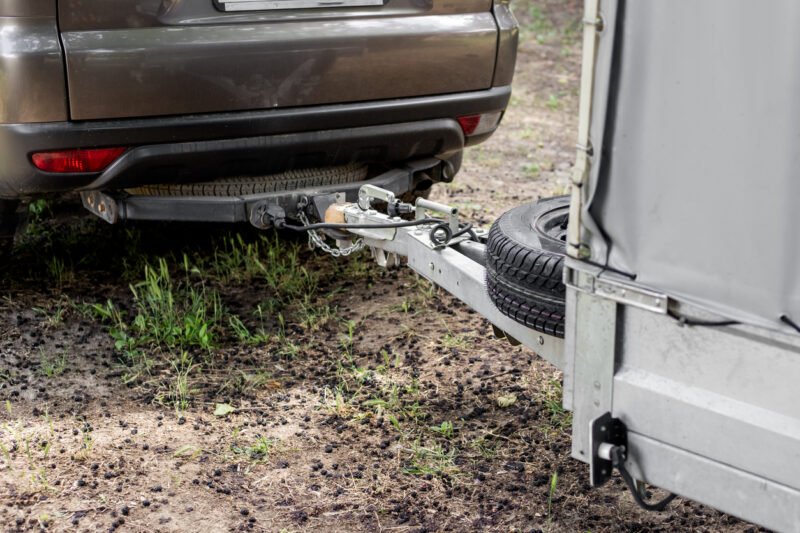
A Class 2 trailer hitch is designed for light to moderate towing tasks. It is commonly installed on smaller vehicles that have limited towing capacity.
This type of hitch usually features a 1.25-inch receiver opening, which means it is compatible with accessories and ball mounts designed specifically for that receiver size.
Typical Weight Capacity
Class 2 hitches generally support:
- Up to 3,500 pounds gross trailer weight (GTW)
- Up to 350 pounds tongue weight
The gross trailer weight refers to the total weight of the trailer and its cargo, while tongue weight refers to the downward force the trailer exerts on the hitch.
Vehicles That Use Class 2 Hitches
Class 2 trailer hitches are commonly found on:
- Sedans
- Compact SUVs
- Small crossovers
- Minivans
Because these vehicles are not built for heavy hauling, a Class 2 hitch provides the right balance between strength and compatibility.
Common Uses
A Class 2 hitch is typically used for towing smaller loads, including:
- Utility trailers
- Lightweight campers
- Jet ski trailers
- Small boat trailers
- Bike racks and cargo carriers
For many everyday towing needs, a Class 2 hitch provides enough capacity without adding unnecessary bulk or weight to the vehicle.
What Is a Class 3 Trailer Hitch?
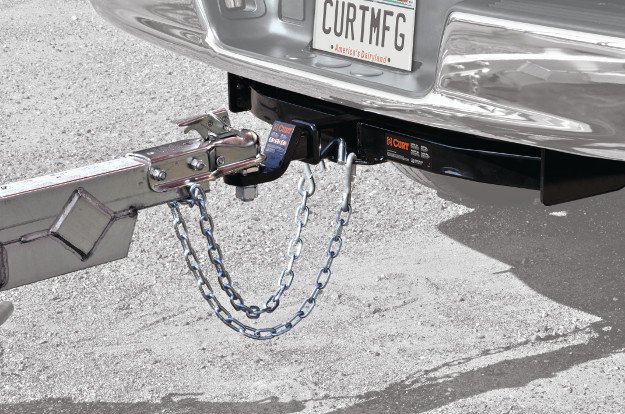
A Class 3 trailer hitch is designed for medium-duty towing applications and offers significantly more capacity than a Class 2 hitch.
This hitch type features a 2-inch receiver opening, which is the most common receiver size in the towing industry.
Because of its higher capacity and versatility, Class 3 hitches are widely used on SUVs, pickup trucks, and larger crossovers.
Typical Weight Capacity
Class 3 trailer hitches usually support:
- Up to 8,000 pounds gross trailer weight
- Up to 800 pounds tongue weight
However, these limits can vary depending on the vehicle’s towing capacity and hitch manufacturer specifications.
Vehicles That Use Class 3 Hitches
Class 3 hitches are commonly installed on:
- Full-size SUVs
- Mid-size SUVs
- Pickup trucks
- Large crossovers
These vehicles are built with stronger frames and more powerful engines, allowing them to handle heavier loads.
Common Uses
A Class 3 hitch is ideal for towing larger trailers, such as:
- Travel trailers
- Larger boats
- Car trailers
- Medium utility trailers
- Landscaping equipment trailers
In addition to towing, Class 3 receivers can support heavier hitch-mounted accessories, including large cargo carriers and platform bike racks.
Key Differences Between Class 2 and Class 3 Trailer Hitches
Although both hitch types are commonly used for personal towing, there are several important differences that set them apart.
Receiver Size
One of the most noticeable differences is the receiver opening size.
- Class 2: 1.25-inch receiver
- Class 3: 2-inch receiver
The 2-inch receiver used in Class 3 hitches is more versatile because many towing accessories are designed for this size.
Towing Capacity
Class 3 hitches provide significantly higher towing capacity.
| Hitch Class | Gross Trailer Weight | Tongue Weight |
| Class 2 | Up to 3,500 lbs | Up to 350 lbs |
| Class 3 | Up to 8,000 lbs | Up to 800 lbs |
This difference makes Class 3 hitches more suitable for larger trailers and heavier loads.
Vehicle Compatibility
Class 2 hitches are designed for smaller vehicles, while Class 3 hitches are used on larger and more powerful vehicles.
Installing a Class 3 hitch on a vehicle that is not designed for heavy towing will not increase the vehicle’s towing capacity.
The vehicle manufacturer’s towing limit should always be followed.
Accessory Compatibility
Because of the larger receiver size, Class 3 hitches can accommodate a wider variety of accessories, including:
- Heavy-duty bike racks
- Hitch cargo carriers
- Trailer hitch steps
- Winch mounts
This makes Class 3 hitches more versatile for people who use their vehicle for multiple outdoor activities or work tasks.
When Should You Choose a Class 2 Hitch?
A Class 2 trailer hitch is the right choice when:
- Your vehicle has a limited towing capacity
- You only tow small trailers
- You need a hitch for bike racks or cargo carriers
- You want a lightweight and affordable towing solution
For many drivers who occasionally tow small loads, a Class 2 hitch provides everything they need.
When Should You Choose a Class 3 Hitch?
A Class 3 hitch is a better option if:
- You plan to tow heavier trailers
- Your vehicle has higher towing capacity
- You want access to more hitch accessories
- You need a hitch for camping, boating, or work equipment
Because of its versatility, many vehicle owners choose a Class 3 hitch even if they only tow occasionally.
Installation Differences
Both Class 2 and Class 3 hitches are typically frame-mounted, meaning they attach directly to the vehicle’s chassis.
Installation may involve:
- Bolting the hitch to pre-drilled mounting points
- Tightening high-strength hardware
- Connecting wiring for trailer lights
Many vehicles today come with factory-installed mounting points, making installation relatively straightforward.
However, heavier Class 3 hitches may require additional support or professional installation.
Safety Considerations When Choosing a Hitch
Regardless of the hitch class you choose, safety should always be a top priority.
Some key safety tips include:
- Never exceed the vehicle’s towing capacity
- Use the correct hitch ball size for the trailer coupler
- Check that the hitch is properly secured before towing
- Always connect safety chains
- Ensure trailer lights and brakes function properly
Even a high-capacity hitch can become dangerous if the vehicle or trailer exceeds recommended weight limits.
Final Thoughts
Both Class 2 and Class 3 trailer hitches serve important roles in the world of towing. The right choice ultimately depends on your vehicle, towing needs, and the type of trailer you plan to use.
A Class 2 hitch works well for light-duty towing tasks, making it ideal for smaller vehicles and occasional use. On the other hand, a Class 3 hitch provides greater strength, versatility, and towing capacity, making it the preferred option for larger vehicles and heavier trailers.
By understanding the differences between these hitch classes, you can choose a setup that ensures safe, stable, and efficient towing every time you hit the road.
FAQs
1. What is the main difference between a Class 2 and Class 3 trailer hitch?
The main difference is towing capacity and receiver size. Class 2 hitches use a 1.25-inch receiver and support up to 3,500 pounds, while Class 3 hitches use a 2-inch receiver and can support up to 8,000 pounds.
2. Can a Class 2 hitch tow a camper?
Yes, a Class 2 hitch can tow small and lightweight campers, as long as the total trailer weight does not exceed the hitch and vehicle’s towing capacity.
3. Is a Class 3 hitch stronger than a Class 2 hitch?
Yes, a Class 3 hitch is significantly stronger and designed for heavier towing tasks compared to a Class 2 hitch.
4. Can I upgrade from a Class 2 hitch to a Class 3 hitch?
In many cases, upgrading is possible, but it depends on the vehicle’s frame design and towing capacity. Installing a stronger hitch does not increase the vehicle’s rated towing limit.
5. What size receiver does a Class 3 hitch use?
A Class 3 trailer hitch typically uses a 2-inch receiver opening, which is the most common size for towing accessories.
6. Are Class 3 hitches compatible with more accessories?
Yes, because of the 2-inch receiver size, Class 3 hitches support a wider range of accessories such as bike racks, cargo carriers, and towing mounts.
7. Can SUVs use Class 3 trailer hitches?
Yes, many mid-size and full-size SUVs are designed to support Class 3 trailer hitches.
8. Is a Class 2 hitch enough for a small boat trailer?
Yes, most small boat trailers fall within the 3,500-pound limit, making them compatible with Class 2 hitches.
9. Does installing a Class 3 hitch increase towing capacity?
No. The vehicle’s manufacturer-rated towing capacity remains the limit, regardless of the hitch class installed.
10. Which hitch class is better for travel trailers?
Class 3 hitches are usually better for travel trailers, especially larger models that require higher towing capacity and stability.
About Author: