








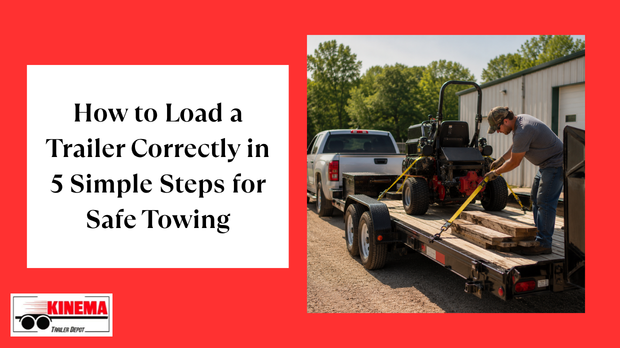
Whether you are hauling equipment, furniture, motorcycles, or landscaping materials, knowing how to load a trailer correctly is one of the most important skills any tower can have. A poorly loaded trailer does not just damage your cargo — it puts your life and the lives of others on the road at serious risk.
This guide walks you through everything you need to know, from trailer weight distribution to avoiding the most common trailer loading mistakes people make every day.
Why Proper Trailer Loading Matters
Before jumping into the steps, it is worth understanding why this topic deserves your full attention.
An incorrectly loaded trailer can cause trailer sway, brake failure, tire blowouts, and even complete loss of vehicle control at highway speeds. According to the NHTSA, thousands of accidents each year are linked to improperly secured or overloaded trailers.
The good news? Most of these accidents are completely preventable. Once you understand how to load a trailer correctly, the process becomes second nature.
Know Your Trailer’s Limits Before You Load Anything

One of the most overlooked trailer loading tips is simply reading the numbers before you start stacking cargo. Every trailer has two critical weight ratings you must know:
- GVWR (Gross Vehicle Weight Rating): The maximum total weight your trailer can carry, including the trailer itself.
- Payload Capacity: GVWR minus the trailer’s own weight. This is how much cargo you can actually load.
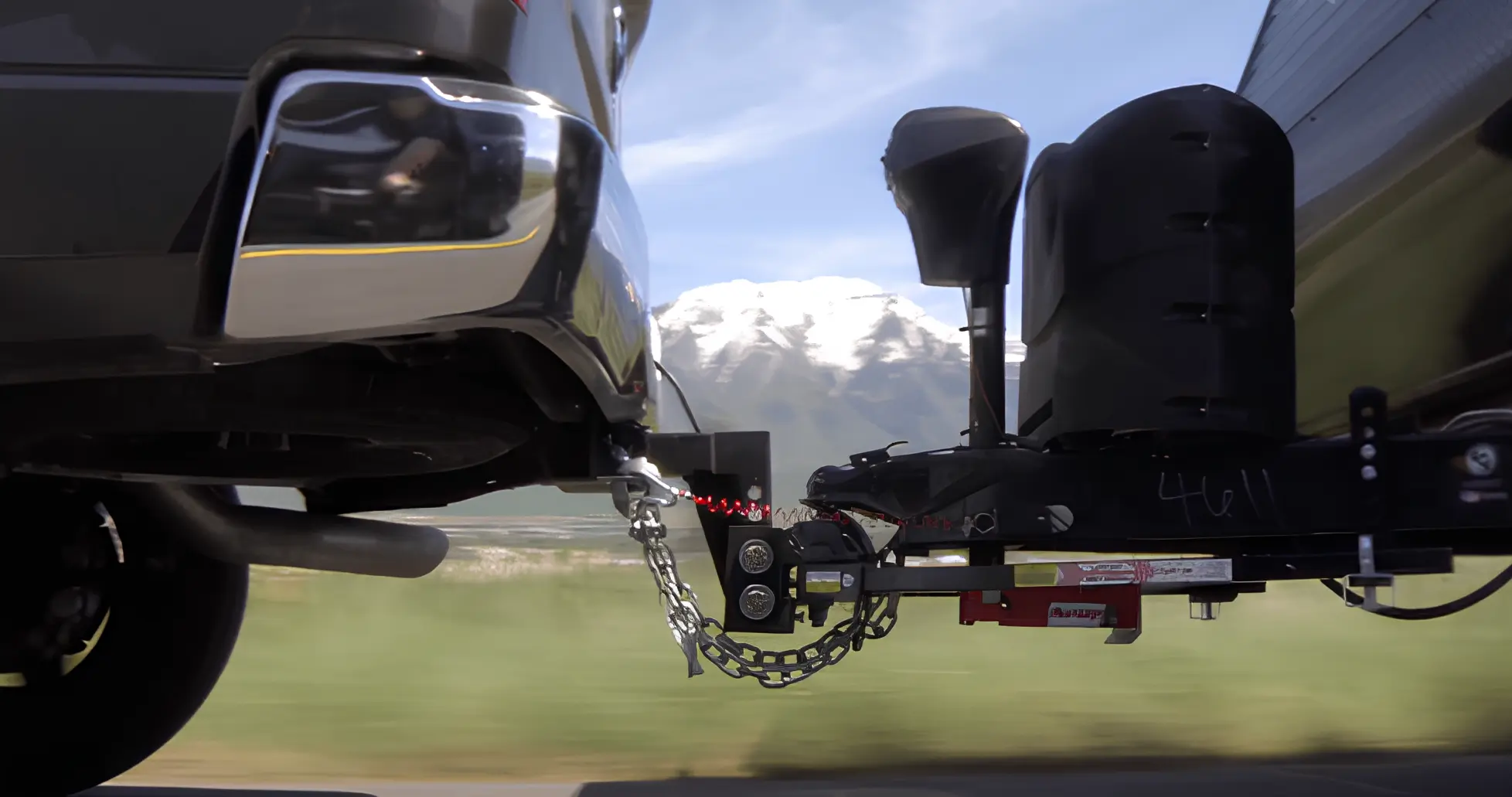
Also check your tow vehicle’s towing capacity and tongue weight rating. Tongue weight — the downward force the trailer exerts on the hitch — should ideally be 10 to 15 percent of the total trailer weight. Ignoring this number is one of the most common trailer loading mistakes people make, and it leads directly to dangerous trailer sway on the road.
Step 1 — Plan Your Load Before You Pack
The first step in learning how to load a trailer correctly is doing the planning before a single item goes on the trailer.
Ask yourself these questions:
- What is the total weight of everything I am hauling?
- Are any items oddly shaped, fragile, or prone to shifting?
- Do I know the weight of my heaviest items individually?
Sketch out a rough loading plan. Identify your heaviest items and decide where they will sit. Group similar-sized items together. Think about what you will need to access first when you arrive — those items should go in last and come out first.
Good planning saves time, prevents overloading, and helps you avoid having to re-load everything halfway through.
Step 2 — Master Trailer Weight Distribution
This is the most critical part of the entire process. Proper trailer weight distribution is what separates a safe, smooth tow from a dangerous, swaying nightmare.
Here is the golden rule: 60 percent of your total cargo weight should sit in the front half of the trailer (toward the hitch), and 40 percent in the rear.
Why? Because having more weight in the front creates a downward force on the hitch ball, which keeps the trailer stable and planted behind your vehicle. Too much weight in the rear causes the back of the trailer to push outward, creating the dreaded trailer sway that can easily result in a jackknife accident.
Practical tips for weight distribution:
- Place your heaviest items low and forward, directly above or just ahead of the trailer axle
- Spread weight evenly from side to side to avoid leaning
- Keep lighter, bulky items toward the rear and on top
- Never stack heavy items on top of lighter, crushable cargo
If you are working with a utility trailer, this utility trailer loading guide principle applies regardless of what you are carrying — gravel, lumber, ATVs, or appliances.
Step 3 — Secure Every Item Like It Will Try to Escape
Knowing how to load a trailer correctly means understanding that gravity and road vibration are working against you the entire time you are moving.
Even items that feel solid and stable at rest will shift, slide, and bounce at highway speeds. Use the right tie-down equipment for the job:
- Ratchet straps for heavy, solid items like equipment and vehicles
- Cam buckle straps for lighter, delicate cargo that could be crushed
- Chains with binders for very heavy machinery
- Cargo nets for loose, irregular items or smaller grouped cargo
Follow the “4-point tie-down rule” for any large, heavy item — attach straps at four different anchor points (front-left, front-right, rear-left, rear-right) to prevent movement in any direction.
Check that all straps are rated for the weight of the cargo they are securing. Tie-down ratings are not suggestions — they are safety specs.
Step 4 — Do a Full Trailer Loading Checklist Before You Drive
This is where a trailer loading checklist becomes your best friend. Before you move the vehicle even one inch, run through the following:
Weight and Balance:
- Total cargo weight is within GVWR and payload limits
- Tongue weight is between 10 and 15 percent of total trailer weight
- Load is balanced side to side
Securement:
- All straps, chains, and nets are tight and properly fastened
- No cargo is hanging over the sides or rear beyond legal limits
- Fragile items are padded and protected
Safety and Lighting:
- Trailer hitch is locked and safety chains are crossed and connected
- All trailer lights are working — brake lights, turn signals, and running lights
- Trailer brakes are functional (if equipped)
- Tires are inflated to the correct PSI
Final Walk-Around:
- Walk completely around the trailer and look for anything that seems off
- Tug on each strap manually to confirm tightness
- Check that nothing is sticking out that could hit another vehicle or pedestrian
Never skip this checklist. It takes less than five minutes and could save your life.
Step 5 — Adjust Your Driving for a Loaded Trailer
The final step in knowing how to load a trailer correctly extends beyond the loading itself — it includes how you drive.
A properly loaded trailer still requires adjusted driving habits:
- Increase your following distance — stopping distance increases significantly with a loaded trailer
- Take turns wider and slower — trailers do not follow the same arc as your tow vehicle
- Avoid sudden braking or sharp steering — smooth inputs are everything
- Check your mirrors frequently — watch for any sign of swaying or shifting cargo
- Pull over if something feels off — unusual movement, noise, or vibration means stop and inspect
If you ever feel the trailer starting to sway, do not brake hard. Instead, ease off the accelerator slowly and hold the steering wheel firmly until the sway stabilizes.
Common Trailer Loading Mistakes to Avoid
Even experienced towers make these errors. Keep them on your radar:
- Loading too much weight in the rear of the trailer
- Exceeding the trailer’s GVWR or your trailer’s carrying capacity
- Using worn or undersized tie-down straps
- Forgetting to check tongue weight
- Skipping the pre-drive trailer loading checklist
- Not re-checking strap tension after the first 10 to 15 miles of driving
Re-checking your straps after the first stretch of driving is one of the most valuable trailer loading tips you will ever follow. Cargo settles and straps loosen faster than most people expect.
Final Thoughts
Learning how to load a trailer correctly is not complicated, but it does demand attention to detail and a respect for the process. From planning your load and mastering trailer weight distribution, to securing cargo properly and running through your trailer loading checklist — each step plays a role in keeping you, your cargo, and every other driver on the road safe.
Whether you are using a utility trailer for weekend hauling or a heavy-duty flatbed for commercial use, the principles in this utility trailer loading guide apply across the board. Take your time, follow the steps, and never rush the loading process. A few extra minutes before you drive could prevent a catastrophic accident on the highway.
Safe towing starts before the engine ever turns on.
FAQs
Q1. How do I know if my trailer is loaded correctly?
Your trailer is loaded correctly when 60% of the weight is forward, cargo is secured with rated tie-downs, tongue weight is 10–15% of total trailer weight, and the trailer sits level when hitched.
Q2. What happens if too much weight is in the rear of the trailer?
Excess rear weight reduces tongue weight, causing the trailer to sway dangerously at speed. This can lead to loss of vehicle control, jackknifing, or a complete trailer detachment — all serious road hazards.
Q3. How tight should trailer tie-down straps be?
Straps should be tight enough that cargo cannot move in any direction, but not so tight they crush or damage the item. Always use straps rated above the cargo weight and re-check after the first 15 miles.
Q4. What is the maximum tongue weight for a trailer?
Tongue weight should be 10–15% of the total loaded trailer weight. Exceeding your tow vehicle’s tongue weight rating is dangerous. Always check both the trailer hitch rating and vehicle owner’s manual for limits.
Q5. Should I load heavy items first or last on a trailer?
Always load heavy items first. Place them low, centered, and forward over or just ahead of the axle. Add lighter items last, toward the rear and on top, to maintain proper balance and safe weight distribution.
About Author: