








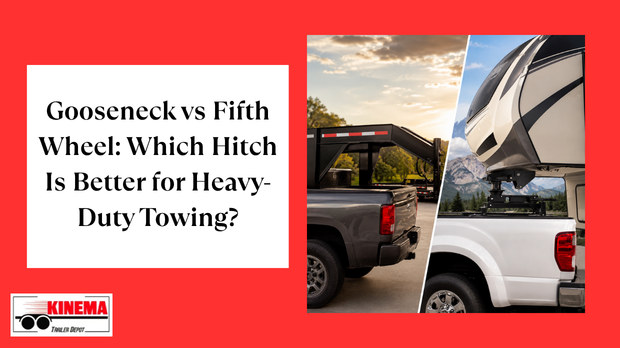
If you’ve ever had to use a heavy-duty towing service, you’ve probably been confronted with the quandary of towing gooseneck vs fifth wheel. Both are very good hitches, both attach to a truck bed and both can hold a lot of weight. They’re not interchangeable, though, and selecting the wrong one can cost you some cash, convenience and even road safety.
In this guide, we’ll look at the major differences without getting lost in technical jargon, giving you a clear picture of which option is right for you.
What Is a Gooseneck Hitch?
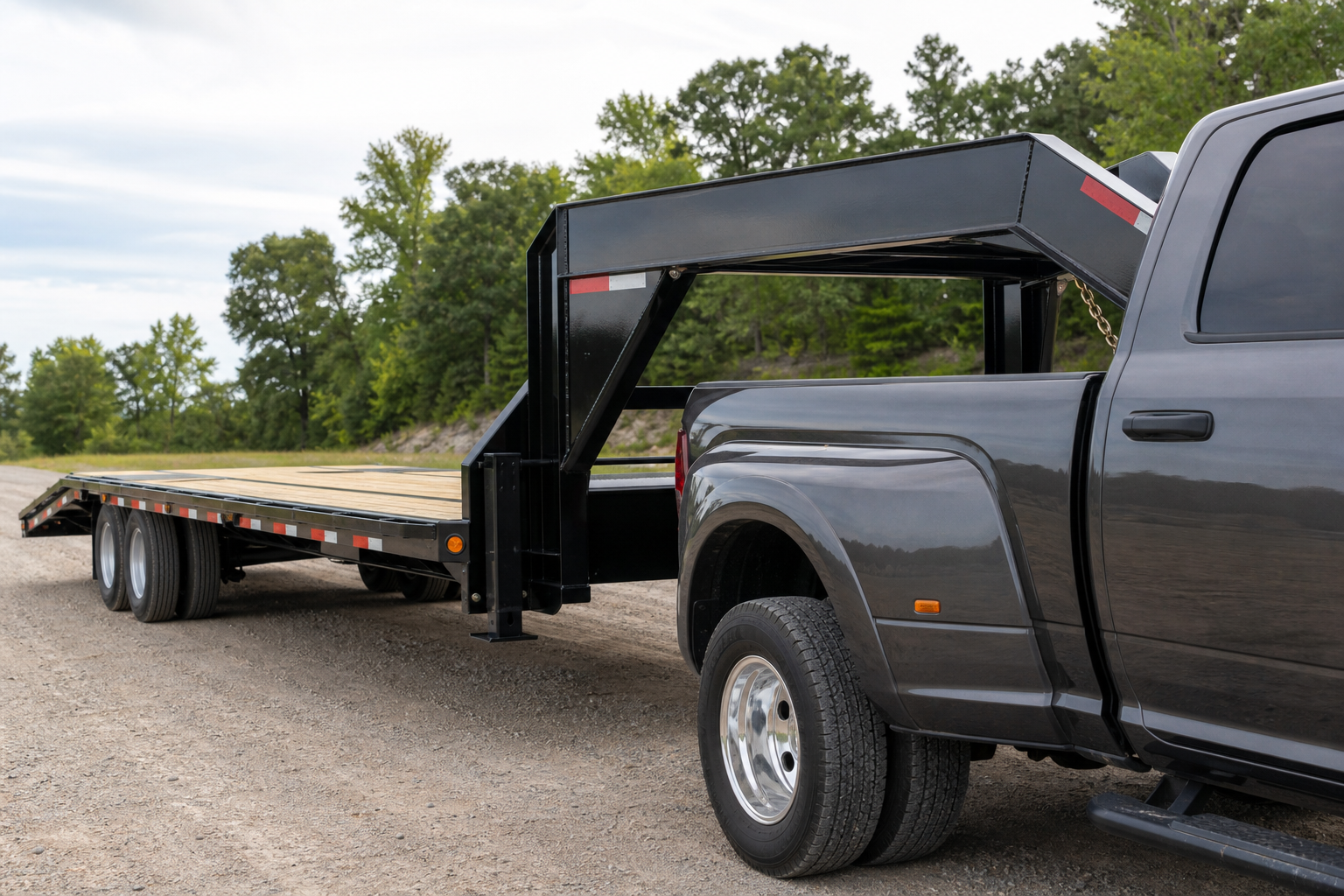
A Gooseneck hitch is a type of towing system that features a ball mount situated in the middle of your truck bed. It is coupled to the trailer with a coupler around the ball, not behind the bumper, but much beefier that a standard ball hitch is.
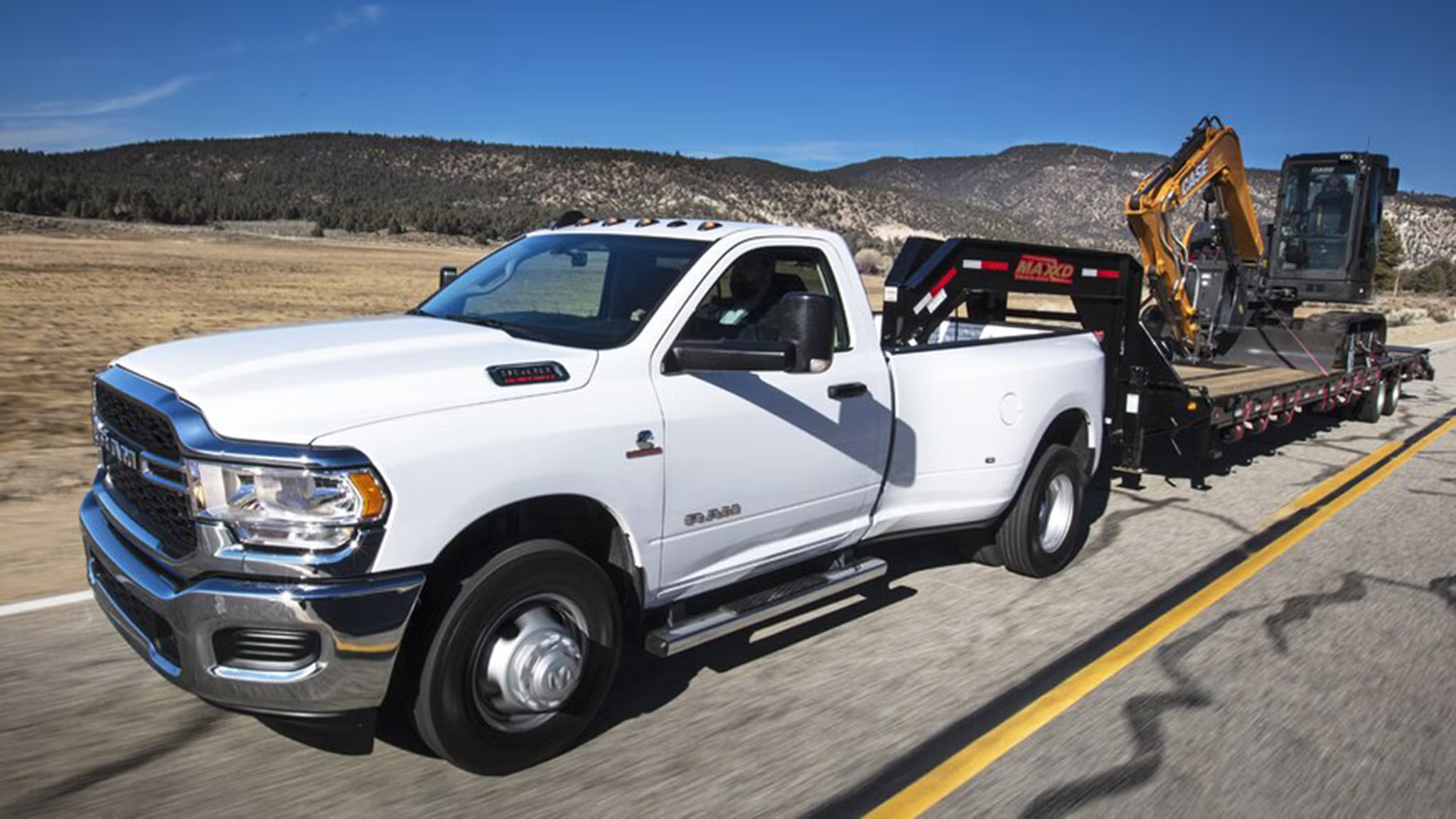
Gooseneck hitches are a favorite in the agricultural and livestock world. Chances are that you’ve spotted a rancher loading a horse trailer or a flatbed trailer with equipment if they were operating a gooseneck arrangement.
Key gooseneck hitch benefits:
- Higher towing capacity (often up to 30,000+ lbs)
- Lower profile ball keeps the truck bed more usable
- More affordable upfront cost
- Works exceptionally well with flatbed and livestock trailers
- Easier to couple and uncouple for many users
What Is a Fifth Wheel Hitch?
A fifth wheel hitch is comprised of a large kingpin and plate coupling system, similar to that in semi-trucks. A horseshoe-shaped plate (the 5th wheel) fits in the back of your truck and attaches to a kingpin on the trailer to lock it in place. More complicated, but provides a rock solid, stable tow.
A 5th Wheel Hitch is the most common hitch used by RV owners and those who are towing enclosed trailers. Anyone who has ever witnessed a big camper being towed down the road without any rocking whatsoever will almost certainly have seen a fifth wheel working.
Key fifth wheel hitch benefits:
- Extremely stable ride — less sway and bounce
- Better weight distribution across the truck
- Ideal for long-distance and frequent towing
- Easier steering and maneuverability at highway speeds
- More secure locking mechanism for peace of mind
Must Read: Class 2 Trailer Hitch vs Class 3: Understanding the Differences Before You Tow
Gooseneck vs Fifth Wheel: Head-to-Head Comparison
Now let’s get into the real meat of the gooseneck hitch vs fifth wheel hitch debate. Here’s how they stack up across the factors that matter most.
1. Towing Capacity
Both hitches are also capable of handling a great deal of weight, but gooseneck hitches typically beat out fifth wheels in terms of raw towing ability. A good gooseneck can take 25,000 – 30,000+ lbs, with most 5th wheel-type hitches not exceeding 20,000 – 24,000 lbs. The gooseneck is likely to take the win here when you are transporting heavy construction machinery or a complete livestock load.
2. Ride Quality and Stability
That’s where the 5th wheel hitch comes in handy. The kingpin connection is much more secure and stable than the ball and coupler tow point. You’ll notice the difference on longer sections of highway. A fifth wheel setup reduces the amount of sway that your truck experiences and provides you with more confidence in your handling of the vehicle.
3. Truck Bed Usability
The gooseneck ball sits low in the bed, so when you’re not towing, it’s barely in the way. A fifth wheel hitch, on the other hand, is a large piece of equipment that takes up a significant portion of your truck bed. If you regularly use your truck for hauling cargo beyond just towing, the gooseneck gives you more flexibility.
4. Cost
Gooseneck hitches are typically more affordable — both the hitch itself and the compatible trailers. Fifth wheel setups cost more upfront, and fifth wheel trailers (especially RVs) tend to be pricier as well. If budget is a real concern, the gooseneck is the more economical path.
5. Ease of Use
This one’s a bit subjective. Many users find gooseneck coupling quicker and simpler — you just back over the ball and lock it down. Fifth wheel hitching requires more precision to align the kingpin with the plate, though experienced drivers don’t find it difficult after a few tries.
6. Trailer Compatibility
This is a big one. The difference between gooseneck and fifth wheel comes down hard here — the two systems are not interchangeable. You can’t hook a fifth wheel trailer to a gooseneck hitch without an adapter (and vice versa). Before you buy either, make sure it matches the trailers you plan to tow now and in the future.
Which Is Better for Your Specific Use Case?
Let’s be real — “better” depends entirely on what you’re doing.
Go with a gooseneck if you:
- Haul horses, livestock, or agricultural equipment
- Need maximum towing capacity on a budget
- Use your truck bed for other purposes regularly
- Work in construction or farming
Go with a fifth wheel if you:
- Tow a large RV or travel trailer frequently
- Prioritize ride comfort on long trips
- Do a lot of highway driving and value stability
- Want a more premium, secure towing experience
For the RV crowd, the fifth wheel or gooseneck for towing question almost always ends with a fifth wheel recommendation. But for working truck owners who need brute capacity and versatility, the gooseneck is hard to beat.
Installation and Setup: What to Know Before You Buy
Both hitches require professional installation for best results, though many experienced truck owners handle it themselves. Here’s a quick overview:
A gooseneck hitch typically bolts into existing frame brackets or requires drilling into the truck frame. The ball assembly folds down or removes completely when not in use on many models.
A fifth wheel hitch requires a rail system that mounts in the truck bed. Some hitches are sliding models, which allow you to move the hitch forward for better clearance when turning — important for shorter-bed trucks.
If you have a short-bed truck, pay close attention to cab clearance when comparing trailer hitch options. Fifth wheel trailers can clip the cab during sharp turns if the setup isn’t right. A sliding fifth wheel hitch solves this but adds to the cost and complexity.
Towing Capacity Guide: Don’t Skip This Step
No matter which side of the gooseneck vs fifth wheel debate you land on, always match your hitch to both your truck’s tow rating and your trailer’s gross weight. Here’s a simple process to follow:
- Check your truck’s GVWR and max towing capacity from the manufacturer
- Know your trailer’s loaded weight (not just empty)
- Factor in tongue weight — gooseneck typically allows 25% of trailer weight; fifth wheel around 20–25%
- Add a safety buffer — don’t tow right at the maximum rating
Overloading either hitch type is dangerous and can cause brake failure, trailer sway, and serious accidents. Always refer to a proper towing capacity guide before your first haul.
Final Thoughts
The gooseneck vs fifth wheel decision isn’t one-size-fits-all. Both are excellent towing solutions built for serious work — they just excel in different situations.
The advantage of the gooseneck hitch is that it is the most versatile hitch if you are looking for raw power, budget-friendly or farm or work-site versatility. A smoother ride and for the premium stability and if mostly towing an RV or luxury trailer, then the fifth wheel hitch is a worthwhile addition of an extra dollar.
The most important thing? Know your use case before you invest. Talk to other truck owners, consult with a hitch specialist, and always stay within your truck’s rated towing capacity. A smart setup keeps you safe, saves you money, and makes every haul a whole lot less stressful.
FAQs
Q1. Is it Ok to tow a 5th wheel trailer with a gooseneck hitch?
Yes, using a gooseneck to 5th wheel adapter. This will make the product less stable and will not be the best choice for a frequent use product. Always use a dedicated fifth wheel hitch—the safer and more reliable option.
Q2. Which of these hitches is more capable of towing, gooseneck or fifth wheel?
Most of the time the gooseneck hitches can have a towing capacity higher than 30,000 lbs. The fifth wheel load is usually limited to 20,000-24,000 lbs or less, depending on the model of truck and hitch.
Q3. Is fifth wheel hitch more suitable for long-distance towing?
Yes. Fifth wheel hitches offer the best stability while riding and help reduce trailer sway, which is ideal for long-distance hauls, particularly when towing a large RV or travel trailer.
Q4. Which is cheaper — a gooseneck or fifth wheel setup?
Generally, goose neck hitches come out cheaper in the beginning. The hitch is less expensive, and compatible trailers tend to be less expensive than fifth wheel trailers. This makes the gooseneck hitch the less expensive choice.
Q5. Do I need a special truck for a gooseneck or fifth wheel hitch?
They want a pickup truck capable of towing, a 3/4 ton or 1 ton model is the typical size. Before buying either hitch system, always check the manufacturer’s specifications on the tow capacity of your truck.
About Author: