








The trailer you choose matters, actually, whether you are towing a skid steer or a sports car. Two of the most popular and often confused options are car haulers and utility trailers. Each of them is built for its unique uses. Choosing the perfect trailer depends on your understanding of the differences between the two types of equipment. Each of these is essential and caters to different needs. In this trailer comparison guide, we will help you understand the differences between the car hauler vs utility trailer so that you can make a better purchase decision. Kinema Trailer Depot prides itself on offering a selection of vehicles in both options.
What is a Car Hauler?
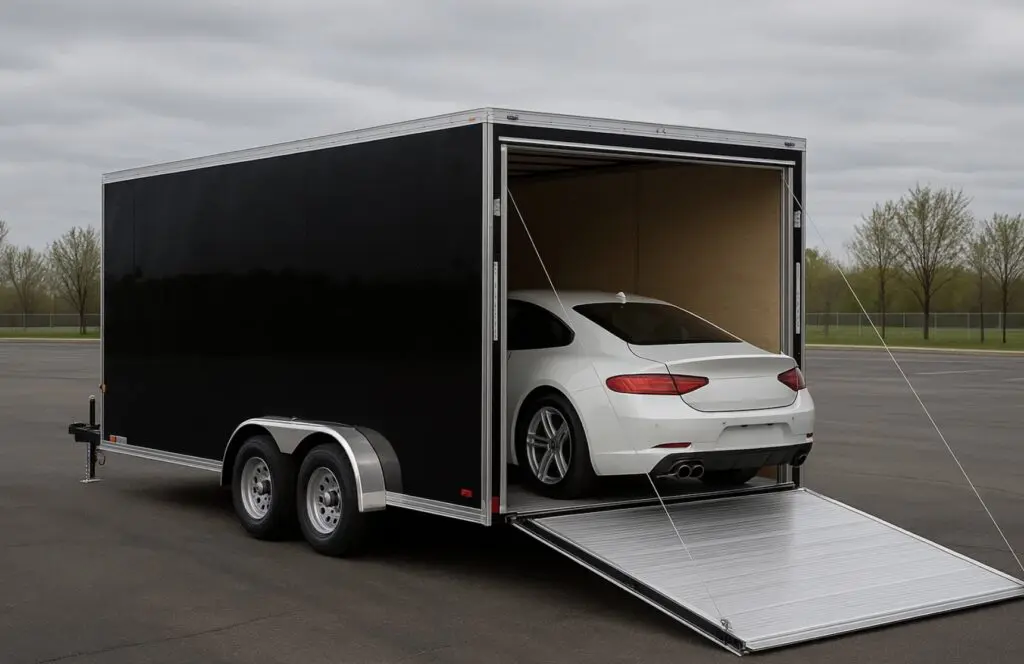
Car haulers are particularly designed to transport vehicles. The trailer makes loading and unloading safe for cars, whether you are transporting racers to a track, relocating someone or moving cars to a dealership. The flat-deck contraption is either enclosed or open and includes a built-in ramp or a tilt bed, allowing low-clearance vehicles to be easily winched up. An angled rear portion or dovetail makes the approach smoother, avoiding scarping. Car haulers can tow up to 10,000 pounds and use lighter axles, contributing to fuel efficiency. These can also come with tie-down systems such as D-rings and wheel straps for secure transport.
Car Hauler Trailer Benefits
Savings
One of the primary benefits of car haulers is that you can frequently move multiple vehicles over long distances. Car transport services can be expensive, and a car hauler eliminates the need for them, letting you transport cars more cost-effectively and at your convenience. Additionally, when you don’t use your car hauler, simply rent it out to make some extra income.
Versatile
While car haulers are defined to specifically transport cars, they have other uses too. Transport ATVs, motorcycles and other vehicles, making it an excellent investment for families. Carry cargo and other HVACs, and more, as car haulers can also accommodate bulk loads.
Convenience
You don’t have to schedule transportation services or wait long for them to arrive. With a car hauler, you just have to load up the cargo and get ready to transport it. Loading and unloading the cars is simple and is particularly useful for antique and unique automobiles.
Safety
While you might be tempted to hire a transportation service, you do not have control over how they handle your cars. Invest in a car hauler to ensure the safety of your vehicles. Get a trailer that best suits your requirements and securely transport your vehicles.
What is a Utility Trailer?
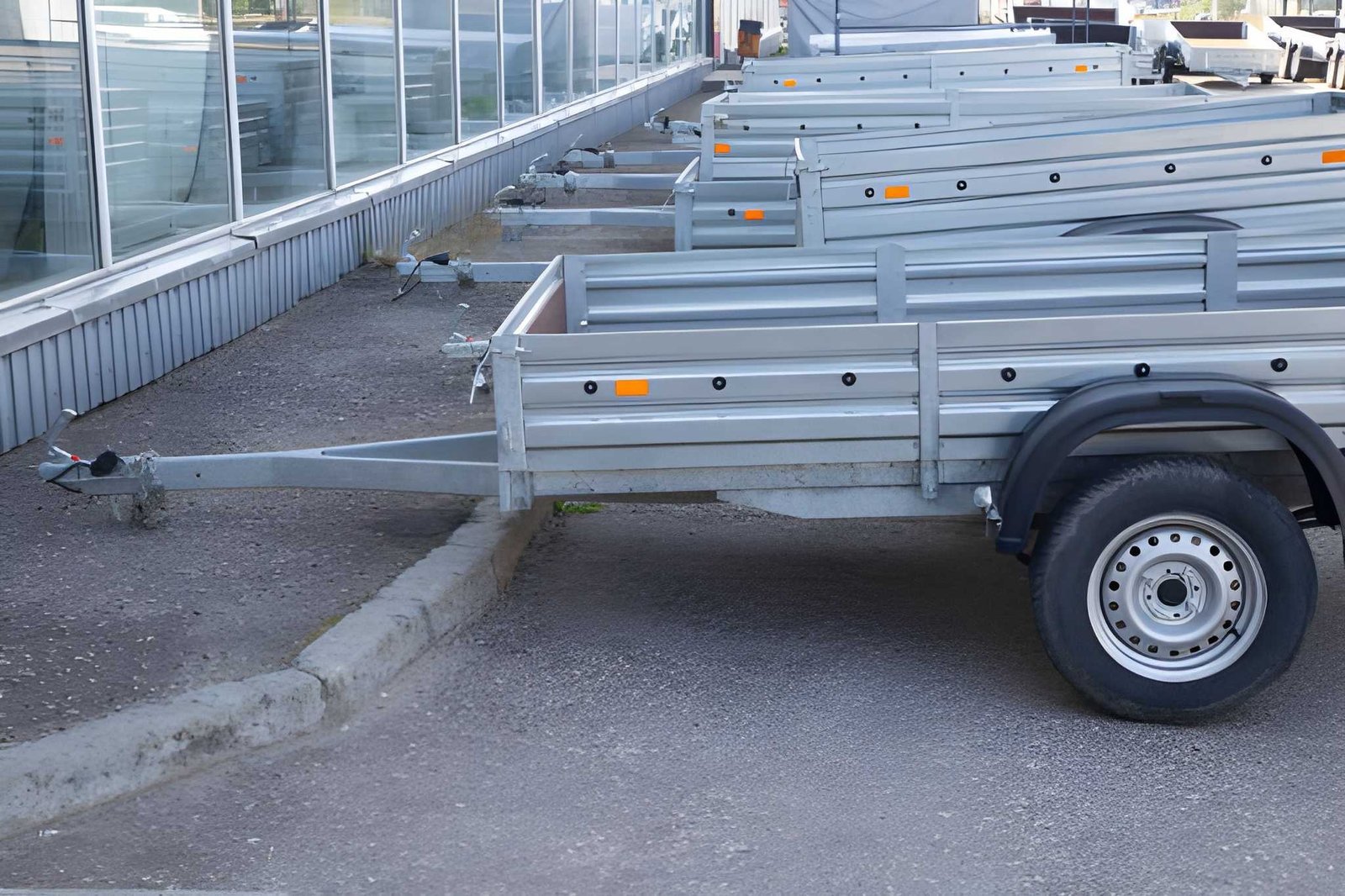
Utility trailers are typically non-motorized and attached to your truck, SUV or car to transport equipment or materials. The utility trailer can tow heavy loads that a regular vehicle cannot handle. They are designed to haul landscaping rails, furniture, ATVs, and even construction materials. Flatbed trailers come with side rails for added protection. These are often called workhorses of commercial and personal transport.
Must Read: What is a Utility Trailer? A Complete Beginner’s Guide
Utility Trailer Uses
Efficiency
One of the most convenient and efficient forms of transportation, the utility trailer offers additional space, reducing the number of trips you may need to make across large projects. You can save significant time and effort with its open design and easy loading and unloading.
Durability
Utility trailers are made from high-quality materials and are extremely durable. These last longer than most other transportation equipment.
Flexibility
One of the biggest benefits of utility trailers is their flexibility. Move gardening equipment, furniture, construction materials, heavy recreational materials and more. These are adaptable and practical solutions for businesses and homeowners alike.
Protection
Protecting items from damage and/or loss during transport is an important benefit of using a utility trailer, as some models are enclosed, further protecting them from external elements (weather, etc.).
Business Operations
Additionally, utility trailers can increase your business’s productivity because you can use one utility trailer to transport multiple large products, saving both travel time and fuel costs, while also improving your overall operations and profits.
Must Read: Top 10 Uses of Utility Trailers (Residential & Commercial)
Difference between Car Hauler and Utility Trailer
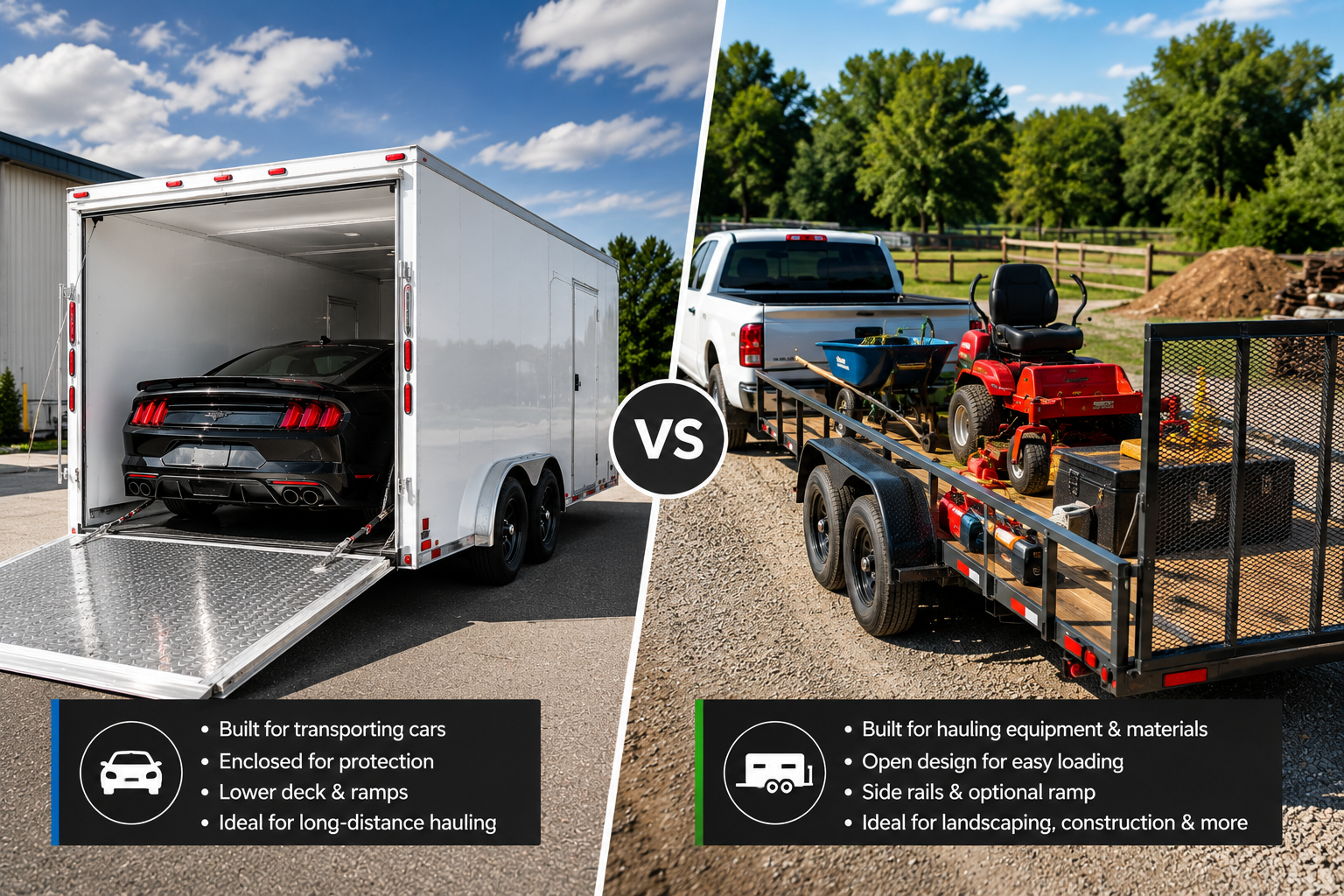
Primarily, car haulers and utility trailers are differentiated by three criteria:
- Capacity to haul
- Railings
- Ramps
Fact: If you really want higher payload capacity and use ramps, you can also use car haulers like utility trailers.
Car Haulers
The hauling capacity of your vehicle determines the weight you can tow and the kind of tasks that you can accomplish. Hauling something larger than your truck or trailer can potentially cause damage and even injury. However, the car hauler can carry several tons, typically about 7,100 pounds. This is well within the towing capacity of most consumer trucks. These haulers use a heavy-duty A-frame tongue and are built sturdy. Besides, car haulers have built-in low-profile ramps to drive the vehicle onto the trailer.
Utility Trailers
Generally, utility trailers have lower hauling capacity. These can hold around 1,800 pounds and can handle smaller vehicle loads, such as an ATV or a motorcycle. Other flatbed utility trailers can haul up to 10,000 pounds or more, depending on the trailer’s size. The trailers also come equipped with railings to keep the load secure during transport. In fact, multiple smaller items can be carried securely on the utility trailer. You can add railings to the car hauler with stake pockets, fitted for the purpose. Utility trailers don’t really come equipped with ramps because they don’t haul vehicles. But detachable ramps are available, making them useful for loading heavy cargo.
Conclusion
When you have to choose between the two, you may want to start by comparing costs. For instance, car haulers are more expensive and incur high operating and maintenance costs. Besides, the decision depends on your usage. If you haul vehicles regularly, get a car hauler. Alternatively, get a utility trailer if you are moving furniture or carrying out small tasks.
FAQs
Q1. Can a car be transported in a utility trailer?
If you have a heavy-duty utility trailer, you can accommodate smaller cars with the right weight and tow capacity, using ramps to load the automobile.
Q2. Do car haulers transport just vehicles?
No. While car haulers are designed to transport cars, they can also haul motorcycles, ATVs, small equipment, and other large cargo. Their flat-deck design and heavy-duty construction make them suitable for a variety of hauling needs.
Q3. How do I choose between the utility trailer and car hauler?
Choose the car hauler for moving cars or recreational vehicles, and the utility trailer for transporting furniture, equipment, or construction materials.
Q4. What is the key difference between a utility trailer and a car hauler?
The primary distinction between a utility trailer and a car hauler lies in their maximum payloads and the need for railings or ramps for loading and unloading. Utility trailers are used to carry items other than vehicles, e.g., tools or equipment, while car haulers are specifically designed to carry vehicles.
Q5. Which one offers a higher capacity, the car hauler or the utility trailer?
The car hauler typically offers better hauling capacity from 7,100 pounds or more, while utility trailers can haul around 1,800 to 10,000 pounds, with heavy-duty versions.
About Author: