








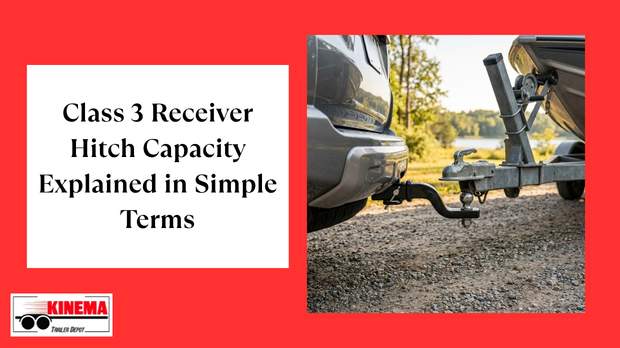
Class 3 hitches are considered some of the most versatile contraptions of all time. To know how this receiver can benefit you, learn about all the other hitch types and then determine if the class 3 receiver hitch is right for you.
Various Hitch Classes
Typically, receiver trailer hitches are rated in five classes, from class I through class V. The thickness of the steel used in manufacturing determines the class and towing strength. Starting at 2,000 pounds for towing capacity with class I hitches, hauling can go up to 12,000 pounds with class V hitches. The hitch’s intended use is also determined by its class. For instance, if you want to accomplish heavy-duty hauling, use the class IV hitch. These are particularly designed to handle heavy loads and are ideal for heavy-duty pickups.
Hitches for everyday use belong to classes I-II. These are perfect for minivans, crossovers and cars. Hitch designs vary with classes, too. You will notice that the class V hitch has a special five-wheel design that helps it distribute weight evenly, making it unique. Receiver openings vary across trailer hitch classes. Class I receivers have smaller openings, and higher classes include larger receivers to accommodate heavier trailers.
Must Read: Class 2 Trailer Hitch vs Class 3 Trailer Hitch
About Class 3 Trailer Hitches
Class 3 hitches are perfect for larger trailers. These are prevalent with SUVs, pickup trucks, vans and crossovers. With a towing capacity between 3,500 and 8,000 lbs and a tongue weight capacity ranging from 350 to 800 lbs, the class 3 hitch has a larger receiver opening of around 2 inches. While these measurements may not necessarily be consistent, its capacity and distribution are determined by its factory specifications. It is best that you research the hitch before you buy. You must remember that a class 3 receiver hitch, even with a higher-class drawbar, will not increase its towing capacity. A special weight distribution hitch may be required to distribute weight evenly. Additionally, while they operate similarly to class 1 and 2 hitches, their design lets them work with large vehicles. Class 3 hitches can tow large objects such as campers, boats, and trailers. These can also mount cargo carriers and bike racks, creating storage solutions ideal for travel.
Must Read: Class 2 Receiver Hitches: Weight Capacity, Tongue Weight and Safety Tips
Using The Class 3 Hitch Receiver
The towing capacity is extremely important when choosing a trailer hitch. Always check the weight of the object you want to carry before you buy, because not every hitch is compatible with every vehicle. For instance, the class 1 hitch cannot be used for an SUV or a truck. Get the class 3 receiver hitch for SUVs, full-sized pickup trucks, and towing large trailers. If you are using a standard hitch size, you can attach more accessories without any modifications.
FAQs
Q1. What is the specific usage of the class 3 hitch?
If you are towing large trailers, SUVs and crossovers, choose the class 3 trailer hitch.
Q2. Is it important that I match the hitch class with my vehicle?
Yes. Only if you use the right hitch will you be assured of safe towing.
Q3. What is the capacity of the class 3 hitch receiver?
The class 3 hitch can tow between 3,500 lbs and 8,000 lbs.
Q4. Can a drawbar increase the class 3 hitch’s towing capacity?
No. Even if you use a high-rated drawbar, it does not increase the class 3 hitch’s towing capacity.
Q5. Who can I reach out to if I have any difficulty choosing the right hitch?
Speak to experts at Kinema Trailer Depot to help you.
About Author: