








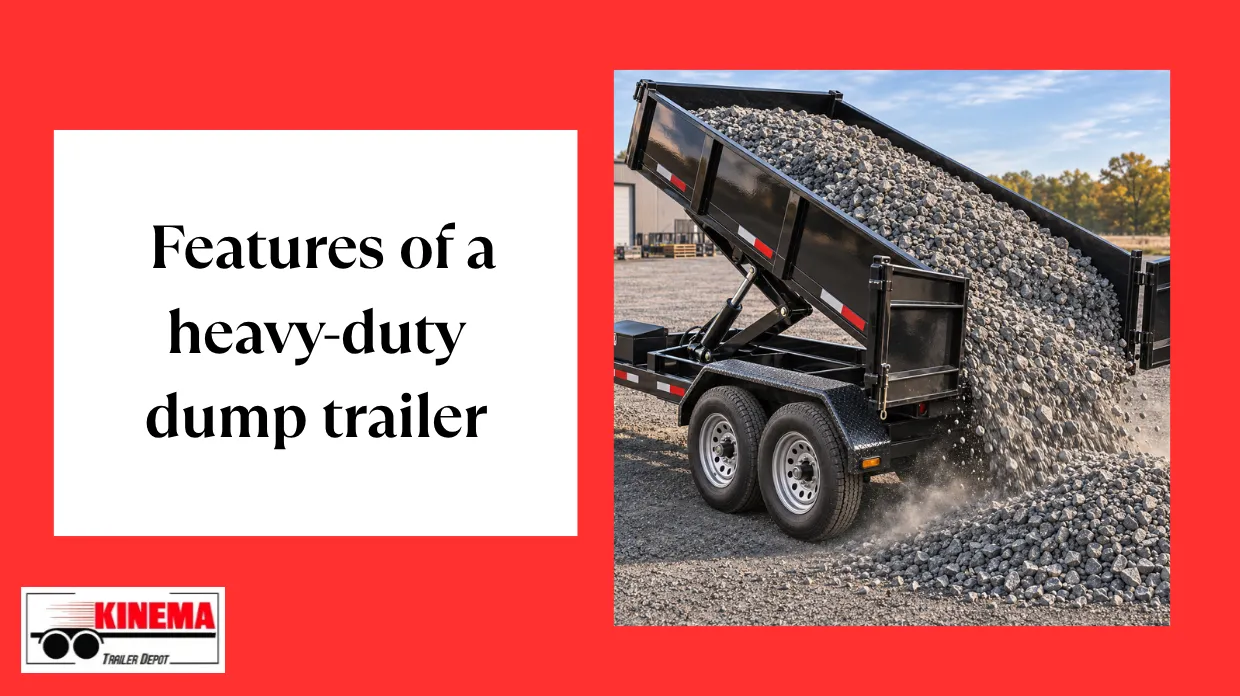
A good way to move large amounts of material (e.g., gravel, dirt, construction waste) is to use equipment designed to perform well under stress. A heavy-duty dump trailer is a cost-effective solution, combining a strong load-carrying surface with a hydraulic lift system that allows for quick, easy unloading.
Dump trailer performance is not always identical. Reasons include construction, load capacity, the type of hydraulic system used, and whether safety mechanisms are installed. When you know the Features of a heavy-duty dump trailer, you can choose wisely when buying one.
This guide covers the essential elements of a trailer, configuration options, and key factors to consider when choosing a trailer that meets your towing needs.
Heavy-Duty Steel Frame Construction
A solid frame is the base for an excellent dump trailer. Most heavy-duty trailers have a reinforced steel frame that can handle heavy weights, numerous loading/unloading cycles, and tough job sites.
Trailers often use either a channel or I-beam structural steel frame to enhance strength. Beneath the cargo bed, crossmembers help disperse the load and increase support.
In addition, when choosing a steel floor, thickness is a significant factor. Floors made from 7-gauge steel are thicker than those made from 10-gauge steel; therefore, they should provide more protection against denting or deformation. The floor’s longevity will also depend on the quality of the weld work, the frame’s design, and the type of protective coating applied.
To assess construction quality, evaluate the frame, bed reinforcement, welds, and level of protection against corrosion.
High Load-Carrying Capacity
A feature that makes a heavy-duty dump trailer so useful is how much material it can carry.
The most important thing to know is the difference between gross vehicle weight rating (GVWR) and payload capacity.
GVWR is the total allowed weight of the trailer plus all of the cargo. Payload capacity is the extra weight you can haul beyond the trailer’s empty weight.
A trailer with a Gross Vehicle Weight Rating (GVWR) of 14,000 lbs. that weighs 4,500 lbs. empty has an estimated payload capacity of 9,500 lbs., as long as no other changes are made to the trailer that affect its weight.
A buyer can find more information about these differences in Kinema Trailer Depot’s guide, “How much weight can my dump trailer hold?”
Always match the trailer’s rated capacity to your materials and towing vehicle.
Reliable Hydraulic Lifting System
A dump trailer’s hydraulic lift mechanism is one of its primary components. This allows the cargo bed to be raised at an angle so that loose material can fall off the back end of the trailer when it is tilted.
Electric-over-hydraulic systems are frequently used on heavy-duty trailers. These systems use an electric motor-driven pump powered by a rechargeable battery.
Two common lifting arrangements include:
- Scissor Lift Systems: A mechanical system located below the platform that lifts the platform.
- Telescopic hydraulic cylinders: Extend in multiple stages to lift the dump body.
When both systems are properly designed to accommodate the trailer’s load and shape, they will both be effective.
Find the right combination of available hydraulic components, well-protected hoses, quality controls, and a material handling system that can handle what you typically work with.
Durable Tandem Axles and Suspension
The axle and suspension system directly affect how well a dump trailer can haul material and how it performs on the road.
Many large-duty trailer designs include dual-axle systems, which spread the trailer’s load evenly across four wheels instead of two. Dual-axle systems are typically used on trailers designed for heavy-duty commercial applications.
Because leaf spring suspension systems are simple to design, they are commonly used.
When comparing trailers, consider axle ratings, suspension quality, tire load capacity, and the type of wheels you have installed.
A proper match between an axle and its suspension provides a smooth ride while towing and reduces excessive strain on each component during transport.
Multiple Dump Trailer Sizes
The right dimensions are necessary for a successful material-handling operation.
Different dump trailer sizes can meet various hauling needs. The most common heavy-duty dump trailer sizes are 12 ft., 14 ft., and 16 ft. beds. Manufacturers vary in the sizes they produce.
A smaller trailer can be much simpler to operate in tight spaces, such as on residential streets or within narrow job sites. Larger trailers offer more capacity to transport large items of material or certain types of machinery.
Bed width and sidewall height also influence usability.
For example, a higher sidewall lets you carry more lightweight, large-volume debris. However, a higher sidewall does not increase your trailer’s rated load capacity.
The best dimensions depend on what you’re moving, how much room you have to work in, and your tow vehicle’s capabilities.
Versatile Rear Gate Options
The back gate plays a major role in loading, unloading, and distributing materials.
Dump trailers designed for heavy-duty use can come equipped with various gate styles (e.g., barn doors, Spreader Gates, Combination Gates).
Barn doors open to provide a large opening for unloading large amounts of trash and debris. Spreader gates control how fast or slow you can release material like gravel.
Combination gates allow a wider range of uses for various types of loads.
Trailers with a removable loading ramp can transport compact equipment as long as it does not exceed the trailer’s rated capacity.
Before purchasing, review the gate mechanism, hinges, lock hardware, and ramp specifications to determine whether they will work for your application.
Dependable Braking and Safety Features
When choosing a trailer for very heavy loads, safety should always be your top concern.
Many heavy-duty trailer models include electric brakes, safety chains, breakaway systems, reflectors, and LED lights.
Electric brakes, combined with an appropriate tow vehicle brake controller, allow you to slow the trailer during transport. In addition, a breakaway system provides emergency braking assistance if the trailer disconnects from the tow vehicle.
Using proper restraints to hold cargo in place during transit is also essential to driving safely. According to the National Highway Traffic Safety Administration, drivers should secure all items being carried on their vehicles with appropriate ties or straps. Drivers may also need to cover those items as required.
Before you pull out, check your tires, lights, hitch/coupler, safety chains, and brakes.
Tarp Systems and Corrosion Protection
A long-lasting dump trailer can protect both the cargo and the trailer’s structure.
Tarp systems hold down loose materials during transport. Operators can select either manual or motorized tarp configurations based upon the specific model being operated.
Additional options for securing loads may be provided by stake pockets and/or tie-down points.
Protective coatings are important for trailers as they are used in wet, muddy and/or abrasive conditions.
Corrosion is limited on properly painted and/or powder-coated steel surfaces if they are properly maintained.
Regular washing, regular inspection of the vehicle’s paint, and prompt repair of damaged areas where bare metal is showing will help keep your vehicle in good operating condition longer.
Types of Dump Trailers Available
Understanding how different types of dump trailers operate helps buyers compare options for their specific job requirements.
- Bumper-pull dump trailers attach to a properly sized and rated hitch on the back of a towing vehicle. These dump trailers are commonly used for landscaping, property maintenance, and general contracting.
- Gooseneck dump trailers use a hitch that is located inside the pickup truck’s bed. People often choose these trailers when they need to transport large loads with an appropriately equipped truck.
- Low-profile dump trailers are designed to be shorter than most dump trailers. This design allows easier side access and easier loading of equipment onto the trailer.
- The deckover design of a dump trailer places the loading area over top of the wheels. This allows some deckover dump trailer designs to have wider loading areas than standard designs.
Selecting the ideal dump trailer begins with understanding your actual hauling requirements.
Conclusion
Key characteristics of a heavy-duty dump trailer will help you evaluate different trailers and choose the equipment that best meets your needs for difficult hauling jobs.
From reinforced steel frames to lifting hydraulics, tandem axles with reliable braking, and adaptable gate designs, these elements work together to provide optimal function.
By choosing the right equipment specs (for construction, agriculture, landscaping, or maintaining your home), you can make it easier to transport materials and use the equipment longer.
Kinema Trailer Depot offers several dump trailer options. You can view different types of dump trailers and compare how each one stacks up against other models, so you can choose the trailer that best fits your job requirements.
FAQs
What are the main features of a heavy-duty dump trailer?
Heavy-duty dump trailer features include a heavy-duty steel frame, hydraulic lift systems, a dual-axle configuration, heavy-duty cargo box construction, and a strong braking system capable of carrying large loads.
What size dump trailer is best for heavy loads?
The best size of a 14′ or 16′ dump trailer will depend on several factors such as how much weight you need to transport (payload capacity), the type of materials you plan to haul (material weight) and the specifications of your towing vehicle.
What are the benefits of using dump trailers?
The use of dump trailers simplifies the process of loading and unloading, minimizes manual labor, reduces the amount of time required, and provides an adaptable option for hauling away debris from construction sites, gravel, dirt, and landscaping material.
About Author: