








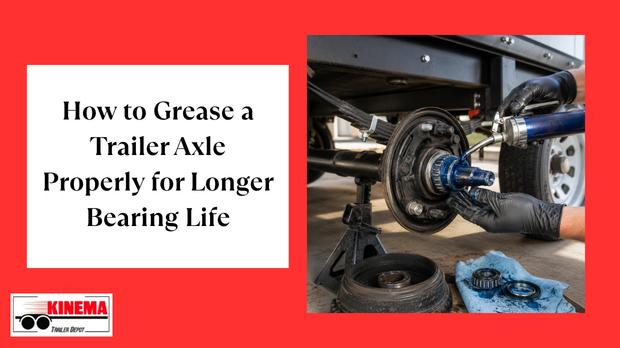
Those who own a trailer know how much of a strain they put it under. Your trailer performs a variety of duties from hauling boats, livestock, equipment and cargo — and, of course, so do its axles. Another aspect of trailer axle care that is often neglected but is of great importance is greasing. If you miss it, you’ll have to deal with seized bearings, expensive repairs or a wheel blowout on the highway.
In this guide, we will show you how to grease a trailer axle properly, so you can save money, enjoy smoother running, and have your bearings last longer.
Why Trailer Axle Lubrication Actually Matters
Now, before we begin with the steps, let’s discuss why this is important.
Wheel bearings in your trailer are always turning while carrying weight. If lubrication is not provided, friction accumulates, and the heat rises, causing metal to rub against metal. That’s a recipe for bearing failure – and it occurs faster than most people realize.
A well lubricated axle reduces friction and heat in your bearings, and helps to keep rust and corrosion out of the axle. It’s one of the easiest things that can be done in the trailer axle and can have a tremendous effect on the longevity of your entire axle assembly.
Experts suggest adding grease to the axle of your trailer at least once a year or every 12,000 miles, whichever is early. If you regularly tow in water (such as launching a boat), then you should tow more often, as water is the enemy of grease.
What You’ll Need Before You Start
Getting everything ready before you begin makes the whole process smoother. Here’s what you’ll need:
- A hydraulic floor jack and jack stands
- Lug wrench or impact wrench
- Flathead screwdriver and needle-nose pliers
- Bearing packer or clean rags
- Fresh wheel bearing grease for trailers (marine-grade if you go near water)
- Clean lint-free cloths
- Brake cleaner or parts cleaner spray
- Replacement seals and cotter pins (always good to have)
- Torque wrench
Now, let’s talk about the best grease for trailer axles. Not all grease is equal. Look for a high-quality NLGI Grade 2 grease — something like marine-grade bearing grease if your trailer sees water exposure. Brands like Lucas, Valvoline, and Mobil all make solid options. Marine grease is water-resistant and holds up well under the kind of conditions trailers are regularly exposed to.
Step-by-Step: How to Grease a Trailer Axle
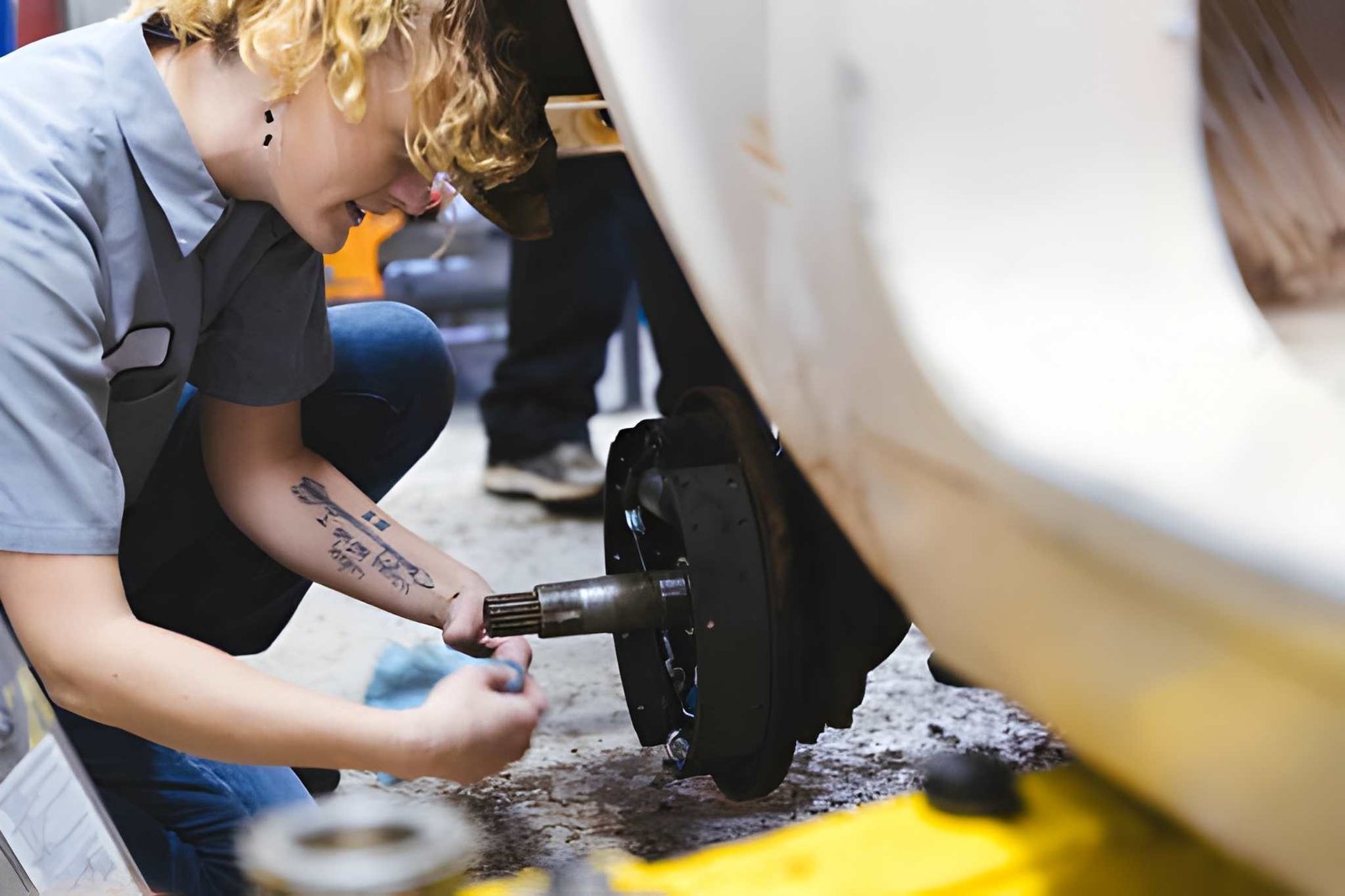
This is the actual working part. Take your time and follow these instructions carefully, and this will be a job you do right the first time.
Step 1: Park on a Flat, Safe Surface
Always work on level ground. If available, engage the parking brake, and put wheel chocks on any wheels that remain on the ground. Safety is always No. 1 — there are no exceptions.
Step 2: Loosen the Lug Nuts and Jack Up the Trailer
When removing the trailer, loosen the lug nuts prior to pulling the wheel off the ground. Then jack up the axle and place jack stands under the frame. Don’t use a floor jack alone when working under a trailer.
Step 3: Remove the Wheel
Remove all the lug nuts and remove the wheel from the rim. Put it away in a safe place.
Step 4: Remove the Dust Cap
Carefully pry the grease cap (or dust cap) off of the center of the hub using a flathead screwdriver or a dust cap puller. Be gentle — you don’t want to damage it.
Step 5: Remove the Cotter Pin and Castle Nut
Inside, there is a cotter pin holding a castle nut. Use needle-nose pliers to straighten the cotter pin and remove it. Next, remove the castle nut and the washer behind it.
Step 6: Pull the Hub and Bearings
Slide the hub off the axle spindle. The outer bearing will usually come out with the hub. Reach inside and remove the inner bearing as well. Be careful not to drop them in the dirt.
Step 7: Clean Everything Thoroughly
This step is crucial. Use brake cleaner or parts cleaner to remove all the old grease from the bearings, the hub cavity, and the spindle. Inspect each bearing carefully. Look for pitting, discoloration, rough rolling, or damaged cages. If anything looks off, replace the bearing — don’t repack a damaged one.
Step 8: Pack the Bearings with Fresh Grease
Now comes the actual greasing part — and this is where a lot of people rush things.
If you have a bearing packer tool, load it up with your chosen wheel bearing grease for trailers and work it through until grease comes out the other side of the bearing cage. If you’re doing it by hand, place a glob of grease in your palm and press the wide end of the bearing into it, rotating it until grease works through every roller. Do this until the bearing is fully packed.
Step 9: Grease the Hub Cavity
Before reinserting the bearings, apply a layer of fresh grease around the inside of the hub. You don’t need to pack it completely full — just a solid coating around the inner walls and the races. Over-packing can actually cause overheating, so don’t go overboard.
Step 10: Replace the Inner Seal
If the inner seal is old, cracked, or damaged, now is the time to replace it. A bad seal is how water and dirt get in and ruin your fresh grease job. Tap the new seal in evenly using a rubber mallet or seal driver.
Step 11: Re-Install Hub & Outer Bearing
Put the hub back on the spindle, place the outer bearing in, place the washer in and manually re-install the castle nut.
Step 12: Fine-tune and tighten the Nut
This step is significant and more than people realize. When tightening the castle nut, do so while rotating the hub, and then back the nut off until there is a little bit of play, but no wobbling. Refer to your trailer’s manual for the correct torque specification. Fit new cotter pin and turn it so it holds all secure.
Step 13: Replace the Dust Cap and Reinstall the Wheel
Put grease cap back on, reinstall wheel and torque to spec (usually 90-120 ft lbs) check with your manual.
Repeat all steps for each wheel on the trailer.
Must Read: Single Axle vs Tandem Axle Utility Trailers: Difference
Signs Your Trailer Axle Needs Greasing Now
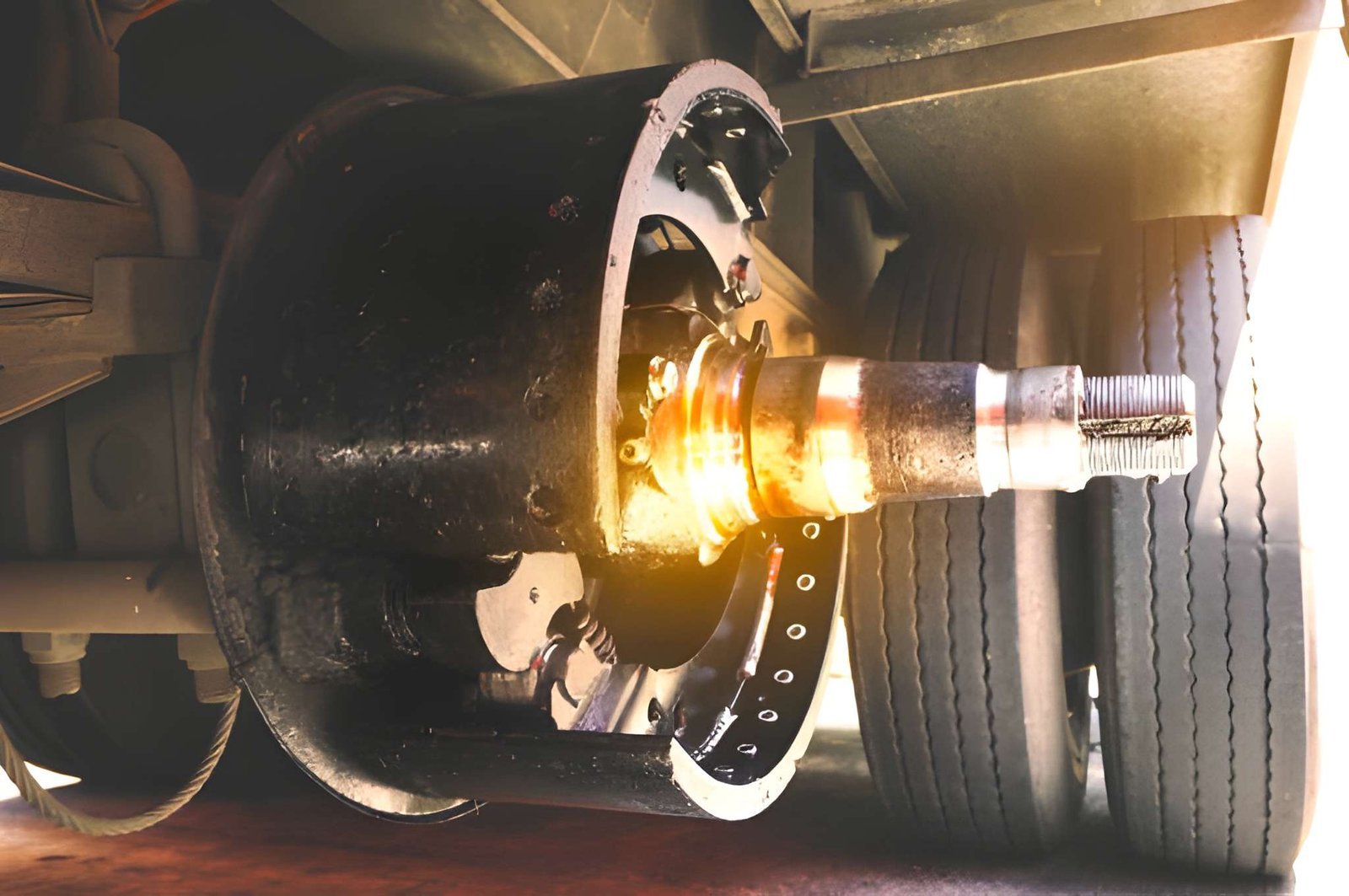
Don’t wait for something to go wrong. Watch for these warning signs:
- A grinding or humming noise coming from the wheels while towing
- Excessive heat from the hub area after a short drive
- Wobbling or vibration while hauling
- Visible rust or grease seeping out from behind the wheel
- It’s been over a year or 12,000 miles since your last trailer axle service
Trailer Maintenance Tips to Stay Ahead of Problems
Greasing your axles is just one piece of the puzzle. Here are a few extra trailer maintenance tips that go hand in hand with proper lubrication:
- Inspect your wheel seals every time you grease the bearings
- Check tire pressure before every haul
- Look over your brake components during each greasing session
- Rinse your trailer thoroughly after any saltwater or muddy exposure
- Keep a maintenance log so you never lose track of when service was last done
Staying consistent with these habits means fewer breakdowns, fewer surprises, and a trailer that lasts for years.
Final Thoughts
If you’re a trailer owner, one of the best time investments you can make is to learn how to grease a trailer axle properly. It is not complicated, no need to be a professional and the expense of grease and seals is far less than a failing bearing or damaged spindle would cost.
The bottom line is: Quality wheel bearing grease for your trailers, clean before you repack, don’t neglect to check the wheel bearings for seals, and always follow a standard service program. If you are greasing the axle of your trailer once a season or once every 12,000 miles, it’s important to get it right or your trailer will be ill.
Avoid waiting to hear a grinding noise on the highway! Step under that trailer, get a little dirty, and take care of those bearings! You’ll be rewarded with a happier trailer and a happier wallet.
FAQs
Q1. How many times should I change the lubricant in my trailer axle bearings?
Grease trailer axle bearings once a year or every 12,000 miles. For trailers that are exposed to water or mud often, check and re-grease every six months for optimum performance.
Q2. Which is the best grease to lubricate trailer axle bearings?
Be sure to use NLGI Grade 2 marine type bearing grease. It is resistant to water washout and can withstand heavy loads, making it suitable for trailers in humid conditions or those that are likely to be used for heavy loads.
Q3. Can I grease trailer bearings without removing the hub?
Certain trailers are fitted with Bearing Buddy so that grease can be injected without the need to remove the hubs. For inspecting and repacking old grease, however, it is recommended that the entire hub be removed.
Q4. What if I don’t grease my trailer axle?
If lubrication is not provided, the bearings will overheat and fail as a result of metal on metal friction. This can lead to wheel pulling up, damage to spindle, and hazardous blow outs on the road.
Q5. How to tell if trailer wheel bearings are loose or worn?
Symptoms are grinding or humming sounds during towage, too hot in the hub, wobbling wheels or rust. If any of the following symptoms are present, inspect and replace immediately.
About Author: